
If you’re new to selling or running a small business, you might think about trying Amazon. You’ve seen others making money, but you’re not sure is it worth selling on Amazon or not. If that’s you, you’re in the right place.
Amazon is a huge marketplace that’s great for businesses of all sizes. It’s worth selling on Amazon if you’re good at managing costs, following rules, and handling competition. Your success really depends on how well you plan and stick with it.
This guide explains how to sell on Amazon using different fulfillment methods. You’ll learn about Fulfillment by Amazon (FBA) and how to handle orders yourself through Fulfillment by Merchant (FBM).
Also, you’ll learn to compare the benefits of selling on your own website to selling on Amazon. If you’re new or just curious about Amazon’s opportunities, continue reading for more insights.
How Much Does an Average Amazon Seller Make?

Many new Amazon sellers and small business owners often ask if selling on Amazon is actually profitable. The truth is that earnings vary based on experience, product choice, and effort.
Some sellers make a few hundred dollars, while others earn thousands each month. Let’s break down how much sellers actually make.
Earnings Based on Seller Type
Not all sellers earn the same. A beginner usually makes between $100 to $1,000 per month. This is because they are still learning. They often start small and reinvest their profits.
Experienced sellers, who have been selling for over a year, typically make between $5,000 to $25,000 per month. They know how to pick profitable products, run ads, and manage stock better.
Full-time sellers who treat Amazon as their primary income source can earn $50,000 or more per month. They usually sell in bulk, use advanced marketing, and build a brand.
Average Revenue and Profit Margins
Industry surveys show that many Amazon sellers earn more than $1,000 each month. A smaller group even makes over $10,000 per month. However, earnings vary widely depending on product selection, pricing, and how efficiently the business is managed.
Profit margins on Amazon usually range between 10% to 30%. A beginner may have lower margins, around 10% to 15%, due to mistakes and high costs. More experienced sellers aim for 20% to 30%, increasing profits by optimizing costs and pricing.
Realistic Income for New Sellers
New sellers should expect slow growth. It can take 3 to 6 months to start making consistent sales. In the first year, earning $500 to $2,000 per month is common.
Success comes from smart planning, consistency, and constant learning. Many sellers quit too soon. Those who stay consistent and learn from mistakes usually see steady income growth.
What Profit Margin Do Amazon Sellers Make?
Profit is what every seller cares about. Profitability varies by product, pricing, and the effective management of Amazon’s costs.
Some sellers make 10% margins, while others see 30% or more. Let’s look at how profit margins work and how to improve them.
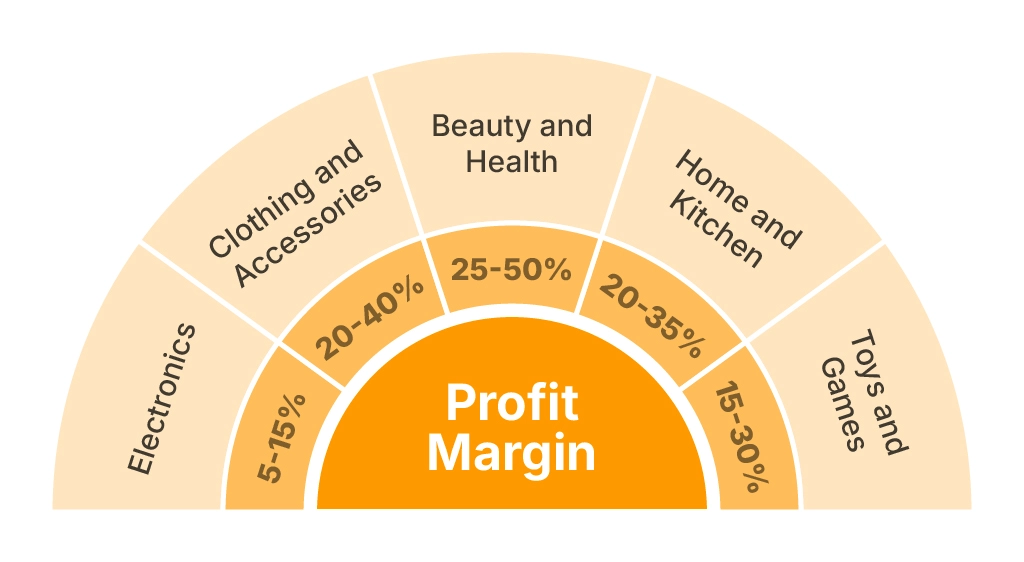
Profit Margins in Different Product Categories
Not all products bring the same profit. Some categories have higher margins, while others have tighter profits due to competition and fees.
- Electronics: Margins are low, around 5-15%, because of competition and price wars.
- Clothing and Accessories: Margins are 20-40%, but returns are high, which can reduce profits.
- Beauty and Health: Margins range from 25-50%, especially for niche or private-label brands.
- Home and Kitchen: Profits vary, usually 20-35%, depending on product uniqueness and demand.
- Toys and Games: Margins are 15-30%, but they sell well during holidays.
How Amazon Fees Impact Profit?
Amazon charges various fees that affect a seller’s overall profit. One of the biggest costs is the referral fee, which takes 8-15% of each sale depending on the product category. This fee is unavoidable and must be factored into pricing.
If sellers use Fulfillment by Amazon (FBA), they also pay for storage, packing, and shipping. These fees vary based on product size and weight, usually ranging from $3 to $5 per item. While FBA saves time, it cuts into profits, especially for low-priced products.
Sellers also face storage fees, especially if inventory sits in Amazon’s warehouse for too long. Long-term storage costs can quickly add up.
Another major expense is advertising. Sponsored ads can boost visibility, but overspending quickly cuts into profits. Without a well-planned strategy, sellers might spend more on ads than they earn.
Ways to Improve Profitability
To increase profit margins, sellers need smart strategies. Here are some ways to boost earnings:
- Choose High-Margin Products: Focus on items that have strong demand and low competition. These products often sell consistently and allow higher markups. You get better returns per unit without entering price wars.
- Optimize Pricing: Use pricing tools or manual testing to find the sweet spot between customer interest and profitability. Adjust prices based on market trends, competitor activity, and seasonal shifts to stay competitive and profitable.
- Lower Fulfillment Costs: Keep your storage and shipping costs under control by managing inventory carefully. Avoid overstocking, monitor turnover rates, and consider switching to fulfillment services with better rates to keep more profit.
- Improve Advertising Strategy: Advertising can eat up profits if not managed wisely. Target high-converting keywords, refine ad audiences, and cut wasteful spending to generate more sales without draining your ad budget.
- Bundle Products: Create bundles using related products that buyers often purchase together. Higher order value boosts overall revenue, while combined shipping reduces cost per unit and improves efficiency.
Can Beginners Really Succeed on Amazon?

Many new sellers look to Amazon as the easiest place to start an online business. It offers built-in traffic, helpful tools, and a simple setup. But starting isn’t always as easy as it seems.
Some parts make the process smoother, while others can be frustrating for beginners. Let’s explore both sides.
What Makes It Easier for Beginners
Amazon gives new sellers several advantages that make getting started feel more manageable. These features help reduce the learning curve and lower the risk of early mistakes.
1. Built-In Shoppers
There’s no need to create your own audience from scratch. Amazon brings in millions of ready-to-buy shoppers every day, which means your product has a chance to be seen right away.
2. Fulfillment by Amazon (FBA)
FBA handles storage, packing, and delivery for you. Amazon brings in millions of ready-to-buy shoppers every day. This gives your product a real chance to be seen right away.
3. Easy Store Setup
Creating a seller account is quick and beginner-friendly. You don’t need coding or design skills. The platform walks you through the steps so you can launch products in just a few hours.
Where Beginners Often Struggle
Even though Amazon helps with setup and fulfillment, beginners still face some real challenges. These issues can limit growth or even lead to early failure without careful planning.
1. High Selling Fees
Each sale comes with multiple fees, including referral charges and storage costs. If you don’t calculate expenses carefully, it’s easy to make sales but lose money on every order.
2. Intense Competition
Most popular categories already have hundreds of listings. New sellers struggle to stand out without reviews, strong photos, or a unique offer. Getting attention requires research and constant tweaking.
3. Strict Rules and Penalties
Amazon has strict rules that all sellers must follow. A single mistake like a late shipment or wrong listing can lead to a warning. Even new sellers risk account suspension.
How Much Money and Time Does It Take to Sell on Amazon?
Starting an Amazon business takes both time and money. New sellers need to invest in products, fees, and marketing before seeing profits. But how much does it really cost, and how long does success take? Let’s find out.
Initial Investment Costs
Selling on Amazon requires upfront costs, depending on the business model. Here’s a breakdown:
| Expense | Estimated Cost |
|---|---|
|
Product Sourcing |
$500 – $3,000 |
|
Amazon Seller Plan |
$39.99/month (Professional) or $0.99 per item (Individual) |
|
FBA Fees (if using FBA) |
$3 – $5 per item |
|
Product Listing and Ads |
$100 – $500
|
Sellers must budget wisely to avoid overspending before making sales.
How Long to Start Making Sales?
Most sellers see their first sales within 1–3 months, but results depend on product demand, pricing, competition, and marketing effort. If you are wondering does selling on Amazon really work, the honest answer is yes—but not automatically. It works best for sellers who choose the right products, manage costs carefully, and stay consistent with promotion and optimization.
When it comes to time commitment, starting an Amazon business takes real effort, especially in the beginning. Most new sellers spend around 10–20 hours per week on product research, creating listings, running ads, managing inventory, replying to customer messages, and tracking sales performance.
Many beginners also ask, how much do people make selling on Amazon. The answer varies widely. Some sellers only make side income, while others build full-time businesses. The average Amazon seller income depends on product margins, sales volume, advertising costs, and how efficiently the business is managed.
As the business grows, handling everything alone can become difficult. Many sellers hire virtual assistants, use seller tools, or switch to FBA to save time and reduce daily workload. These steps make operations smoother and allow sellers to focus more on growth.
Building a successful Amazon business takes time. Sellers who plan ahead, track their numbers, use the right tools, and stay consistent are more likely to see long-term results.
Top 10 Tips for Success on Amazon
First-time sellers often expect quick results, but building success on Amazon takes real strategy. Many new sellers struggle with competition, high fees, and slow growth. However, you can build a successful and profitable business with the right strategy.
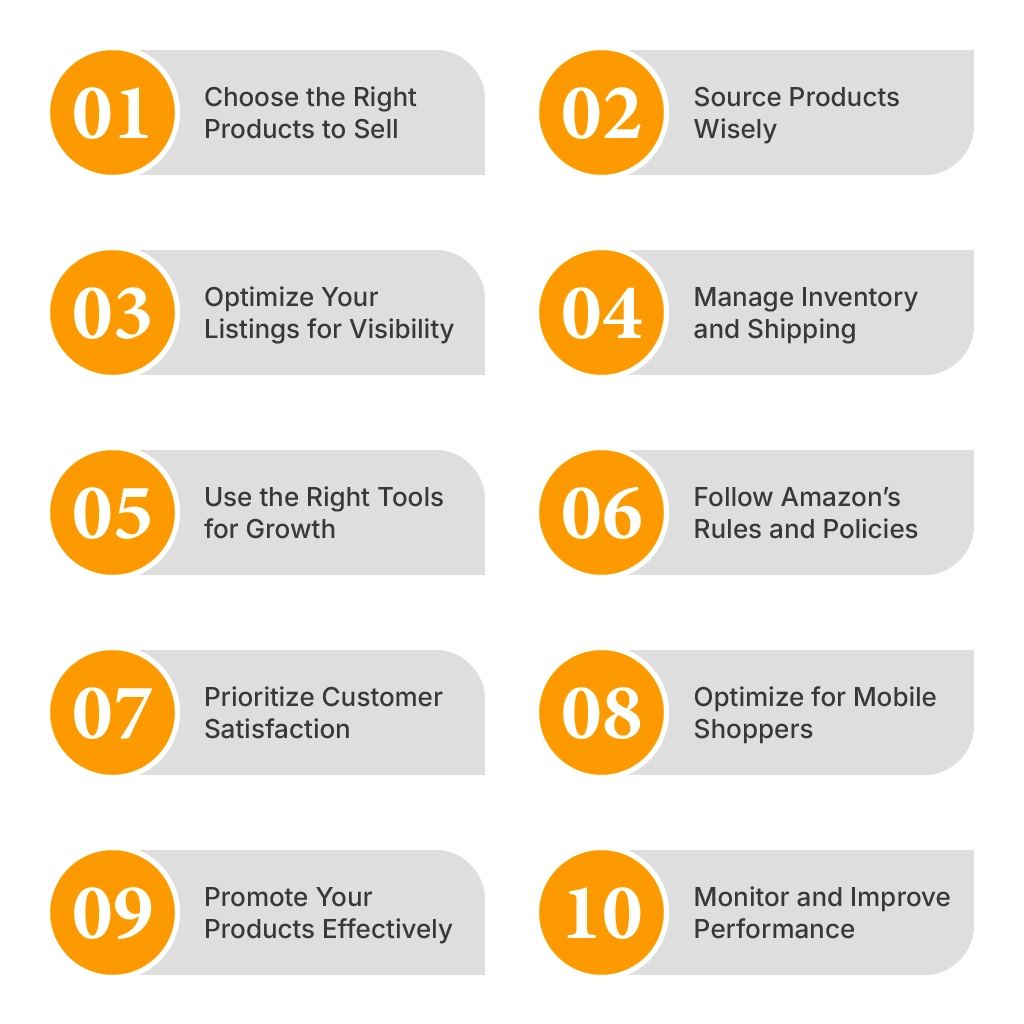
If you want to boost sales and grow your Amazon store, start with the right approach. These 10 tips will help you avoid common mistakes and stand out from the competition.
1. Choose the Right Products to Sell
Success on Amazon starts with product selection. Some items sell fast, while others collect dust in warehouses. Choosing wisely can make or break your business.
Look for high-demand, low-competition products by using tools like Amazon Best Sellers, Jungle Scout, and Helium10. Avoid fragile, oversized, or restricted products that often come with higher fees and strict regulations.
2. Source Products Wisely
A great product won’t sell if the quality is poor or the supplier is unreliable. Bad suppliers can lead to delays, customer complaints, and negative reviews.
Compare multiple suppliers on Alibaba, ThomasNet, or U.S.-based wholesalers. Always order samples first to check quality before making a bulk purchase. This small step prevents major problems later.
3. Optimize Your Listings for Visibility
Even the best products won’t sell if people can’t find them. Your listing should attract attention and convince buyers to purchase.
Use clear, keyword-rich titles and descriptions to improve rankings. High-quality images build trust and help customers visualize the product. Instead of just listing features, explain why your product makes life easier.
4. Manage Inventory and Shipping Efficiently
Running out of stock hurts your rankings while overstocking ties up your money. Poor inventory management can cost you sales and profits.
Use Amazon’s inventory tracking tools to monitor stock levels and set reorder alerts. If using FBA, send products in early to avoid delays. If shipping yourself, use fast, reliable carriers to maintain customer satisfaction.
5. Use the Right Tools for Growth
Amazon is highly competitive, and successful sellers use tools to stay ahead. Manually managing everything wastes time and increases mistakes.
Tools like Helium 10, Jungle Scout, and Keepa help track pricing trends, sales, and competition. Automated repricing tools keep your prices competitive without constant monitoring. The right tools save time and increase profits.
6. Follow Amazon’s Rules and Policies
Amazon has strict guidelines, and breaking them accidentally can get your account suspended. Some sellers violate rules without realizing it, which leads to unnecessary risks.
To protect your business, stay updated on Amazon’s latest policies. Never manipulate reviews, list restricted products, or use misleading descriptions. Keeping your account in good standing ensures long-term success.
7. Prioritize Customer Satisfaction
Happy customers leave positive reviews and come back for repeat purchases. Negative feedback and poor service can hurt rankings and lower sales.
Respond quickly and offer helpful solutions to maintain positive reviews. Encourage satisfied customers to leave honest reviews as they build trust and attract more buyers.
8. Optimize for Mobile Shoppers
More than 60% of Amazon shoppers use mobile devices. If your listings aren’t mobile-friendly, you could be losing potential sales.
Make sure your product descriptions are short and easy to read. Use high-quality images that look good on small screens. A mobile optimized listing helps you reach more customers.
9. Promote Your Products Effectively
Amazon is crowded with millions of sellers, so marketing is key to standing out. If you don’t promote your product, it may get lost in search results.
Use Amazon PPC ads to increase visibility and drive traffic to your listings. Promote products on social media, deal sites, and email lists to attract more buyers. Smart marketing boosts sales and rankings.
10. Monitor and Improve Performance
A successful Amazon business requires ongoing improvement. Sellers who don’t track performance miss opportunities to increase sales and profits.
Regularly check sales reports, customer feedback, and competitor pricing. Adjust your pricing, listings, and marketing strategies based on what’s working. The best sellers analyze and improve constantly.
Amazon vs Your Own Website: Which is the Better Choice for Selling?

Amazon and personal websites offer two very different paths, and every seller needs to choose one. Your own website gives you full control over branding, pricing, and the customer experience. Amazon provides quick access to a large customer base with built-in traffic and simple fulfillment.
Still, many sellers find it hard to know which option is the better fit. That’s why it helps to understand the pros and cons first. It makes the decision much easier.
Pros of Selling on Amazon and Your Own Website
Amazon gives you quick access to millions of active shoppers, so you don’t need to build your own traffic. In addition, Fulfillment by Amazon (FBA) takes care of storage, shipping, and customer service, which saves you time and effort. Most importantly, buyers already trust the platform, so sales often happen faster and with fewer objections.
In contrast, your own website gives you full control over store design, product pricing, and marketing. You can also avoid marketplace fees, which will help you keep more of your profit. You also own the customer relationship. This gives you the chance to build loyalty and promote directly over time.
Cons of Selling on Amazon and Your Own Website
Both platforms have benefits, but they also come with real challenges. First, Amazon has high costs. It charges referral, storage, and fulfillment fees. These can take 30 to 40 percent of your revenue.
Competition is also a big issue. Many sellers offer similar products, which makes it hard to stand out. It’s even tougher when big brands or low-cost sellers dominate the results. Another problem is limited brand control. You can’t collect customer emails or build direct relationships with your buyers.
Meanwhile, running your own website brings different challenges. You need to bring in visitors through SEO, ads, or social media. This takes time, effort, and consistency.
You also have to cover setup costs. Domains, hosting, and tools can cost between $29 and $300 per month. Last, you must handle shipping, returns, and support unless you use a third-party service.
Which one is Better for Selling?
The right choice depends on your business goals. Amazon helps you reach more buyers without handling shipping or customer service. It works best for everyday products that are already in strong demand. You don’t need to invest heavily in marketing or logistics.
You should build your own website if you want full control over branding, pricing, and customer relationships. It suits sellers offering niche, custom-made, or premium products. You also avoid high platform fees and keep more of your profits over time.
Amazon FBA vs FBM: Which One Should You Choose?
If you decide to sell on Amazon, your next choice is how to fulfill orders. FBA lets Amazon handle storage and shipping. FBM gives you full control. Let’s see the other comparison below:
| Feature | FBA (Fulfilled by Amazon) | FBM (Fulfilled by Merchant) |
|---|---|---|
|
Shipping |
Amazon handles it |
You manage shipping |
|
Storage |
Amazon stores your products |
You store your own products |
|
Fees |
Higher due to handling and storage |
No Amazon handling fees |
|
Customer Service |
Amazon manages returns and customer service |
You handle customer queries and returns |
|
Prime Eligibility |
Available |
Not available unless using Seller Fulfilled Prime |
|
Sales Volume |
Better for high-volume sales |
Works well for lower sales volumes |
The table highlights key differences between Fulfillment by Amazon (FBA) and Fulfillment by Merchant (FBM). With FBA, Amazon manages shipping and customer service. Your products are also stored in Amazon’s warehouses.
FBM gives you complete control over how you store, ship, and present your products. Since you manage operations yourself, you avoid Amazon’s storage and handling fees. It’s a better option for sellers with lower sales volumes who want a hands-on approach to running their business.
When Selling on Amazon Is Not Worth It
Selling on Amazon is not worth it when your product has low profit margins, high competition, weak demand, or expensive fulfillment costs. If Amazon fees, ads, shipping, and product costs leave little room for profit, the business can become risky fast.
It is also not worth it if your product is easily copied, heavily price-driven, or dominated by big brands. In these markets, sellers often compete only on price, which reduces margins and makes long-term growth difficult.
Amazon may also be the wrong platform if you cannot maintain inventory, handle returns, follow Amazon policies, or invest in ads. A product may look profitable on paper, but without proper cash flow and ranking strategy, it can quickly lose money.
How to Know If Your Product Can Be Profitable on Amazon
A product can be profitable on Amazon if the selling price is high enough to cover product cost, Amazon referral fees, FBA fees, shipping, advertising, returns, and still leave a healthy net margin. Ideally, sellers should calculate profit before launching.
Start by checking demand. Look at search volume, best seller rank, competitor reviews, pricing, and monthly sales estimates. A good Amazon product usually has consistent demand, manageable competition, and a clear reason buyers would choose it.
Then calculate your break-even point. If you need high ad spend just to get sales, your profit may disappear. A profitable product should have enough margin to survive PPC costs, discounts, storage fees, and occasional returns.
Finally, look at differentiation. Products with better design, stronger branding, improved features, bundles, or better content usually have a better chance of success. If your product is the same as everyone else’s, profit will be harder to protect.
Amazon Business Models Compared: Private Label vs Wholesale vs Retail Arbitrage vs Dropshipping
Private label means creating your own branded product and selling it on Amazon. This model has the highest long-term potential because you control branding, pricing, listing content, and customer perception. However, it requires more upfront investment, product research, inventory, and marketing.
Wholesale means buying branded products in bulk from manufacturers or distributors and reselling them on Amazon. It is usually less risky than private label because the products already have demand, but competition can be intense and margins may be lower.
Retail arbitrage means buying discounted products from retail stores and reselling them on Amazon for profit. It has a low startup cost, but it is harder to scale. Sellers may face brand restrictions, inconsistent supply, and price competition.
Dropshipping means selling products without holding inventory, while a supplier ships directly to the customer. On Amazon, this model is risky because sellers must follow strict policies. Poor supplier control, slow shipping, and invoice issues can lead to account problems.
Frequently Asked Questions (FAQs)
Yes, selling on Amazon can be profitable, but success depends on product choice, pricing, and cost management. Most sellers earn 10-30% profit margins after fees. Using FBA, optimizing listings, and running ads strategically can increase profitability.
Selling on Amazon is a good business opportunity due to its massive customer base and ease of selling. However, competition is high, and sellers must research profitable products, manage costs, and follow Amazon’s policies to succeed.
Amazon charges referral fees (8-15%), FBA storage and fulfillment fees, and advertising costs, which reduce profit margins. Sellers must price products strategically, track expenses, and optimize fulfillment methods to maintain profitability.
Selling individually is better for low-volume sellers because there is no monthly fee, but Amazon charges $0.99 per sale. For sellers with more than 40 sales per month, the Professional Plan ($39.99/month) is more cost-effective.
Selling on Amazon is easy to start but challenging to scale. Listing a product takes minutes, but managing competition, pricing, ads, and inventory requires effort. Success comes with proper research, consistency, and adapting to trends.
A business license is not required for individual sellers. However, for LLCs or brands selling private-label products, having a business license or reseller permit may be necessary based on local laws and tax regulations.
If using FBA, Amazon handles returns and refunds automatically. If selling through FBM (Fulfilled by Merchant), sellers must process returns, follow Amazon’s return policy, and issue refunds promptly to maintain good account health.
Conclusion
Before listing their first product, most sellers ask, is it worth selling on Amazon? The answer is yes. Amazon offers massive reach, simple fulfillment, and strong profit potential. But success takes time, strategy, and consistency.
New sellers should focus on product choice, cost control, and listing quality. While competition is tough, those who learn, adapt, and stay committed can build a profitable business.
If you’re just starting, take it one step at a time. Stay motivated and keep moving forward. The effort you put in today can lead to lasting success tomorrow.
