

You’ve decided to start an Amazon business. The product’s locked in, and everything feels ready to go. Then, a big question hits you. Should you form an LLC before jumping in? You search online for a solution, but still feel unsure. One wrong choice could cause legal trouble or delay your launch.
So, do you need an LLC to sell on Amazon? Technically, it is not mandatory to open an LLC. But forming an LLC can protect your assets and make your business look more professional on Seller Central. Many new and growing Amazon sellers ask this because they want to start the right way and avoid risk.
In this article, you’ll learn the legal basics, how to form an LLC, the right time to open an LLC, and what to decide before moving forward.
What Is an LLC and Why Sellers Consider It?
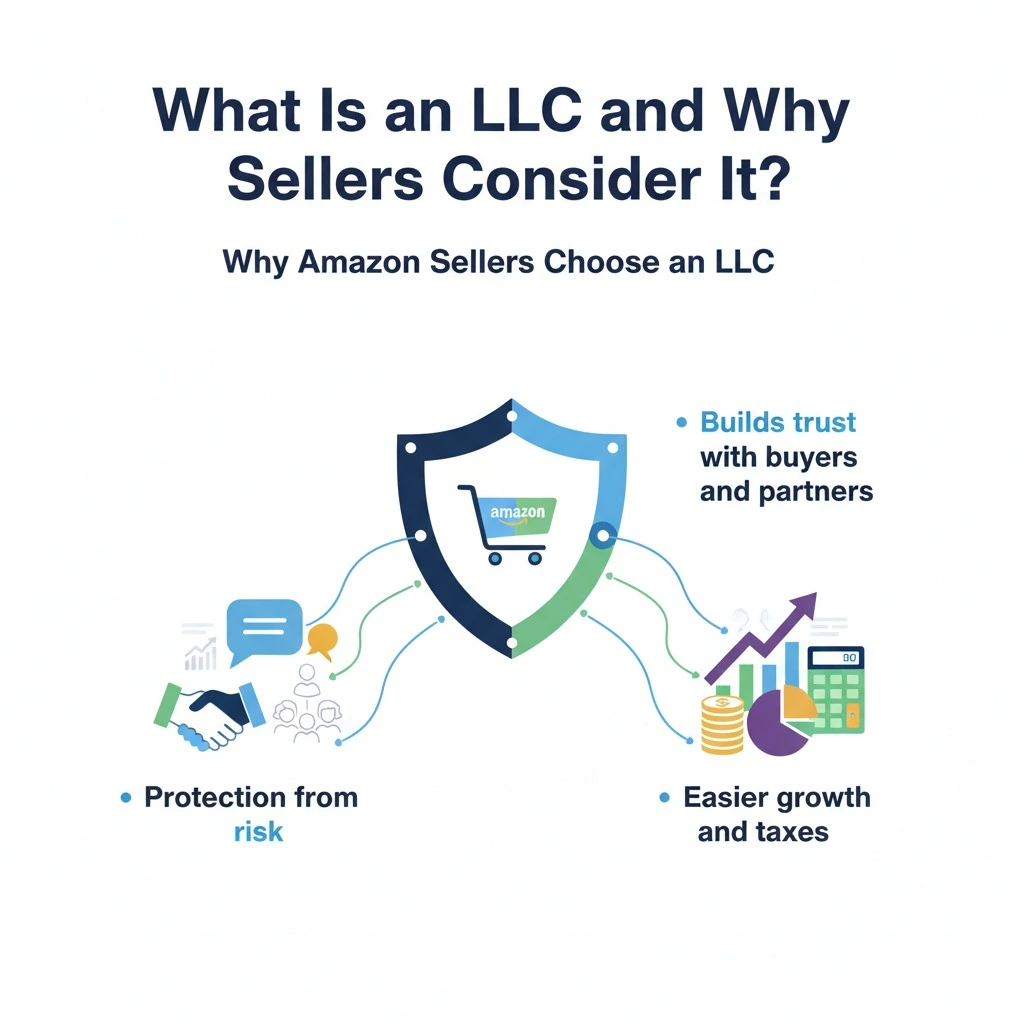
An LLC means Limited Liability Company. It is a business structure that protects your personal money and property.
If your Amazon business faces legal trouble, your home and savings stay safe. Only the money tied to your business is at risk.
Unlike structures like sole proprietorships or partnerships, an LLC keeps your business legally separate from your personal life.
That gives you legal protection and more control. Many Amazon sellers pick this structure to reduce risk and grow with confidence.
Why Amazon Sellers Choose an LLC
Most sellers ask, “do I need LLC to sell on Amazon?” because they want limited liability, a real business structure, and stronger legal protection for long-term growth. An LLC can help provide these benefits while keeping the rules simple and giving sellers flexible control over their business.
- Protection from risk: Product selling comes with legal risks such as customer complaints, returns, accidents and any other risks. An LLC shields your personal money and property if something goes wrong. This gives sellers peace of mind as they grow.
- Builds trust with buyers and partners: An LLC shows buyers and partners you’re serious. It adds professionalism to your Amazon Seller Central profile. Brands and suppliers also trust sellers more when they operate as a legal business.
- Easier growth and taxes: LLCs make it easier to open a business bank account, apply for loans, or add new partners. They also offer tax flexibility, letting sellers choose how their profits are taxed.
When Is the Right Time to Open an LLC for My Amazon Business?
There’s no universal answer to when you should start an LLC. Here’s how to know when it makes sense. Some sellers launch first and wait. Others form an LLC before listing their first product. It all depends on your goals and how far you plan to take your Amazon business.
If you’re just testing ideas with no steady income, you can wait. But if you’re growing fast or investing money, the right time may already be here. An LLC helps protect you, streamline your business, and prepare for bigger steps.
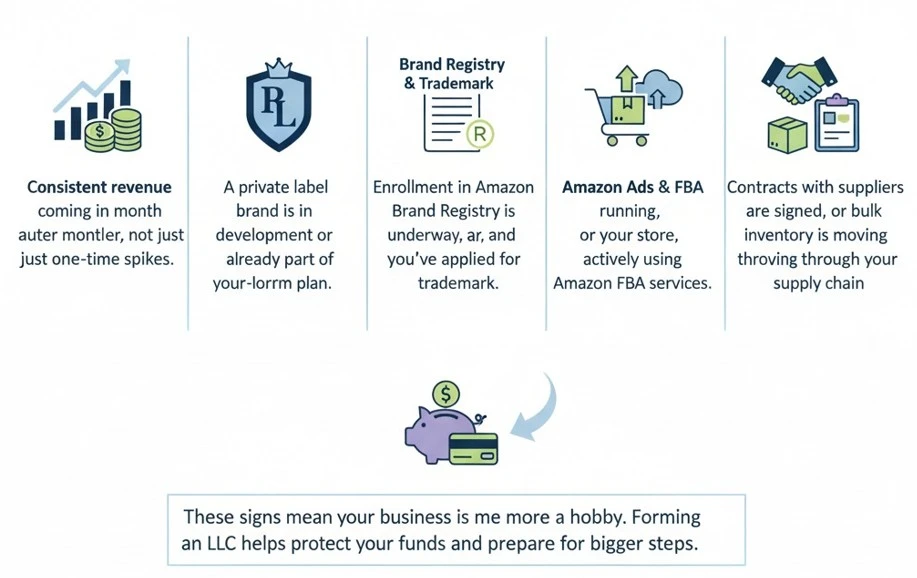
Here are clear signs you’re ready to form an LLC:
- Consistent revenue is coming in month after month, not just one-time spikes.
- A private label brand is in development or already part of your long-term plan.
- Enrollment in Amazon Brand Registry is underway, and you’ve applied for a trademark.
- Amazon ads are running, or your store is actively using Amazon FBA services.
- Contracts with suppliers are signed, or bulk inventory is moving through your supply chain.
These signs mean your business is more than a hobby. You’re managing risk, spending money, and planning for long-term success. Forming an LLC allows you to set up a business bank account, which helps separate and protect your funds.
We help businesses source LLC to sell on Amazon with the right setup, product planning, and seller strategy.
Our team guides you from LLC preparation to Amazon selling structure, so you can launch professionally and avoid costly mistakes.
How Much Does It Cost to Form an LLC?
The cost to form an LLC depends on your state. Most states charge between $40 and $500 to file. This is called a state filing fee, and it’s usually a one-time payment when starting your LLC.
State Filing Fees
LLC filing fees depend on the state you choose, and the cost can vary significantly across the country. Here are a few examples in the table below:
| States | Cost |
|---|---|
|
Wyoming |
$100 |
|
Florida |
$125 |
|
Texas |
$300 |
|
California |
$500
|
The table gives a quick look at how different each state can be. Wyoming and Florida keep costs low, which helps new sellers start with less risk. Texas is mid-range but doesn’t ask for yearly reports.
California costs the most and adds extra yearly taxes. Before you file, check what your state charges. That way, you won’t run into unexpected fees.
Other Costs to Expect
Once your LLC is filed, there may be other fees based on how your business will operate.
A registered agent accepts legal documents for your business. If you use a service, the fee is usually $50 to $300 per year. Some states require you to have a registered agent at all times.
Some sellers prefer using online services like LegalZoom or Rocket Lawyer. These platforms help with paperwork and charge between $100 and $500 based on the service level.
An EIN (Employer Identification Number) is used for tax purposes and to set up your business banking. You can get one for free directly from the IRS.
Certain cities or counties may ask you to get a business license. However, the cost and rules depend on your location and the type of products you sell. Always check local requirements early.
Do you need an LLC to sell on Amazon?

Amazon doesn’t require an LLC to start selling. You can open a seller account without forming a company.
Plenty of people begin as individuals. All you need is a name, address, and tax details. That works well for part-time sellers, side hustlers, or anyone just testing the platform.
But things change once sales pick up or you start treating your store like a real business. That’s when many sellers decide to form an LLC. It helps separate personal and business finances, which keeps things clean and less risky.
More importantly, an LLC makes you look more professional to suppliers, banks, and even customers. It also helps with planning. You can open a business bank account, manage taxes, and bring on partners more easily.
So, you don’t need an LLC. But if you’re thinking long-term, it might be the smartest next move.
Pros and Cons of Selling on Amazon as an LLC
Sellers with long-term goals usually start forming an LLC to build a strong business base. Some sellers keep it simple and sell as individuals. Others want more structure, protection, and tools to grow.
An LLC offers those advantages, but it also comes with extra costs and responsibilities. That’s why it’s important to weigh both sides before making your decision. Below, we’ve listed the key pros and cons of selling as an LLC.
Pros of Selling on Amazon as an LLC
- Liability protection keeps your personal money safe if your business faces legal issues.
- Your store looks more professional to banks, suppliers, and future partners.
- You can choose how your LLC pays business taxes, which helps with future planning.
- Business bank accounts are easier to open and help separate personal and company funds.
- LLCs support future growth, including adding partners or applying for business loans.
Cons of Selling on Amazon as an LLC
- Startup costs vary, and some states charge high filing and renewal fees.
- Ongoing costs include registered agent fees, business licenses, or legal services.
- More paperwork is required, including reports and financial tracking.
- Many sellers run stores without an LLC and still avoid legal or tax problems.
How Do You Set Up an LLC for an Amazon Business?
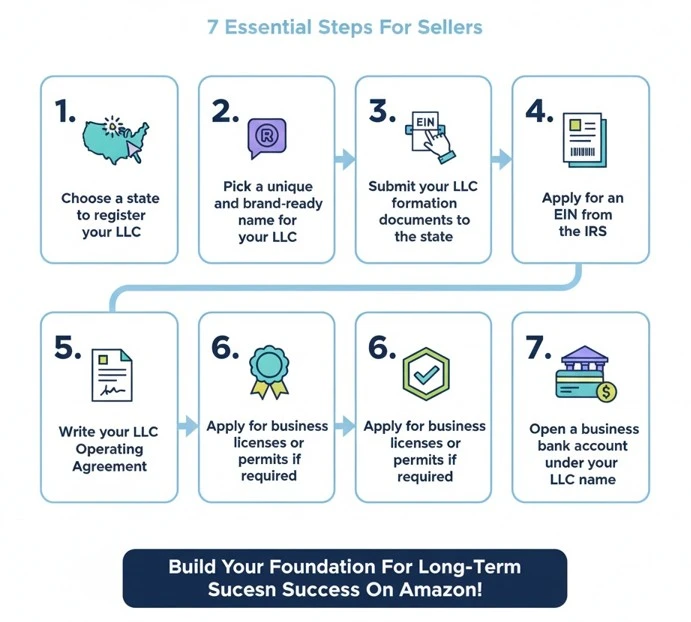
You may think LLC setup is hard, but the steps are simple when explained the right way. Each step helps you stay legal, stay organized, and build a real business. Here’s exactly how to create an LLC the right way.
1. Choose a state to register your LLC
You can register your LLC in your home state or pick a business-friendly option like Wyoming or Florida. Filing in your home state keeps things simple for taxes and renewals. Check your state’s website for state filing fees and local rules.
2. Pick a unique and brand-ready name for your LLC
Your LLC name must follow state rules and be different from any other registered business. Use a name that aligns with your branding and is easy for shoppers to keep in mind. You can check name availability through your state’s online business database.
3. Submit your LLC formation documents to the state
This document makes your LLC official. It includes your business name, location, and management structure. Some states call it a Certificate of Formation. You must pay a one-time state filing fee to complete this step. Many states let you file online.
4. Apply for an EIN from the IRS
Your EIN is used for business taxes and opening a business bank account. The IRS provides this number for free. Head over to the IRS site and fill out their short application to get your EIN. You’ll receive your EIN immediately after submitting it online.
5. Write your LLC Operating Agreement
An operating agreement explains how your LLC will run. It covers ownership, roles, and how decisions are made. Even if your state doesn’t require one, it’s smart to have this document. It protects your business in case of future disputes.
6. Apply for business licenses or permits if required
You may need a business license based on your product type and location. Rules can vary by city, county, or state. Check with your local government to see what permits or registrations apply to online sellers.
7. Open a business bank account under your LLC name
Create a separate account to track all money coming in and going out of your business. A separate account keeps your records clean and protects your liability. It also helps when filing business taxes and maintaining your liability protection.
LLC vs Sole Proprietorship: Which is Better?
If you’re stuck between an LLC and Sole Proprietorship, use this chart to see which fits your goals.
| Feature | Sole Proprietorship | LLC |
|---|---|---|
|
Legal Status |
Business and owner are the same legal entity. |
LLC creates a legal boundary between the business and its owner. |
|
Liability Protection
|
The owner is personally responsible for all debts and legal risks. |
Personal assets are protected from most business liabilities. |
|
Formation Process |
Easy to start with no formal registration. |
Must register LLC and file with the state.
|
|
Startup Costs |
No filing fees or legal setup costs in most cases. |
Includes state filing fees and possible legal paperwork costs.
|
|
Business Taxes |
Income taxed as personal income, includes self-employment taxes. |
Can choose pass-through or corporate tax treatment. |
|
Compliance Tasks |
No annual filings or operating agreements required. |
May need annual reports and an operating agreement. |
|
Banking Rules |
Business and personal funds are often mixed. |
Requires separate business bank accounts for protection. |
|
Growth Flexibility |
Harder to raise funds or add partners. |
Easier to scale, add members, or attract investors. |
|
Perception |
Perception
Seen as informal or unstructured by lenders and suppliers.
|
Viewed as more professional and credible.
|
Can You Sell on Amazon Without an LLC? Seller Central Account Requirements
Yes, you can sell on Amazon without an LLC. Amazon clearly allows individuals to register as sellers. During Seller Central registration, if your business is not incorporated, you can choose “None, I am an individual” as your business type.
To open an Amazon seller account, you still need proper verification details. Amazon may ask for your legal name, government-issued ID, residential address, phone number, tax information, bank account details, credit card, and proof of address. These requirements are about identity, payments, and compliance — not whether you own an LLC.
Selling as an individual is fine for beginners testing a product or starting with low risk. But if you plan to build a serious Amazon business, an LLC can help separate your personal and business finances, make accounting cleaner, and create a more professional structure.
LLC for Amazon FBA: Do FBA Sellers Need One?
No, Amazon FBA sellers do not need an LLC to start. FBA stands for Fulfillment by Amazon, which means Amazon stores, packs, and ships your products. It is a fulfillment method, not a legal business structure.
You can use FBA as an individual seller, sole proprietor, corporation, or LLC. Amazon’s main concern is whether your Seller Central account is verified, your tax interview is complete, your products follow Amazon policies, and your payment details are valid.
That said, serious FBA sellers should consider forming an LLC once revenue, inventory value, or product liability risk increases. If you sell private-label products, imported products, supplements, electronics, baby items, or anything with safety risk, operating without legal separation is a weak move. You may be allowed to sell without an LLC, but that does not mean it is always smart.
Amazon Seller Insurance vs LLC: Why an LLC Alone Is Not Enough
An LLC and seller insurance are not the same thing. An LLC may help separate personal and business liability, but it does not pay legal claims, product injury claims, property damage claims, or customer lawsuits. Insurance is what helps cover those financial risks.
Amazon requires commercial liability insurance after sellers exceed the applicable sales threshold or when Amazon requests it. Amazon’s current policy commonly refers to the $10,000 gross sales threshold in a month, and commercial liability coverage requirements can include at least $1 million per occurrence and aggregate coverage.
The blunt truth: an LLC without insurance is incomplete protection. If your product causes harm, catches fire, leaks, breaks, or injures someone, your LLC structure alone may not save you from serious financial trouble. For Amazon sellers, the stronger setup is proper account verification, clean bookkeeping, an LLC when the business becomes serious, and liability insurance before risk gets expensive.
Frequently Asked Questions(FAQs)
Curious about how an LLC fits into your Amazon journey? These common questions might give you some clarity.
Yes, you can switch at any time. You’ll need to form the LLC, get a new EIN, and update your Amazon seller account. It’s a common move when sellers start small and later decide to grow.
No, a lawyer isn’t required. Most sellers file the paperwork themselves through their state’s website. You can also use online services like LegalZoom or Incfile if you want help with the process.
Yes. With an LLC, you may need to file separate forms based on how it’s taxed. Most single-member LLCs still file on a personal return, but multi-member LLCs must file a partnership or corporate return.
Yes, you can use your home address if allowed by your state. However, some sellers prefer using a registered agent or virtual address for privacy and professionalism, especially when selling to large audiences.
No, Amazon doesn’t give special treatment to LLCs. However, an LLC helps with brand trust, working with suppliers, and preparing for the Brand Registry. It also signals you’re running a real business, which helps in many areas.
Forming an LLC for Amazon? Brands Bro Makes It Simple
If you’re unsure about forming an LLC, setting up your store, or organizing your listings, you’re not alone. Brand’s Bro has spent over 10 years helping Amazon sellers build real businesses that are structured, compliant, and ready to grow.
We’ve worked on everything from product listings and A+ content to full business setups which includes Amazon SEO and Amazon PPC. If you’re launching your first product or expanding your store, we’re here to help you do it right.
Have questions or need support with anything you read here? Reach out. We’d love to hear about your goals.
Send us a message or book a quick call. Let’s get your Amazon business started the right way.


