
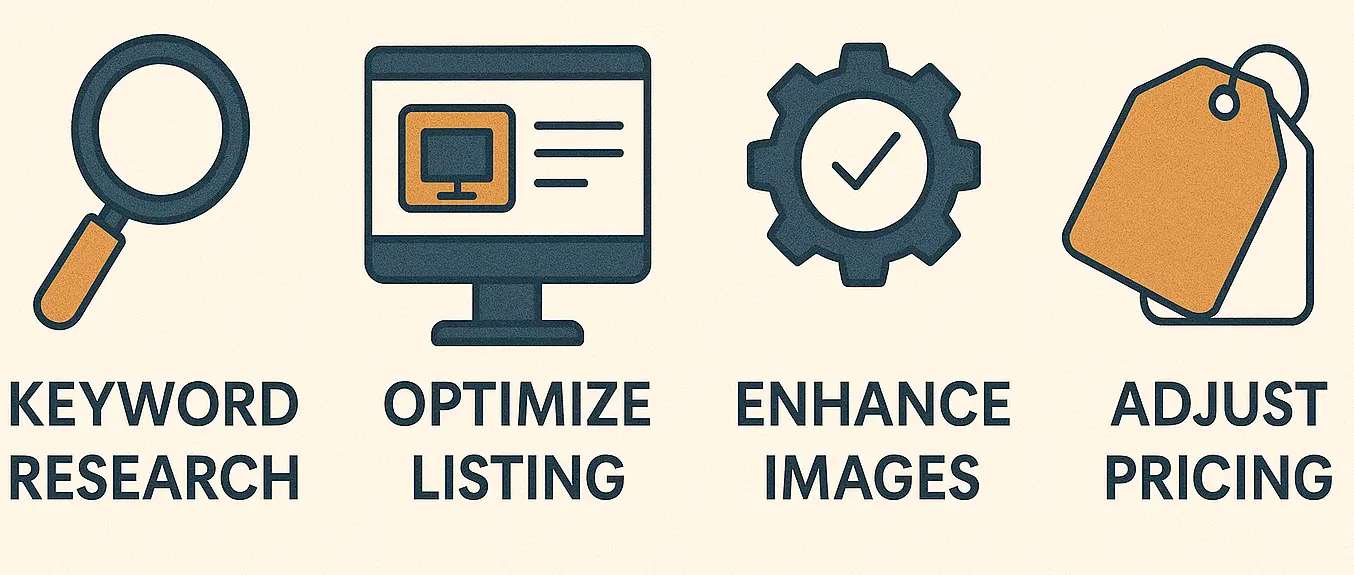
Ever wonder why some Amazon products rank higher? If yours doesn’t show up, you lose sales. Many sellers struggle with visibility. Without SEO, your product stays hidden. To avoid this problem, you need to know how to do SEO for Amazon Products.
It helps your product appear higher in search results. More visibility means more clicks and more sales. It’s how Amazon decides which products to recommend. Learning Amazon SEO gives you control over your product’s success.
In this guide, we’ll break down Amazon SEO step by step. You’ll learn how ranking works, which factors matter most, smart techniques to try, and advanced tips to grow. By the end, you’ll know how to boost visibility and turn searches into sales.
Understanding Amazon SEO
Amazon SEO is how sellers help their products get noticed on the platform. It makes listings appear higher when buyers search for certain terms. The goal is to rank near the top so more people see and buy your product. This system works differently from regular search engine optimization used for websites.
While Google focuses on helpful content, this platform focuses on sales. Here, relevance and performance decide rankings. If a product gets clicks and sells fast, it moves up. Sellers must optimize titles, keywords, and images to win.
The platform uses a smart system called the A9 algorithm. It decides which items show up first based on what people search for. A9 checks how well a listing matches a query and how likely it is to convert. Products with strong sales and good customer engagement tend to rank higher.
This means success depends on more than just keywords. Customer behavior, order speed, and listing quality all play a role. The better your product performs, the more visibility you gain over time.
Key Ranking Factors in Amazon SEO
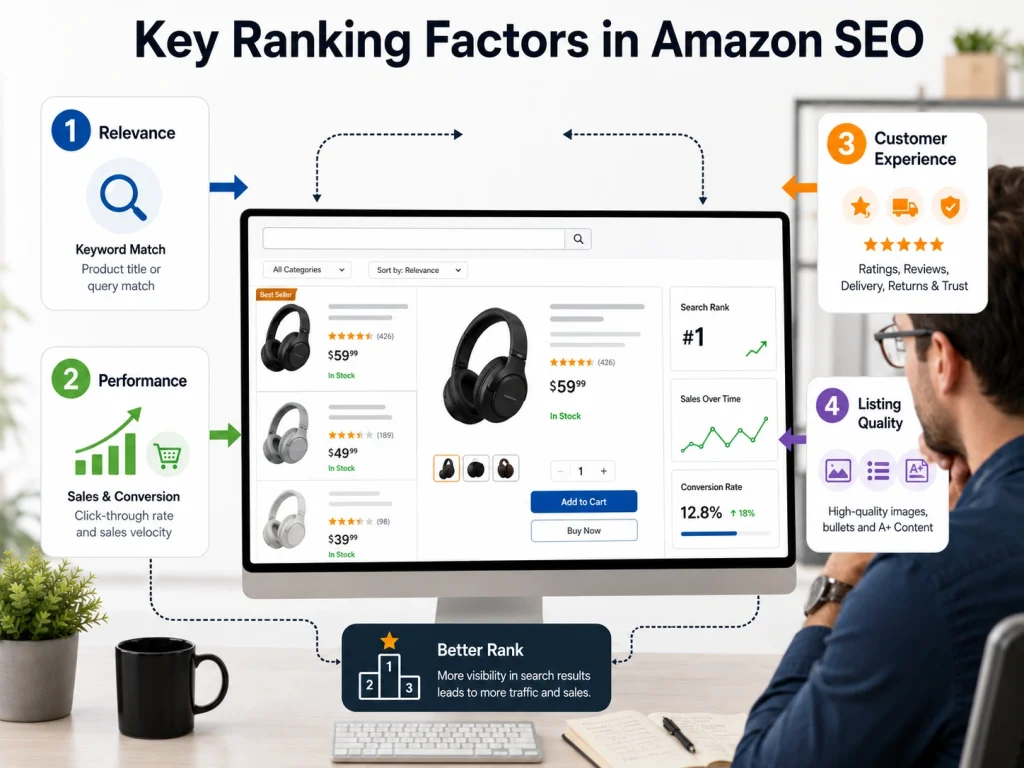
Amazon doesn’t rank products randomly. It uses clear signals to decide which items deserve top spots. If you want your product seen, you need to understand what Amazon values most. Four main factors influence your rankings: relevance, performance, customer experience, and listing quality.
Here’s how each one works.
1. Relevance
Amazon needs to know what your product is and who it’s for. That’s where relevance comes in. Keywords are the words buyers type when searching.
If your listing uses those same words, Amazon sees your product as a good match. This helps it rank higher in search results.
2. Performance
If your product gets clicks but doesn’t sell, Amazon may stop showing it. Performance means how well your product sells after being seen.
Fast sales and high conversion rates tell Amazon your product is popular. The more people buy after viewing, the better your rankings become over time.
3. Customer Experience
Buyers trust products with good ratings and real reviews. Positive feedback shows your product works as promised.
Amazon rewards listings with strong ratings by giving them more visibility. Quick responses to questions also build trust and help improve your standing in search results.
4. Listing Quality
First impressions matter. High-quality images show your product clearly and attract clicks. A well-written title and clear bullet points explain its benefits quickly.
Amazon favors listings that give buyers all the info they need. Strong visuals and clear details make your product stand out and convert better.
How to Do SEO for Amazon Products (Proven Techniques)
Amazon doesn’t show random products when people search. It uses a smart system to decide which items appear first. That’s where SEO comes in. It helps your product get seen by the right buyers.
Unlike Google, Amazon focuses on what people want to buy. This means SEO here is about more than just keywords. It also includes sales, reviews, and how clear your listing is.
The A9 algorithm checks all these things to rank products fairly. If you want more visibility and sales, you need to optimize your listing the right way.
In this guide, you’ll learn how to find the best keywords, write strong titles, use great images, create A+ content, and build trust with customer reviews. These proven strategies will help you boost rankings and grow your business.
Keyword Research for Amazon SEO
Amazon shows products based on what people search for. That means finding the right keywords is key to getting seen. These are the words buyers type when looking for something like your product.
Use tools like Helium 10 or Jungle Scout to find good keywords. They show how often people search and how much competition exists. Amazon also has a free tool called Product Opportunity Explorer that helps too.
Check what your top competitors are using. See which keywords they rank for. This gives you ideas and shows where you might be missing out.
Long-tail keywords are longer phrases with less competition. Short-tail keywords are shorter but harder to rank for. Use both to reach different types of buyers.
LSI keywords help Amazon understand your product better. They’re related terms that support your main keywords.
You can add hidden keywords in the backend of your listing. They don’t appear to customers, but still affect rankings. Use them to include extra terms without overloading your title or description.
Mix high-traffic and low-competition keywords. That way, your product appears where buyers actually look.
Optimizing Amazon Product Titles for SEO
Your product title is one of the most important parts of your listing. It tells buyers what you’re selling and helps Amazon understand your product.
Amazon allows 200 characters for titles. You need to make every word count. Start with your brand name. Then add the product name and key features.
Include your main keyword early in the title. This helps it show up when people search. Add other important details like size, color, or use case.
Avoid stuffing too many keywords. Keep it natural and easy to read. Overloading can look spammy and hurt your rankings.
Make sure your title answers the question: What is this product and who is it for? Clear, simple language builds trust and encourages clicks.
A well-written title improves both visibility and conversions. It tells Amazon and buyers exactly what you offer.
Writing Bullet Points That Convert
Bullet points are one of the most important parts of your Amazon listing. They help buyers understand what your product does and why they should buy it.
Each bullet should highlight a feature and explain how it helps the customer. Focus on solving a problem or making life easier.
Start with the most important features. Then, show how they solve real problems. This is called the feature-benefit method. It makes your listing more persuasive.
Use keywords naturally in your bullets. Don’t force them. Amazon rewards clear, helpful content that matches buyer searches. Think about what worries customers. Do they care about quality, ease of use, or long-term value? Answer those questions in your bullets.
Each point should highlight one benefit. Make sure it’s easy to read and gives useful info. Well-written bullets build trust and improve rankings. They help buyers make quick decisions and increase sales.
Optimizing Images and Video SEO for Amazon Products
High-quality images are one of the best ways to catch a buyer’s attention. Amazon shows listings with clear, bright photos more often. Make sure your main image has a white background and is high resolution.
Amazon allows up to nine images per listing. Use them all. Show your product from different angles. Include lifestyle images that show how it works in real life.
Add a short video if you can. Product videos help buyers see how your item looks and works. They also improve rankings and click-through rates.
Use alt text to describe your images. This helps Amazon understand what your product is. Keep it simple and use keywords that match your listing.
Good images and videos build trust and help your product rank higher. They make your listing look professional and increase sales over time.
A+ Content Optimization for Enhanced Brand Storytelling
Only registered brands can use A+ Content on Amazon. This lets you add more details beyond the basic product listing. You can include images, videos, and custom text to tell your story.
Use A+ Content to explain what makes your product special. Show how it solves a problem or fits into a buyer’s life. Make it clear why they should choose you over others.
You can add modules like comparison charts, lifestyle photos, and step-by-step guides. These help buyers understand your product better and build trust.
Test different versions of your A+ pages using A/B testing. See which content works best to increase clicks and sales.
Well-written A+ Content improves both rankings and conversions. It shows Amazon you’re a strong brand and gives customers more reasons to buy.
Customer Reviews and Ratings
Positive reviews and high ratings help your product rank higher on Amazon. They show buyers that others trust your product. Amazon also sees them as a sign of quality.
The more good reviews you have, the more likely Amazon will show your product in search results. Listings with few or negative reviews may get less visibility over time.
Ask customers to leave feedback after they receive their order. Use polite follow-up emails that offer help and request a review. Avoid asking only for positive reviews. This can break Amazon’s rules. Instead, focus on giving great service and let reviews come naturally.
Respond to negative reviews calmly and professionally. Show that you care about customer satisfaction. This helps build trust and improves long-term performance.
Good reviews boost both rankings and sales. They make your listing look trustworthy and increase buyer confidence.
Amazon PPC and SEO Synergy
Many sellers run Amazon ads without knowing they can help their product rank higher organically. You may spend money on Sponsored Products but still see little long-term growth. But what if your ad campaigns could boost your visibility naturally over time?
Here’s how to use Amazon PPC and SEO together to increase both traffic and rankings:
- Start by running Sponsored Products campaigns to find out which keywords get the most clicks and sales. This gives you real data about what buyers are searching for.
- Use the best-performing keywords from your ads in your product title, bullet points, and backend search terms. This helps your listing show up higher in organic results.
- Add negative keywords to avoid spending money on irrelevant searches. This lowers your ACOS and makes your targeting more precise.
- Keep an eye on the keywords that bring the most conversions. Update your listing regularly with these terms. As your relevance improves, so will your organic ranking.
- Don’t just focus on ads. Continue to improve your listing using the data you collect. Over time, this strategy can lead to a big jump in visibility.
Monitoring and Analyzing Performance
Tracking your Amazon listing’s performance helps you make smart changes. It shows what works and where you need improvement. Use data to boost rankings, increase sales, and stay ahead of competitors.
Here are the key areas to focus on:
- Click-Through Rate (CTR): Measures how often people click your listing when they see it. A higher CTR means your title and image are working well.
- Conversion Rate: Shows how many clicks turn into actual sales. This is one of the strongest signals Amazon uses to rank products.
- Sales Velocity: Tracks how fast your product sells. High velocity tells Amazon your product is in demand and deserves better visibility.
- Bounce Rate: Measures how many people leave your page without buying. A high bounce rate may mean your listing needs improvement.
- Amazon Seller Central Reports: Use built-in tools to track traffic sources, keyword performance, and sales trends over time.
- Third-Party Tools: Helium 10, Jungle Scout, and others give deeper insights into keywords, competition, and listing health.
- Competitor Analysis: Watch what top sellers are doing. Check their keywords, pricing, and reviews to find gaps and opportunities.
- Keyword Performance: Track which search terms bring traffic and sales. Update your listing regularly with high-performing keywords.
- Adjust Strategy: Use what you learn from data to improve your listing. Small updates can lead to big improvements in rankings and sales.
Advanced SEO Strategies
Amazon SEO doesn’t stop at keywords and product listings. To grow long-term, you need to go beyond basic optimization. Using advanced strategies helps you reach more buyers, improve rankings, and build a stronger brand presence.
Here are powerful tactics to take your Amazon SEO to the next level:
External Traffic Sources
Drive visitors to your listing from outside Amazon. Use social media platforms like TikTok, Instagram, and YouTube to promote your products. When people search for your product on Amazon after seeing it online, it signals popularity to the A9 algorithm.
Influencer Marketing
Partner with influencers who connect with your target audience. Micro-influencers can be especially effective. They help build trust and drive targeted traffic that often converts well.
Seasonal Optimization
Prepare your listing for peak seasons like Black Friday or Christmas. Update titles, images, and bullet points to match seasonal demand. This makes your product more relevant during high-traffic periods.
Global Expansion
If you’re ready to scale, use Amazon Global Selling. Optimize listings for different regions by translating content and researching local keywords. This opens up new markets and increases sales potential.
Retargeting Ads
Bring back shoppers who viewed your product but didn’t buy. Use retargeting ads on Facebook or Google to remind them of your offer. This improves conversion rates and strengthens your SEO performance over time.
Future Trends (Voice, AI, Amazon Live)
Amazon SEO is always changing. New tools and buyer habits mean sellers need to stay ahead. Here are three big trends shaping the future.
Voice Search
Voice search lets buyers find products by speaking their queries. More people use Alexa or Google Assistant to shop. Optimize your listing with phrases buyers are likely to say out loud.
Use question-style keywords like “best travel mug” or “waterproof earbuds.” Add these phrases in titles, bullet points, and backend keywords to rank higher in voice searches.
AI Tools
Artificial intelligence is changing how sellers build product listings. Tools like ChatGPT help write clear, keyword-rich content fast. You can use AI prompts to generate strong bullet points or FAQs.
Try prompts like “Write five bullet points for a wireless charger.” Make sure to review and tweak the output to match Amazon’s style and your brand voice.
Amazon Live
Amazon Live lets sellers do real-time video shopping shows. This helps buyers see your product in action. It also builds trust and increases visibility on the platform.
Set up live sessions to show features, answer questions, and offer deals. Use keywords in your session title and description to help Amazon suggest your video to more shoppers.
Optimize for Alexa
Alexa shopping is growing fast. Buyers ask Alexa to find items based on need or problem. Your listing must match what they’re looking for to win these sales.
Think about how customers describe your product and add those phrases to your listing. The better your match, the more likely Alexa will suggest it.
AI for Amazon SEO
AI tools don’t just write content, they help you find keywords, track trends, and improve performance. Some tools even test listing variations to see what works best.
Common Mistakes to Avoid
Many sellers lose sales because of small SEO mistakes. These errors can hurt rankings and make it harder for buyers to find your product.
Fixing them helps improve visibility and grow your Amazon business.
- Keyword Stuffing: Try to fit too many keywords into titles and descriptions. This looks spammy and lowers trust.
- Ignoring Mobile Optimization: Don’t check how your listing looks on phones. Many buyers shop from mobile devices.
- Low-Quality Images: Use blurry or low-resolution photos. Clear, professional images help you win clicks.
- Poor Product Descriptions: Write vague or copycat text. Focus on benefits and solve customer problems clearly.
- Not Using A+ Content: Skip brand storytelling even if you qualify. A+ Content builds trust and boosts conversions.
- Bad Review Management: Let negative reviews sit without responding. Handle them professionally to keep buyers happy.
- Non-Compliance with Amazon Rules: Break Amazon’s policies. This can lead to penalties or being banned.
Amazon Backend Search Terms: How to Use Hidden Keywords Correctly
Amazon backend search terms are hidden keywords added inside Seller Central to help Amazon understand what your product should appear for. Shoppers do not see these keywords, but Amazon can use them for indexing and search relevance.
Use backend search terms for keywords that do not fit naturally in your title, bullets, or description. Good examples include synonyms, alternate spellings, abbreviations, and long-tail keyword variations. Amazon’s own guidance recommends using search terms effectively, including synonyms and staying within the search term length limit.
Do not repeat keywords already used in your visible listing. Repetition wastes space and does not make your product more relevant. Also avoid competitor brand names, misleading claims, irrelevant keywords, punctuation stuffing, and promotional words like “best,” “cheap,” or “free shipping.”
How to Check If Your Amazon Product Is Indexed for Keywords
Amazon keyword indexing means your product can appear in search results for a specific keyword. If your ASIN is not indexed, ranking for that keyword is almost impossible, even if you run ads or add the keyword later.
The simplest way to check indexing is to search Amazon using this format: keyword + ASIN. If your product appears in the results, it is likely indexed for that keyword. For example, search “stainless steel garlic press B0XXXXXXX” and check whether your product appears.
You should test your main keywords, backend keywords, and PPC search terms regularly. If a keyword is not indexed, add it naturally to the title, bullets, description, A+ content, or backend search terms. Front-end placement usually carries stronger relevance than backend placement.
Amazon SEO Launch Plan: What to Do in the First 30–90 Days
In the first 30 days, focus on indexing and conversion. Build a keyword-rich title, clear bullet points, strong images, A+ content, and backend search terms. Your goal is simple: help Amazon understand the product and help shoppers buy it.
From days 30 to 60, review PPC data, search term reports, click-through rate, conversion rate, and keyword ranking. Move high-converting PPC terms into your listing content. Remove weak or irrelevant terms that bring clicks but no sales.
From days 60 to 90, improve ranking signals. Increase reviews, optimize price, test main image changes, update bullets, and expand keyword coverage. At this stage, Amazon SEO should not be random editing. It should be based on real keyword, sales, and conversion data.
The biggest mistake is treating Amazon SEO as a one-time setup. A strong launch plan checks indexing first, then improves ranking, then scales the keywords that already prove they can generate sales.
Frequently Asked Questions (FAQs)
Have more questions about optimizing your Amazon listings? Below are some frequently asked questions that go beyond the basics to help you rank higher and sell more.
You should review and refresh backend keywords every 4 to 8 weeks using Seller Central analytics and search tool insights. Update only when introducing new relevant terms or seasonally trending keywords to avoid disrupting listing relevance.
Popular tools like Jungle Scout, Helium 10, and SEMrush allow you to analyze competitor ASINs, keyword rankings, and search volume. They reveal high-performing keywords and PPC strategies to inform your optimization efforts.
Yes. Over 70 percent of Amazon traffic comes from mobile devices. Use concise bullet points, mobile-friendly images, and readable titles to improve clicks and conversions, which boosts both SEO and sales performance.
Yes. PPC campaigns increase sales velocity, which Amazon sees as relevant. Ads can indirectly help improve organic rankings by generating early clicks and conversions that build listing credibility.
Customer reviews and ratings influence conversion and ranking. More positive reviews signal quality to Amazon’s algorithm. Timely responses to negative reviews also help maintain strong listing performance and customer trust.
Need Expert Help To Boost Your Amazon Product Rankings?
With over a decade of Amazon experience, Brand’s Bro helps sellers improve visibility and drive consistent sales through proven SEO techniques. We’ve optimized thousands of listings to perform better in search results, resulting in higher clicks, conversions, and revenue.
Our team specializes in keyword research, title and bullet optimization, A+ content creation, and PPC alignment. Each listing is crafted to rank stronger and convert more shoppers into customers.
Ready to get your products ranking and selling on Amazon?


