
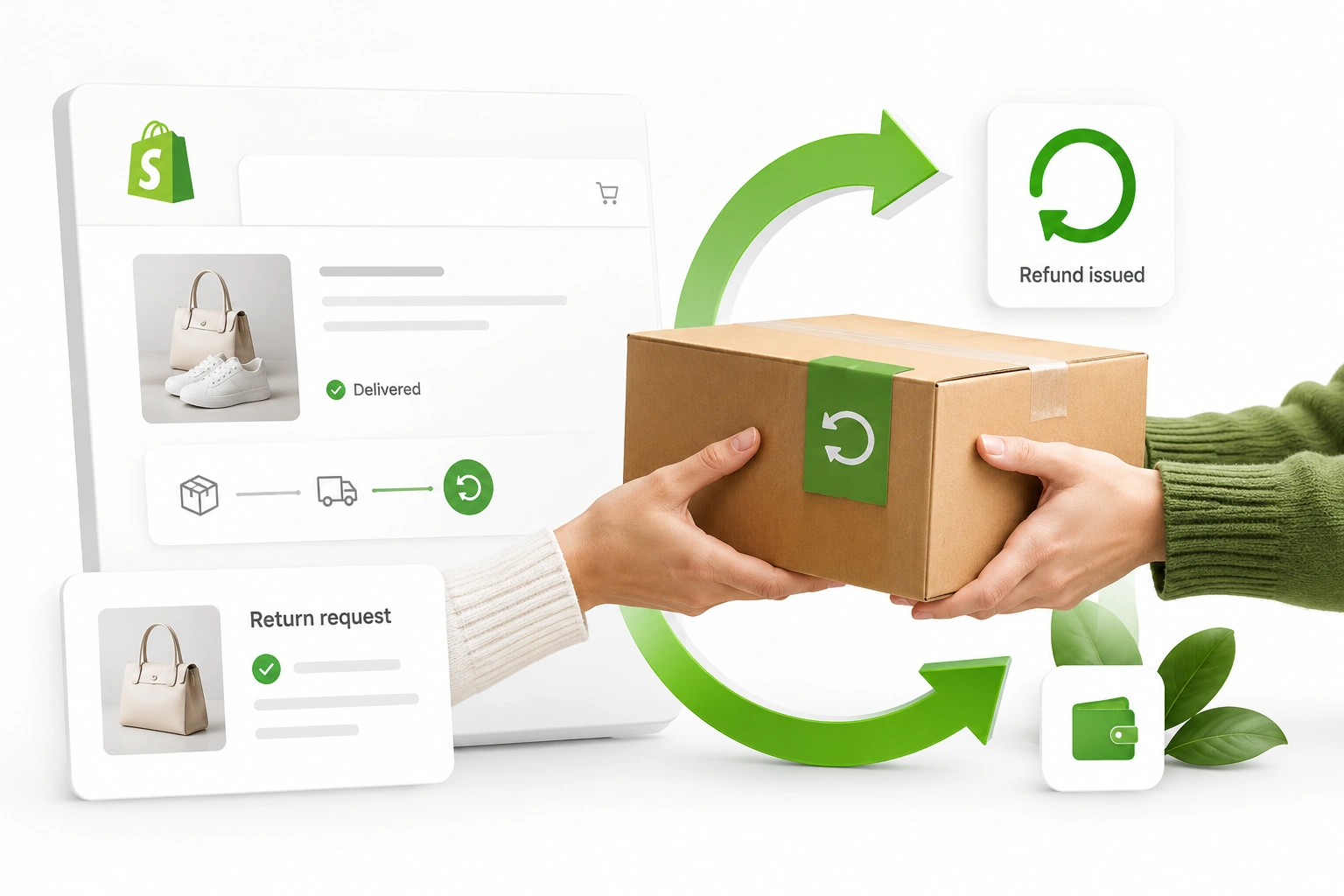
Returns are normal in ecommerce, but a high return rate is a warning sign. If too many Shopify customers are sending products back, the issue is not always the product itself. It can come from unclear product descriptions, poor sizing guidance, weak product images, wrong customer expectations, slow support, shipping damage, or a confusing return process.
At Brand’s Bro, we have spent over 11 years helping Shopify and ecommerce brands reduce returns, improve customer trust, and increase profitable sales. Our team has worked with 350+ Shopify businesses across the USA, Canada, the UK, and Australia, including brands in fashion, beauty, home goods, electronics, lifestyle, and health-focused ecommerce.
We have seen many Shopify stores lose profit because they treated returns as only a customer-service problem. That is a mistake. Returns are often connected to product-page clarity, customer education, shipping experience, and post-purchase communication. In one Shopify fashion project, the brand was struggling with frequent size-related returns. After improving size charts, product descriptions, product images, and FAQ sections, return requests dropped by 37% within 80 days, while repeat purchases increased by 46%.
For a home goods Shopify store, we improved product expectation setting, delivery communication, packaging guidance, and customer support flow. As a result, avoidable return cases decreased by 31%, and monthly revenue became more stable because fewer completed orders were being lost after purchase.
The average Shopify return rate depends on the product category, but the impact is always serious. High returns reduce profit, create inventory problems, increase support workload, and weaken ad performance. More sales do not matter if too many orders come back.
In this guide, we’ll explain the average Shopify return rate, the main reasons customers return products, and how to reduce returns using better product pages, clearer policies, stronger visuals, accurate sizing support, customer education, and smarter post-purchase communication.
If your Shopify store is getting sales but losing profit through returns, Brand’s Bro can help you find the real cause and build a return-reduction strategy that protects your revenue. You can book a meeting with us today.
What Is a Normal Shopify Return Rate?
A normal Shopify return rate varies depending on what you sell. If you sell clothing, your return rate will likely be higher than for home decor. It is important to know your industry’s Shopify return rate benchmark.
The average ecommerce return rate usually ranges from 20% to 30%. Some industries experience even higher numbers during the holiday season. However, the average Shopify return rate varies by niche.
For high-fashion brands, this number can climb as high as 40%. In contrast, electronics or beauty products often see a Shopify return rate benchmark of 5% to 10%. If your rate is significantly higher than these numbers, you have a problem with your product or your presentation.
The table below shows ecommerce return rate benchmarks in different industries:
Industry Category | Average Return Rate | Benchmark Status |
Apparel and Fashion | 25% to 35% | High Risk |
Electronics | 5% to 12% | Medium Risk |
Home and Garden | 10% to 15% | Medium Risk |
Beauty and Personal Care | 4% to 7% | Low Risk |
Luxury Goods | 10% to 12% | Medium Risk |
Footwear | 18% to 25% | High Risk |
Jewelry and Accessories | 7% to 10% | Low to Medium Risk |
Knowing the normal Shopify return rate by industry helps you set realistic goals for your store. Once you understand the average return rate Shopify stores face in your niche, you can start looking at why these returns happen.
Now that you know the benchmark, let’s understand the reasons behind returns.
Why Customers Return Products on Shopify?
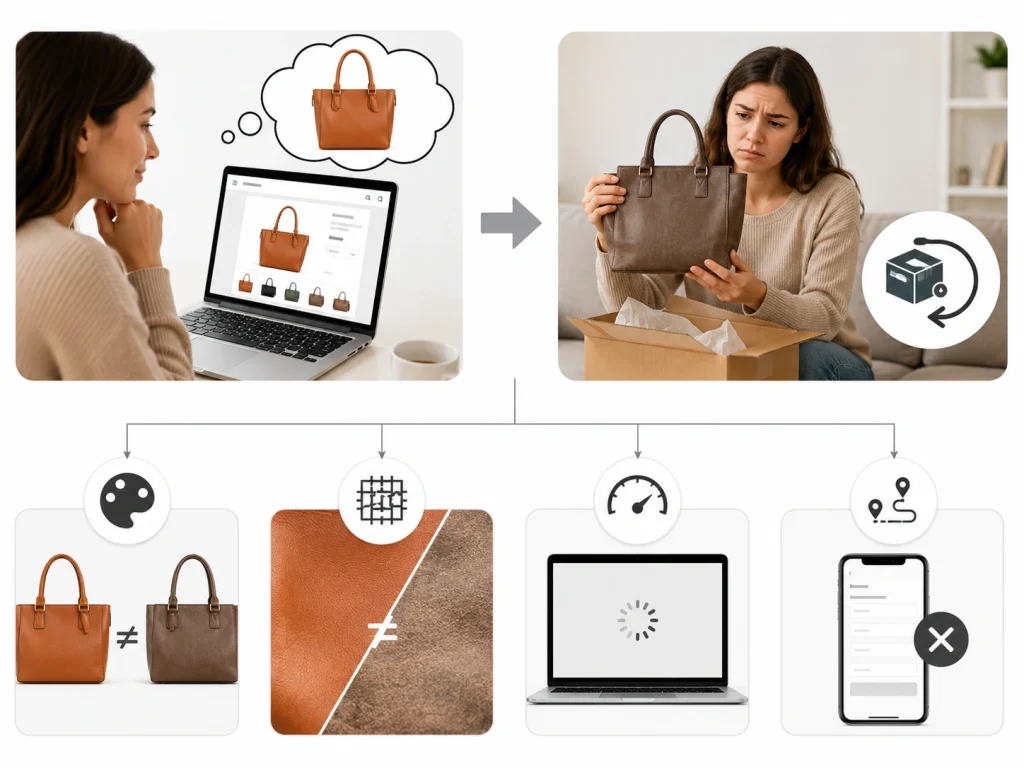
There are many reasons for ecommerce returns. In our experience, most returns happen because of a gap between expectation and reality. The customer expects one thing based on your website, but they receive something else.
This leads to disappointment and a return request. If the product arrives and does not look like the photo, the customer feels misled.
Customers might feel the color is different from what they saw on the screen. They might feel the material feels cheaper than it looked in the professional studio photos.
In many cases, we also see that poor site performance and broken user flows increase confusion. Proper store structure and speed improvements can fix these issues. Many brands invest in Shopify store development solutions to support long-term return reduction.
Most Common Reasons for Ecommerce Returns
Here are the most common points we find:
- The product does not match expectations
- The size of the product is wrong
- The product is damaged
- The product quality is poor
- There is a delay in delivery
- The product looks different in real life
- The customer no longer needs the item
By identifying these gaps, you can start improving your website content to prevent future returns. When you fix these issues, you also improve your conversion rate.
Now let’s move to one of the strongest solutions.
BrandsBro helps Shopify stores reduce return costs by improving product pages, size guides, return policies, and customer expectations before purchase.
We build a smarter return-reduction system so you lose less money, handle fewer returns, and protect your profit.
How Product Descriptions Reduce Shopify Returns
Product pages play a major role in Shopify return rate optimization. Weak pages lead to confusion. Confusion leads to returns.
Many store owners write short or vague descriptions to save time. This is a big mistake. A good description should answer every possible question a customer might have.
It is also important to attract the right kind of traffic to your site. We believe that expert technical SEO helps you rank for the right keywords. This way, people can find what they are actually looking for.
The product pages should describe the texture of the materials. They should mention the weight of the items. And they should definitely point out the specific features and how they work in real life.
Detailed Product Descriptions to Reduce Returns
A strong product page should include:
- Exact specifications
- Material details
- Fit and usage explanation
- Honest limitations
Customers trust clarity. When you explain everything properly, returns will drop. Good product descriptions reduce returns and increase profit.
High Quality Product Pages Improve Customer Decisions
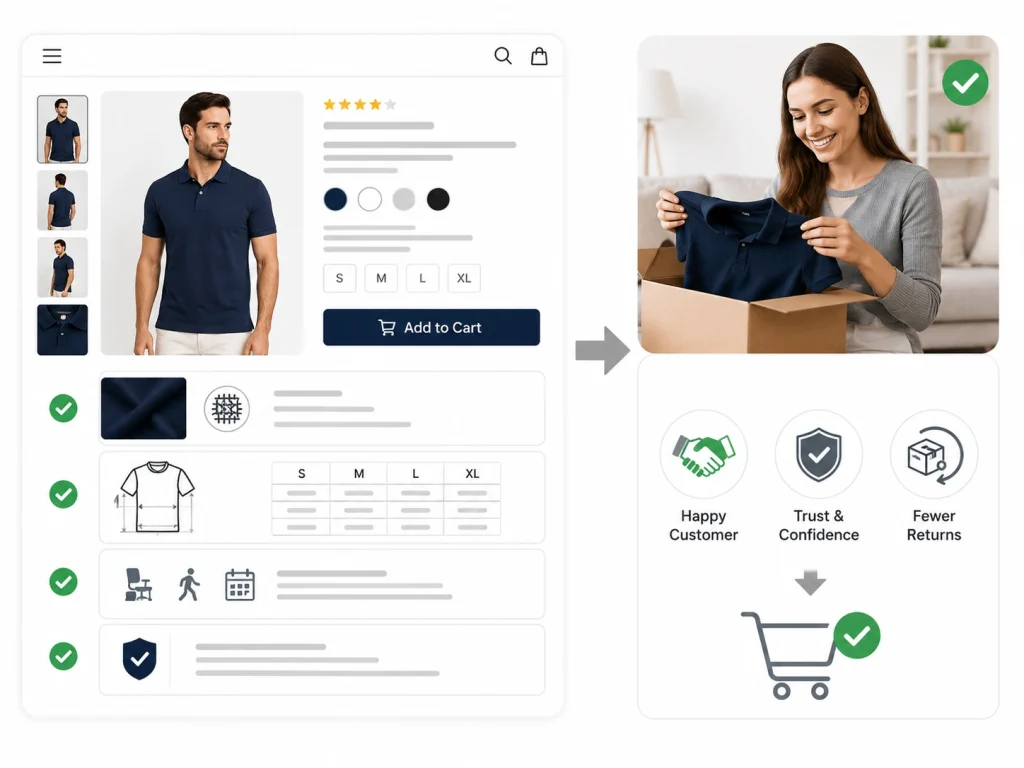
Clear product pages help customers make informed choices. This supports strategies to lower ecommerce return rate.
For example, when you explain fabric thickness or product usage clearly, customers know what to expect. This is one of the best strategies to lower ecommerce return rate for any store.
When your descriptions are accurate, you build a loyal customer base that knows what to expect. This trust leads to a better relationship with your buyers. After descriptions, your policies also play a huge role in building that trust.
How Size Guides and Product Images Reduce Returns
Visuals are the most important part of the online shopping experience. If your photos are low quality, customers cannot see the details. This is why high-quality product images lower returns.
You should use high-resolution photos from multiple angles. Furthermore, you can reduce returns with 360 product views that show how the item holds its shape during use. This visual proof is a key step in Shopify return rate optimization.
Using accurate size guides gives the customer a physical reference. You should provide actual measurements instead of just using a standard “S, M, L” chart.
For clothing brands, you can help your customers find the right size by using a Shopify fit finder for apparel. Adding a virtual try-on is another great way to give shoppers more confidence. This stops the common problem of products looking different in person than they did online.
Return Policy Best Practices for Shopify Stores
Your Shopify return policy is a tool for trust. If you have a confusing or hidden policy, customers will feel puzzled.
As it influences both conversions and returns, it is better to keep your return policy fair and simple. If the return policy is too strict, buyers will hesitate to purchase something. If it is too vague, buyers will lose trust.
Here are some key elements of an effective ecommerce return strategy:
- Use a dedicated landing page that is easy to read and understand
- Offer an easy self-service return portal for the customer to use
- Be clear about what items are final sale and cannot be sent back to you
- Communicate the expected timeline for refunds or exchanges very clearly
- Include an FAQ section to address common concerns
A transparent policy builds authority and makes your store look more professional. It shows that you value safety and honest choices in your business operations.
Now let’s focus on understanding the difference between refunds and returns.
Shopify Returns vs Refunds: What Store Owners Should Track
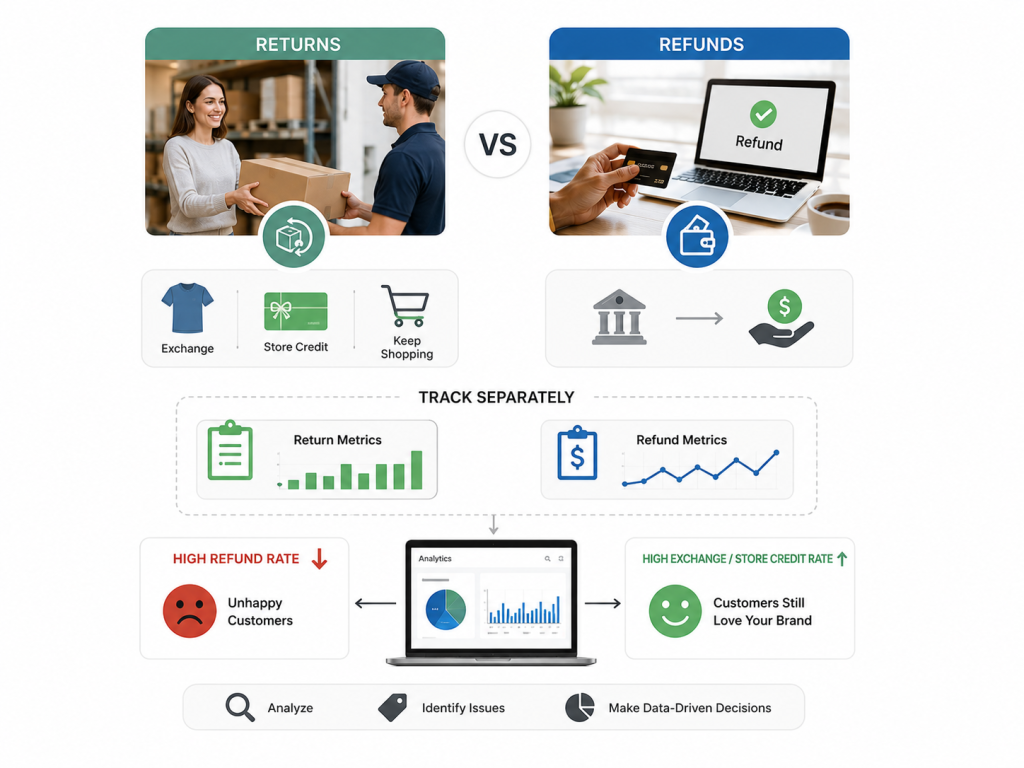
A return happens when a customer sends a product back to you. On the other hand, a refund is when you give the customer their money back.
Sometimes, a customer might return an item but choose an exchange for a different size. They might choose a store credit. In this case, you have a return but not a full refund of the cash.
You should be tracking Shopify refund metrics data separately from your return data. This helps you understand how much actual cash is leaving your business account.
If your refund rate is very high, it might mean that customers are unhappy with your brand as a whole. If they are choosing exchanges, it means they still like your brand. They just got the wrong item or the wrong size.
Calculating ecommerce return rate properly allows you to see how your store is performing. Knowing these numbers allows you to cut the products that are hurting your business.
Average Shopify Return Calculator
Brand’s Bro ASR Calculator
Average Shopify Return Rate
To calculate your average return rate, divide the total number of returned items by the total number of items sold, then multiply by 100. For example, if you have 50 returns out of 500 sales, your Shopify returns average return rate is 10%.
Tracking this metric monthly allows you to spot trends. It also identifies which specific products are hurting your margins.
How Email Marketing Helps Reduce Product Returns
Many store owners think email marketing is only for making sales. However, you can strategically reduce refunds with email flows. You can do this by engaging with the customer immediately after the purchase.
Marketing does not stop after the customer clicks the “buy” button. You can send post purchase emails to reduce Shopify returns by staying in touch during the shipping process.
We have found that Klaviyo marketing is excellent for keeping the conversation going after the sale. Many brands use Klaviyo to set up these specific post-purchase flows. This platform allows you to segment your customers based on what they bought.
Lower Returns and Refunds with Better Product Content
Emails guide customers after purchase. They reduce confusion and improve satisfaction. Here are some effective ways to use email marketing to reduce returns:
- Send usage instructions
- Share care guides
- Provide support access
You can also use automated return feedback flows to ask for feedback early. This is a smart way to reduce returns on Shopify without spending more on ads.
Now we must look at the darker side of returns, which is abuse and fraud.
Preventing Shopify Return Fraud and Abuse
Not all returns are honest. ‘’Ecommerce return abuse’’ is a growing concern for online sellers today.
This includes wardrobing. This is where someone buys an outfit and wears it once for a special event. They then return it the next day for a full refund.
Some claim false damage. Others take advantage of weak return rules. As a result, protection from return abuse in ecommerce is a growing necessity for many Shopify stores.
Excessive returns hurt business profit. At Brand’s Bro, we have worked with stores on preventing Shopify return fraud by identifying patterns. We recommend using software that tracks customer behavior over time.
If a customer returns 90% of everything they buy, you may need to flag their account. This is a key part of managing the serial returner’s impact on your business.
Case Study: Reducing Return Rates for a Fashion Brand
We recently partnered with a boutique Shopify store specializing in traditional wear. The brand was facing a high return rate that threatened its profit margins. Each return meant increased shipping costs and potential damage to artisanal materials.
What We Found
When we analyzed their data, we found their return rate was 32%. The key problems included “size and fit” issues and “color mismatch”.
The product pages lacked clear measurements for different draping styles. They only featured static photos. Short descriptions failed to explain the unique texture of cotton and silk fabrics.
What We Did
We implemented a detailed size guide with specific measurements for traditional wear. To solve the color issues, we added high-resolution images showing the fabrics in both natural and indoor lighting. We also used automated email flows to send “Draping & Care Guides” immediately after a purchase was delivered.
Results After Optimization
Within a couple of months, the overall return rate dropped from 32% to 12%. Returns related to sizing and color expectations fell by 45%. This strategy proved to be highly effective in reducing Shopify returns.
Best Shopify Return Management Apps
Manual return management is inefficient. We can simplify the process by using apps. As you grow, you should look for the best Shopify return management apps to automate the process.
The right apps can automate labels, exchanges, tracking, and customer updates. These apps provide a “returns portal” where customers can start a return without emailing you.
We have found that automated return software for Shopify also helps you gather better data. These apps force the customer to choose a reason for the return before they get a label. If you decide to switch platforms, a professional Shopify Migration helps keep your customer records and return history safe during the move.
Some apps for ecommerce returns even offer features like instant exchanges. This allows the customer to pick a new item before they even send the old one back to you. We often look at loop returns vs aftership returns to see which fits a brand best.
App Name | Key Features | Best For |
Loop Returns | Focuses on exchanges and store credit | Brands looking to retain revenue |
AfterShip Returns | Simple portal and automated labels | Global shipping and tracking |
Returnly | Offers instant credit for shoppers | Improving the customer experience |
EcoReturns | Uses AI to reduce returns and carbon footprint | Reducing return abuse |
How to Turn Returns Into Repeat Customers?
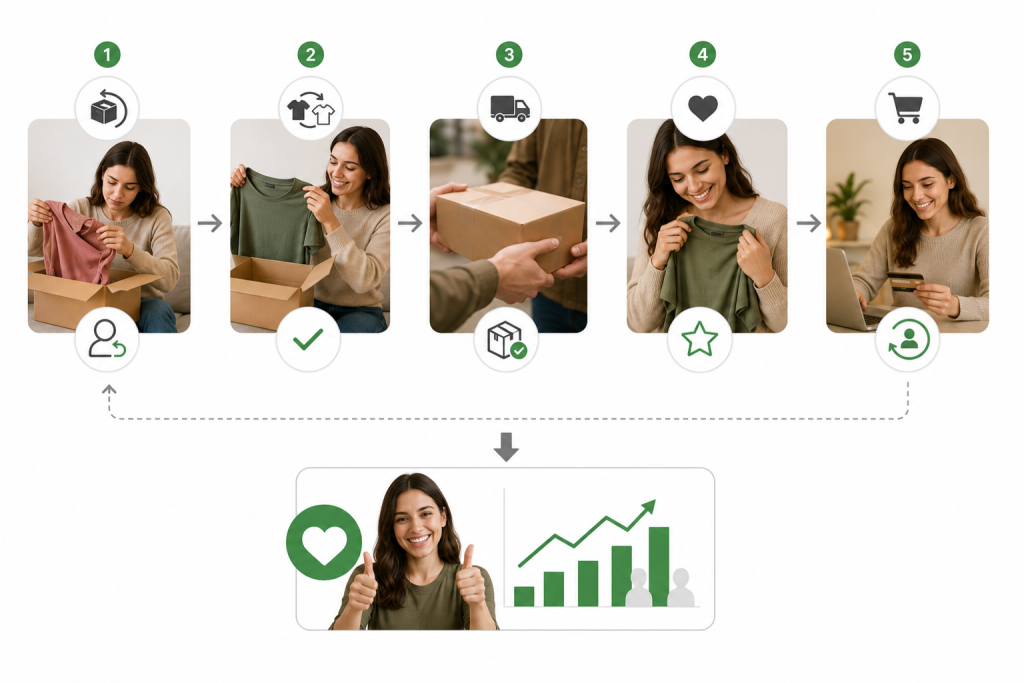
A return does not have to be the end of the story. You can convert returns into exchanges for Shopify. All you have to do is follow some key steps.
Incentivized Exchanges for Customer Retention
Some post-return customer retention strategies include:
- Offer an exchange before a refund when it fits
- Send a helpful follow-up after the return is closed
- Recommend a better fit or better match
- Send a personal apology note if a product was defective.
- Thank the customer for the chance to fix the issue
- Keep the tone calm and human
You can turn returns into repeat sales by treating the situation like service, not failure. This builds long-term value and helps keep lifetime value stronger.
How to Create a Return for a Shopify Order
Creating a return for a Shopify order starts inside your Shopify admin. Go to Orders, open the order the customer wants to return, and click Return. From there, select the item quantity, choose a return reason, and confirm the return details.
A Shopify return should clearly show which products are coming back, why the customer is returning them, and whether any restocking fee or return shipping fee applies. This helps store owners avoid refund mistakes and gives customers a clear return process.
You can also add exchange items while creating the return. This is useful when the customer wants a different size, color, or replacement product instead of a refund. For ecommerce stores, exchanges can help protect revenue instead of losing the full sale.
After the return is created, wait until the returned item arrives and is inspected before issuing the refund. Shopify allows merchants to process a full or partial return depending on the condition of the product and the store’s return policy. Shopify notes that merchants can manage returns directly from the Orders page and issue refunds after inspection.
Shopify Return Labels and Return Shipping Options
Shopify gives merchants several return shipping options when creating a return. You can create a return label in Shopify, upload your own return label, or choose No shipping required if the item does not need to be sent back.
The Create a return label in Shopify option is available only when both the store’s primary location and the customer shipping address are in the United States. This is the easiest option for U.S.-based returns because the label can be sent directly to the customer from Shopify.
If you already use another carrier, 3PL, or external shipping tool, you can upload an existing return label. Shopify supports label uploads as PDF, PNG, or JPEG files, and you can also add a label URL, tracking number, and shipping carrier.
For products that do not need to be returned, such as damaged low-cost items or goodwill refunds, choose No shipping required. This keeps the return record clean without forcing unnecessary shipping steps. The best option depends on your return policy, product value, shipping cost, and whether the item needs inspection before refunding.
Frequently Asked Questions (FAQs)
Handling returns is a big part of running a successful online store. Here are the answers to some common questions about managing your Shopify returns.
You can reduce returns on Shopify by using clear photos and accurate size guides. Detailed product descriptions also help customers know exactly what they are buying.
Yes, a transparent return policy builds customer trust and encourages more sales.
The average Shopify return rate is usually between 20% and 30%. This varies by industry, with apparel seeing the highest rates.
Yes, post purchase emails reduce returns, educate the customer, and prevent frustration.
Yes, the best Shopify return management apps like Loop Returns and AfterShip can automate your portal and offer exchanges.
Boost Your Profit Margins by Reducing Shopify Returns
Lowering your return rate is the fastest way to grow your profit without spending more on ads. Better product data and clear policies build the trust needed to drive more sales. Update your most returned pages with better guides to see immediate results.
A simple return process helps you keep more customers over time. Do not let hidden costs slow down your business growth. Focus on accuracy and customer satisfaction to build a brand that lasts.
Start optimizing your store for higher conversions and fewer returns today. Reach out to Brand’s Bro now to turn your return process into a growth tool. We can help you build a more sustainable and profitable Shopify store.
