
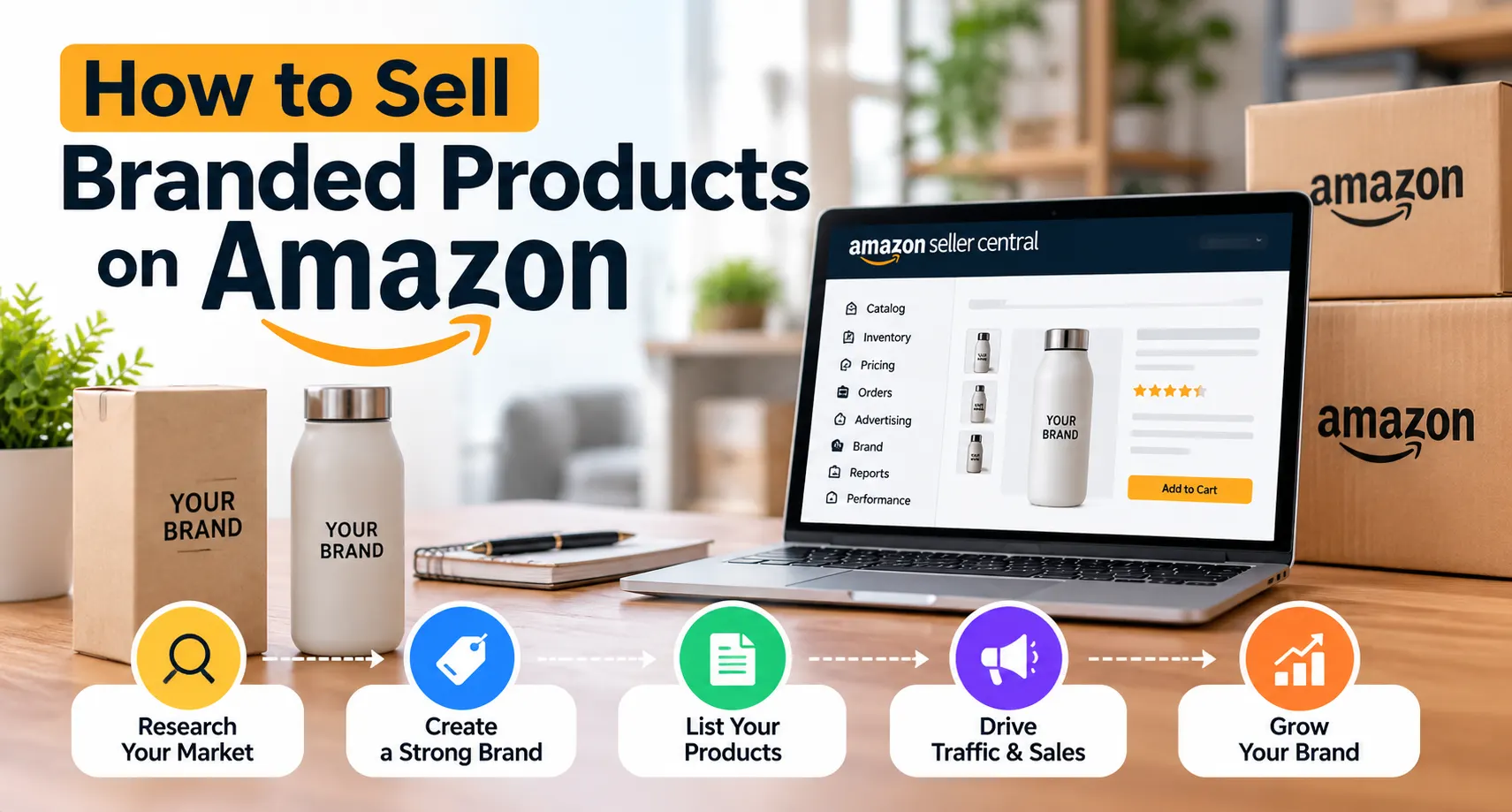
Branded products draw Amazon sellers for one clear reason. A known brand name means the buyer wants the product before the listing loads. That search demand turns into orders without heavy marketing spend.
One of our clients learned the hard part fast. That seller sourced a popular electronics brand at strong wholesale margins. Amazon pulled the listing within three weeks because no authorization letter was on file.
That one missing document froze the entire inventory. The account health score dropped. Storage fees added up while the issue sat under review.
At Brand’s Bro, we have helped 350+ brands avoid problems like this. One client saw a 22% conversion rate increase after listing changes. Several branded sellers crossed the million-dollar profit mark with our support.
Knowing how to sell branded products on Amazon starts before the first listing. This guide covers 13 steps that protect your account and your margin.
Can You Sell Branded Products on Amazon?
Yes. Amazon allows sellers to list branded products under certain conditions. The seller must prove that the products are authentic. Brand approval or authorization may be needed first.
Amazon Seller Central is where you manage branded product listings. Some brands are gated on the platform. Gated means Amazon requires extra documents before you can list those products.
An authorized reseller can sell with fewer restrictions. Authorization comes from the brand owner or a verified distributor. Without it, the listing can face removal or IP complaints.
What Makes Branded Products Different on Amazon?
Branded products carry risks that generic items do not. The brand owner controls the catalog content on those pages. Listing errors can trigger complaints faster than with private-label goods.
Product detail pages for branded items belong to the brand or its registry. Sellers who invest in listing optimization support before launch reduce catalog risks. Resellers match existing ASINs instead of creating new product pages.
Invoice quality matters more with branded products. Amazon may ask for purchase invoices during brand approval reviews. Those invoices must show the supplier name and matching item details.
13 Steps to Sell Branded Products on Amazon
The process starts before any product reaches Seller Central. These 13 steps cover sourcing through the first customer order. Each step removes one common risk for branded sellers.
1. Confirm the Brand Allows Resellers
Some brands restrict who can sell their products on Amazon. The brand’s reseller policy should be checked before placing a wholesale order. A phone call to the brand’s sales team can confirm access.
Gated brands require documents before Amazon allows a listing. That gating status should be checked in Seller Central first.
2. Get a Brand Authorization Letter
A brand authorization letter confirms your right to sell. The trademark owner or an authorized distributor provides this document. Amazon may request it during brand or category approval.
The letter should name your business and the brand. A date range and product scope make the document stronger.
3. Source From a Verified Supplier
Authentic products need a verified supply chain behind them. Purchase from the brand or a known wholesale distributor. Random middlemen increase the risk of counterfeit claims.
Clean wholesale sourcing also produces better invoices for approval. Amazon checks those invoices when reviewing brand access.
4. Collect Clean Purchase Invoices
Amazon reviews invoices during the brand approval process. Each invoice should show the supplier name and contact details. Product names and quantities must match your planned listing.
Invoices older than 365 days may not pass review. Recent purchases from known distributors carry more weight with Amazon.
5. Check Category Approval Status
Some branded products fall into restricted categories on Amazon. These categories need a separate approval before listing. Amazon may ask for invoices or product certifications during this review.
Category approval and brand approval are two different steps. A seller may pass one and still need the other.
6. Match the Correct ASIN
ASIN is Amazon’s catalog number for each product page. Branded products almost always have an existing ASIN in the catalog. Your listing must match the correct one for that product.
A wrong ASIN match can trigger a counterfeit complaint. The UPC or GTIN from product packaging confirms the right page.
7. Review the Product Detail Page
The product detail page shows what buyers expect to receive. Photos and descriptions should match your exact product version. A mismatch between page content and shipped items creates returns.
Resellers often cannot change detail pages controlled by the brand. A careful review of the page helps avoid listing under the wrong product.
8. Set Pricing After Amazon Fees
A high sale price can still leave thin margins after costs. Amazon charges a referral fee on each branded product sale. The Revenue Calculator shows the amount left after those costs.
Branded products may also carry MAP pricing from the brand owner. Pricing below MAP can damage the reseller relationship over time.
9. Pick FBA or FBM for Each Product
FBA means Fulfillment by Amazon for warehouse storage and shipping. FBM means Fulfilled by Merchant for seller-managed orders. Both methods work for branded inventory.
FBA can help win the Buy Box on competitive branded pages. FBM gives more control over shipping costs and inventory access.
10. Prepare Packaging and Product Labels
Branded products need the correct barcode on each unit. FBA shipments require Amazon-compliant labels on every item sent. Wrong labels can delay check-in at the fulfillment warehouse.
The product condition should match what the listing promises. Any gap between packaging and listing creates buyer complaints.
11. Submit and Monitor Account Health
After listing, the Seller Central dashboard shows account health metrics. A warning about product authenticity needs action within days. Amazon may request invoices or authorization after the listing goes live.
New branded sellers should check account health within the first week. Early warnings are easier to resolve than late ones.
12. Track Competitor Pricing and Buy Box
Branded products often have multiple sellers on one product page. The Buy Box rotates based on price and fulfillment method. Account health also affects rotation.
A sudden price drop from another seller can affect your sales. Price tracking tools show these changes before margins shrink.
13. Build a Review and Feedback Plan
Reviews affect both ranking and buyer trust on branded pages. A plan for requesting reviews keeps feedback coming at a steady pace. Amazon has guidelines for how sellers can ask for reviews.
Branded product buyers often compare reviews across competing sellers. Strong feedback scores build trust for your offer over time.
Quick Branded Product Seller Checklist
These 13 checks follow the step order above. Each one reduces a specific listing or profit risk. The table gives new sellers one repeatable process.
Step | What to Review | Why It Matters |
1 | Reseller policy | Confirms the brand allows resale |
2 | Authorization letter | Proves your right to sell |
3 | Supplier source | Protects against counterfeit claims |
4 | Purchase invoices | Supports brand approval requests |
5 | Category restrictions | Avoids gated category blocks |
6 | ASIN match | Prevents wrong page listings |
7 | Detail page review | Reduces returns from mismatched items |
8 | Pricing after fees | Protects your actual margin |
9 | Fulfillment method | Sets shipping and storage costs |
10 | Packaging and labels | Prevents warehouse check-in delays |
11 | Account health | Catches early warnings fast |
12 | Competitor pricing | Maintains Buy Box position |
13 | Review plan | Builds buyer trust on shared pages |
This checklist works best before buying new inventory. It catches weak sourcing decisions before money is spent.
What Is a Brand Authorization Letter?
A brand authorization letter is a document from the trademark owner. It confirms that your business can resell their products on Amazon. Amazon may request this letter during brand approval reviews.
The letter should include the brand name and your legal business name. A date range and product scope make the document stronger. Some distributors provide authorization letters along with purchase invoices.
Sellers without authorization face higher risks of IP complaints. A proactive request to the brand is worth the effort before listing.
Amazon Brand Registry and Reseller Access
Amazon Brand Registry gives trademark owners control over their product pages. Registered brands can manage content and report listing violations. The registry creates the detail pages that resellers match.
Registered brands also follow brand story guidelines when building their Amazon product pages. Resellers should review those pages before listing any product. Content conflicts between your listing and the brand page create problems.
Resellers do not need Brand Registry enrollment to sell. The reseller role allows listing under an existing branded page. Authorization from the brand owner is the key requirement instead.
FBA vs FBM for Branded Products
Fulfillment by Amazon handles storage and shipping at Amazon warehouses. Fulfilled by Merchant means the seller manages each order. Both options work for branded inventory.
FBA gives branded sellers stronger Buy Box access on competitive pages. Sellers who pair fulfillment with product design support improve listing conversion alongside shipping speed. That combination matters on shared branded product pages.
Factor | FBA | FBM |
Storage | Amazon stores inventory | Seller stores inventory |
Shipping | Amazon ships orders | Seller ships orders |
Buy Box | Stronger access | Requires competitive metrics |
Control | Less packaging control | Full handling control |
Best For | High-volume branded stock | Low-volume or fragile items |
The better option leaves enough margin after every order cost. Volume and product weight should shape the final decision.
Common Branded Product Selling Mistakes
Most branded product mistakes come from weak preparation or missing documents. These errors create IP complaints or thin margins. Each one can be avoided with the right process.
- Listing without a brand authorization letter on file.
- Sourcing from unknown suppliers without verified invoices.
- Matching the wrong ASIN for a similar branded product.
- Ignoring gated brand or category restrictions before listing.
- Pricing before subtracting Amazon referral fees from revenue.
- Skipping the product detail page review before going live.
- Sending products with incorrect labels to FBA warehouses.
- Waiting too long to respond to IP or authenticity complaints.
- Missing MAP pricing terms set by the brand owner.
- Selling branded products with expired authorization dates.
Fixing these mistakes works best before buying inventory. The same list can guide account audits as sales grow.
Branded Products You Should Not List on Amazon
Some branded products should not be listed without extra caution. Restricted items can create account problems for sellers. Wrong catalog matches can also violate Amazon listing rules.
Products marked “Not for Resale” or “Sample” need to be avoided. Expired goods from any brand face separate listing restrictions. Counterfeit or replica items should never reach a product page.
Recalled products also carry listing risks on Amazon. Sellers should check the brand’s public notices before sourcing older stock. A barcode and packaging review can catch problems before listing.
Is Selling Branded Products on Amazon Worth It?
Branded product resale can be worth it when margins survive Amazon fees. Price alone means little when referral fees and fulfillment costs consume the revenue. Sales speed matters because slow inventory ties up working cash.
Each branded product needs a full cost review before buying more stock. That review should happen before committing to a larger wholesale order.
Strong demand from a known brand name can shorten the sales cycle. Faster sales mean less storage cost and quicker cash return. A simple profit sheet can expose weak buys before purchase.
How Brand’s Bro Helps Clients Sell Branded Products
Brand’s Bro helps Amazon sellers build stronger listings and cleaner account structures. The team has completed 500+ projects for brands across multiple countries. That work includes listing copy and product visuals. It also covers full Amazon growth strategy.
For branded product sellers, the first step is catalog accuracy. ASIN matching and product detail review happen before any promotion begins. Authorization and invoice checks set the foundation for account safety.
The team also reviews listing structure before a seller scales inventory. That process keeps branded catalogs clean as product count grows. Sellers gain a system that reduces IP risks at each stage.
When Amazon Ads Work for Branded Inventory
Ads make more sense when a branded seller can restock the same product. A one-time wholesale lot leaves little room for campaign learning. Repeat inventory gives ads enough data to improve over time.
Branded sellers can benefit from expert ad management after listing data stabilizes. Sponsored Products can place offers inside Amazon search results. The product margin should still support each paid click.
Small sellers should focus on sourcing and pricing first. Paid traffic works better after conversion data proves the listing converts.
Frequently Asked Questions (FAQs)
New branded product sellers ask common questions before listing inventory. These answers address the issues that cause the most early mistakes.
Some popular brands are available on Amazon. You may need invoices and brand authorization before listing those products.
Amazon may ask for purchase invoices and a brand authorization letter. The invoice should show recent purchases from a known distributor.
Most brand approval decisions take a few days to a few weeks. Response time depends on document quality and product category.
Yes. Brand Registry is for trademark owners. Resellers can sell branded products with proper authorization and clean invoices.
A gated brand requires Amazon approval before you can list it. The process involves submitting invoices or authorization letters.
Source from authorized suppliers and keep invoices on file at all times. Match the correct ASIN and avoid modifying brand-owned content.
Branded sales can be profitable when margins survive Amazon fees. Referral fees and fulfillment costs should be calculated before sourcing.
Start Selling Branded Products With Clean Foundations
Strong branded product sales start with clean documents and accurate listings. Authorization and invoice quality protect the account before promotion begins. ASIN matching and detail page reviews prevent the errors that create IP complaints.
Pricing after Amazon fees protects the margin on every single sale. Sellers who sell branded products on Amazon with these steps build a more stable and profitable business.
Brand’s Bro helps Amazon sellers improve listings and growth systems. Clean catalog work gives every later marketing step a stronger base.
