

Ever wonder how Amazon decides which products show up first? It’s all thanks to its search algorithm. This powerful system is the gatekeeper to getting your products seen by millions of shoppers. For years, sellers talked about the “A9 algorithm”. Now, the conversation has shifted to the “A10 algorithm”.
But here’s a little secret: Amazon has never officially announced something called “A10”. It’s a term the seller community created to describe the big changes we’ve seen in how Amazon ranks products.
The algorithm has evolved, moving beyond old tactics to focus more on what customers really want. It’s smarter, more customer-focused, and it changes how you need to think about selling.
What is the Amazon A10 Algorithm?
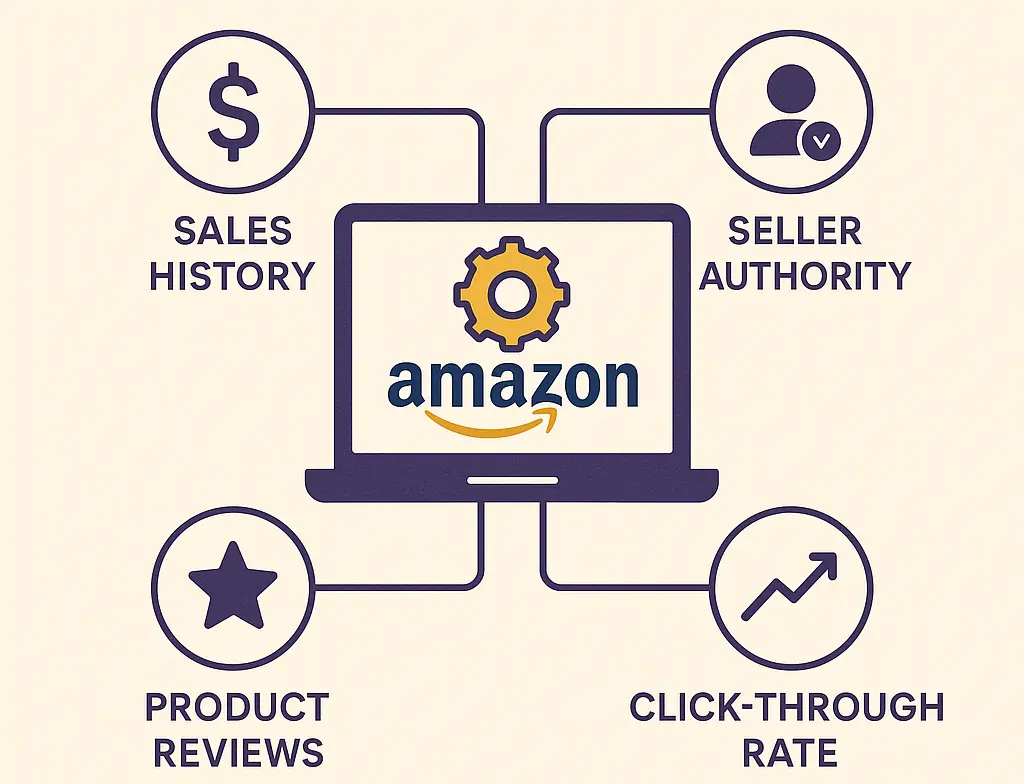
The term “Amazon A10” was created by sellers to explain the updates and shifts they noticed after the well-known A9 algorithm. It’s not an official name from Amazon, but a label for the new way Amazon seems to be ranking products.
The old A9 algorithm was simpler. It heavily focused on a few key things, especially sales velocity. If a product sold a lot, it ranked high. Keywords were also huge, and sellers who could stuff the right terms into their listings often won. A9 was very focused on what happened inside Amazon.
The seller community started using the term “A10” when they saw that old tricks weren’t working as well. Rankings started to depend on more than just sales and keywords. Factors like customer engagement, seller reputation, and even traffic from outside of Amazon seemed to matter more. This shift made it clear that Amazon was getting smarter about what makes a good product and a trustworthy seller.
Amazon itself doesn’t talk about A9 or A10. The algorithm’s main job is to understand what a shopper is looking for and show them products they are most likely to buy. The A10, as sellers call it, is just a reflection of Amazon getting better at that job by looking at a wider range of signals. A10 simply uses more diverse and sophisticated inputs than A9 ever did.
For sellers, this means you can’t just focus on one thing. You need a complete strategy. If you need help managing all the moving parts of your Amazon account, our Amazon Account Support service page can provide the backup you need.
Core Ranking Signals of A10
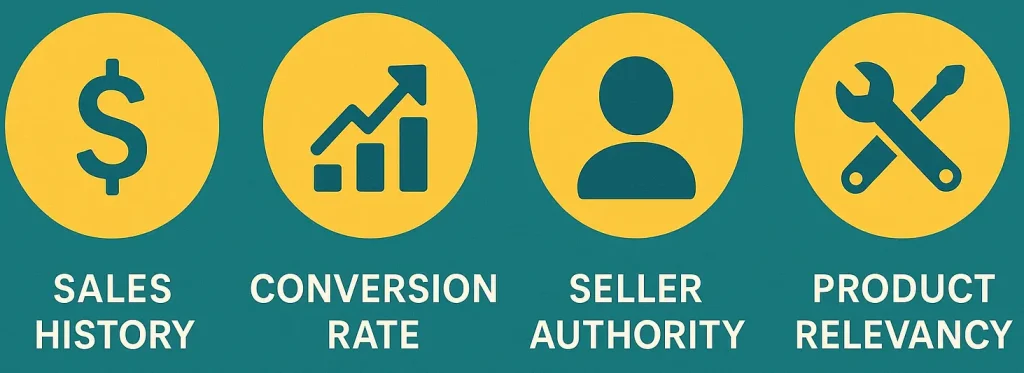
To succeed with the A10 algorithm, you need to understand what it values. It’s not about one magic trick; it’s about being strong in several key areas. These ranking signals tell Amazon that your product is relevant, your customers are happy, and you are a reliable seller. Let’s break down the most important factors.
Relevance Factors (On-Page Optimization)
First and foremost, your product has to be relevant to what the customer is searching for. Amazon figures this out by looking at the words you use in your listing. This is where classic search engine optimization (SEO) comes into play.
Keywords are the foundation. You need to include important search terms in your product title, bullet points, and description. Don’t forget the backend search terms field. It’s a great place for extra keywords that you don’t want cluttering your main page. Choosing the right product category, or browse node, is also critical for telling Amazon where you fit.
A10 looks beyond just keywords. It also values high-quality content that helps customers make a decision. This is where A+ Content and other creatives come in. Good images, videos, and detailed A+ layouts keep shoppers on your page longer and answer their questions. This signals to Amazon that your listing is helpful and engaging, which can give you a ranking boost.
Behavioral & Engagement Signals
A10 pays close attention to how shoppers interact with your listing. These behavioral signals show Amazon if your product is truly appealing. Think of it like Google noticing how long someone stays on a website. Amazon does the same thing on its product pages.
Important signals include:
- Click-Through Rate (CTR): How many people click on your product after seeing it in the search results. A high CTR tells Amazon your main image, title, and price are attractive.
- Conversion Rate (CVR): The percentage of visitors who buy your product. This is a huge factor, as it shows Amazon that your listing does a great job of selling.
- Dwell Time: How long shoppers spend on your page. Longer dwell times suggest your content is engaging and informative.
- Add-to-Cart: Even if a shopper doesn’t buy right away, adding your product to their cart is a positive signal.
- Review Quality: A10 doesn’t just count reviews; it looks at their quality and helpfulness. Consistent, positive reviews are a powerful trust signal.
For example, we worked with a client to redesign their main product image and update their bullet points to be more benefit-focused. Their CTR jumped by 30%, and within a few weeks, their organic ranking for their main keyword climbed from page two to the top of page one.
Seller Authority & Performance

Amazon wants to promote sellers who provide a great customer experience. Your performance as a seller directly impacts your product’s visibility. This is what the community calls “seller authority”.
Key metrics that build your authority include:
- Order Defect Rate (ODR): This measures negative feedback, claims, and credit card chargebacks. A low ODR will help you rank higher.
- On-Time Shipping: Shipping products on time is critical for customer satisfaction.
- Prime Eligibility: Products fulfilled by Amazon (FBA) or Seller-Fulfilled Prime (SFP) often get a ranking advantage because they come with Amazon’s promise of fast, reliable shipping.
- Seller Feedback Rating: Your overall seller rating is a public sign of your trustworthiness.
Running your business smoothly with FBA can have a big impact compared to Fulfillment by Merchant (FBM). This guarantees the level of service Amazon wants for its customers.
Commercial & Inventory Health
Finally, A10 considers practical business factors. After all, Amazon is a store, and it wants to feature products that are ready to sell and priced competitively.
Sales velocity, or how quickly your product sells, is still very important. It shows Amazon that your product is in demand. However, it’s not the only thing that matters anymore. Price competitiveness is also key. If your product is priced much higher than similar items, Amazon might be less likely to show it.
Your inventory health is equally crucial. The Inventory Performance Index (IPI) is a score Amazon gives you based on how well you manage your stock. Being out of stock is one of the worst things for your ranking. A stockout tells Amazon you can’t meet customer demand, and your product’s visibility can drop quickly. It’s hard to regain that momentum once you’re back in stock.
By focusing on all four of these areas, you create a well-rounded strategy that aligns perfectly with what the A10 algorithm wants to see.
Amazon A9 and A10 Algorithms Compared
Understanding the shift from A9 to A10 is key to updating your strategy. While some core principles remain the same, the emphasis has changed significantly. A10 takes a more holistic view of your product and your business. It’s less about quick wins and more about building a sustainable, customer-focused brand on Amazon.
Let’s look at a simple comparison:
BrandsBro worked on an Amazon A10 Algorithm strategy project where the client struggled with weak visibility, poor product presentation, and low engagement.
We improved the storefront structure, optimized the shopping experience, and helped create a stronger brand presence. Book a free meeting to discuss similar issues.
| Attribute | Amazon A9 | Amazon A10 |
|---|---|---|
|
Primary Focus |
Sales Velocity & Keyword Relevance |
Customer Experience & Overall Performance |
|
PPC Influence |
Very high direct impact on rank |
Indirect impact through sales and engagement |
|
External Traffic |
Low importance |
High importance, seen as a sign of brand authority |
|
Seller Metrics |
Moderate importance |
High importance (seller authority is key) |
|
Content Quality |
Keywords were the main goal |
Engagement is the goal (A+ Content, video) |
|
Customer Behavior |
Clicks and conversions were tracked |
Deeper signals like dwell time and user interactions matter more |
The Biggest Shift in Amazon Ranking
The biggest change is the move away from pure sales velocity as the primary ranking factor. Under A9, a product that sold a lot, often boosted by heavy ad spend, could dominate the search results.
A10 balances this by giving more weight to broader signals like seller authority, customer engagement, and now, external traffic. Organic sales are now believed to have a stronger impact on long-term ranking than sales driven purely by ads.
It’s important to separate fact from speculation. Amazon has not confirmed these changes with a list. This table is based on widespread observations from thousands of sellers and agencies that analyze the data every day.
The trend is clear: Amazon is rewarding sellers who build real brands and provide genuine value.
Is Your Strategy A10-Ready? The Answer Isn't What You Think
As our team often says, “Don’t chase the name”. Whether you call it A9, A10, or something else, the goal is the same. Make your customers happy, and Amazon’s algorithm will follow.
This new landscape requires a more sophisticated approach. You can’t just set up an ad campaign and expect it to carry your product. You need to think about the entire customer journey, from how they find you outside of Amazon to how they interact with your listing.
External Traffic & Off-Amazon Influence
One of the biggest talking points around the A10 algorithm is the increased importance of external traffic. Many sellers now believe that driving shoppers from outside of Amazon to your product page is a powerful way to boost your rankings. It shows you have real demand and are bringing new customers into the Amazon ecosystem.
Amazon itself encourages this with programs like the Amazon Attribution tool and the Brand Referral Bonus. Amazon Attribution allows you to track how your external marketing efforts are performing. This helps you see which channels are driving sales.
The Brand Referral Bonus program actually pays you a bonus (a percentage of the sale) for sales that come from traffic you drove to Amazon. These programs wouldn’t exist if Amazon didn’t value this traffic.
So, where can you get this valuable external traffic? There are many sources:
- Google Ads: Running ads that send searchers directly to your Amazon listing can be very effective, especially for high-intent keywords.
- Social Media Ads: Platforms like Facebook, Instagram, and TikTok are great for reaching new audiences and building brand awareness that leads to Amazon sales.
- Influencer Marketing: Partnering with influencers who can showcase your product to their followers is a powerful way to drive targeted traffic and build social proof.
- Blogs and Content Marketing: Having your product featured in guides or review articles can send highly motivated buyers to your page..
Driving external traffic is about building a brand, not just a listing. If you’re also growing your own e-commerce store on a platform like Shopify, these efforts can benefit both channels.
At BrandsBro, our E-commerce Acceleration services help you build a cohesive strategy that integrates your Shopify store and your Amazon presence for maximum growth.
Are Ads Still Worth It? Yes, Here's the New Rulebook

With all this talk about organic ranking, you might be asking a simple question. Should I still run Amazon ads?
The answer is a huge YES. But their job has changed. Think of ads less as a way to buy your way to the top. Think of them more as a way to prove to Amazon that your product belongs there.
How Ads Create a Winning Cycle
Let’s make it simple. Ads do not directly tell Amazon to rank you higher. Instead, they start a powerful chain reaction:
- A customer clicks your ad and buys your product.
- This creates a sale and boosts your sales history.
- Amazon’s algorithm sees this and thinks, “Shoppers want this product!”
- As a result, Amazon shows your product to more people organically.
This creates a positive feedback loop. Your ads drive sales, which earns you a better organic rank. That better rank leads to even more sales.
Forget ACoS. Start Watching TACoS
For years, sellers focused on ACoS (Advertising Cost of Sale). This metric only measures how much you spend on ads to get ad sales. Today, the most important metric is TACoS (Total Advertising Cost of Sale).
TACoS looks at your ad spend compared to your total sales. This includes sales from both your ads and your organic ranking. A falling TACoS is the best sign that your ads are successfully boosting your entire business.
3 Keys to Smarter Ads in the A10 Era
Your strategy must be smart and efficient. Focus on quality over quantity.
- Stop Wasting Money
Use specific keywords to prevent your ads from showing up for irrelevant searches. This targets only shoppers who are ready to buy your product. - Spend Your Budget Wisely
Do not just “set it and forget it”. Constantly watch your bids. Spend more on keywords that lead to sales and less on the ones that do not. - Reach the Right Shoppers
Use all of Amazon’s targeting tools. This helps you find the perfect customers who are ready to click and make a purchase.
Feeling overwhelmed by complex ad campaigns? Our Amazon ads management team can take the wheel. We build smart PPC strategies that boost both your sales and your organic rank.
Playbooks for Sellers
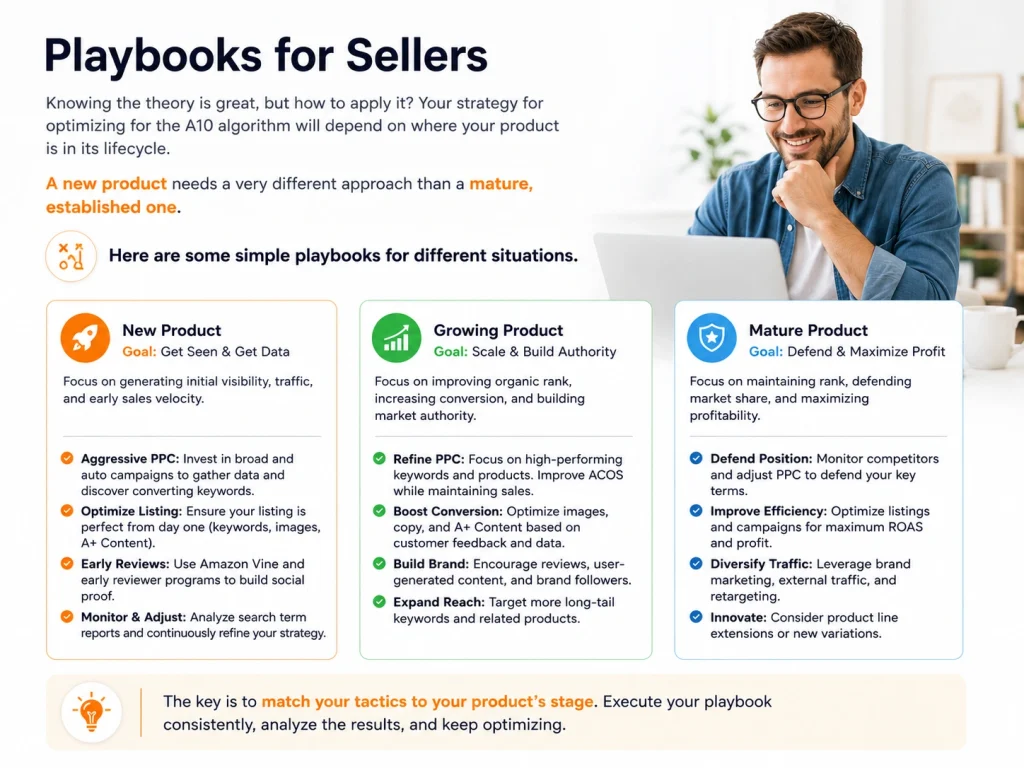
Knowing the theory is great, but how to apply it? Your strategy for optimizing for the A10 algorithm will depend on where your product is in its lifecycle. A new product needs a very different approach than a mature, established one. Here are some simple playbooks for different situations.
New Product Launches
The goal for a new product is to build momentum and prove to Amazon that it’s a winner. You need to generate initial sales velocity and gather positive reviews quickly.
- Build Initial Sales Velocity: Your launch is a critical window. Price your product competitively. You can even start with a launch discount to encourage those first sales.
- External Traffic Burst: Plan an external traffic campaign for your launch week. Use social media ads or an influencer collaboration to send a wave of targeted buyers to your new listing.
- Strategic PPC: Start with a focused PPC campaign. Target a small group of highly relevant keywords to get your first ad-driven sales.
- Review Strategy: Use programs like Amazon Vine to get your first few crucial reviews. Early reviews build trust and dramatically improve your conversion rate.
Stagnant Listings
Do you have a product that used to sell well but has hit a plateau? It’s time for a refresh. The goal here is to improve your conversion rate and remind the algorithm that your product is still relevant.
- Conversion Rate Optimization (CRO): Take a hard look at your listing. Are your images outdated? Can you improve your bullet points to better highlight benefits? Consider creating or updating your A+ Content to tell a better story.
- Test Title and Keywords: Your main keyword might not be the best one anymore. Experiment with a new title that targets a different high-volume search term. Use backend search terms to test new keyword ideas without changing your main listing.
- Run a Limited-Time Deal: A Lightning Deal or a simple coupon can create a sense of urgency and generate a spike in sales. This can be enough to get your listing moving up in the ranks again.
Seasonal Products
For seasonal products, success is all about planning and timing. You need to be ready for your peak season and maximize sales when demand is high.
- Inventory Planning: This is the most important step. Stocking out during your peak season is a disaster. Make sure your inventory is in place well before demand starts to ramp up.
- Pricing Tactics: Adjust your pricing as you get closer to the peak season. You can often command a higher price when demand is at its highest.
- Driving Urgency: Use deals and promotions to create urgency as the season progresses. Holiday-themed ads and creatives can also help you stand out.
Mature Listings
For products that are already selling consistently, the focus shifts to defending your position and increasing profitability.
- Focus on Brand Story: Use A+ Premium Content and your Brand Store to build a deeper connection with customers. A strong brand encourages repeat purchases.
- Subscribe & Save: If your product is a consumable, aggressively promote Subscribe & Save. This creates a steady stream of repeat purchases, which is a powerful signal to the algorithm.
- Protect Your Turf: Keep an eye on new competitors. Use Sponsored Display ads to target competitors’ product pages and defend your market share. Continue to gather reviews to maintain your social proof.
How Amazon's Search Algorithm Actually Works
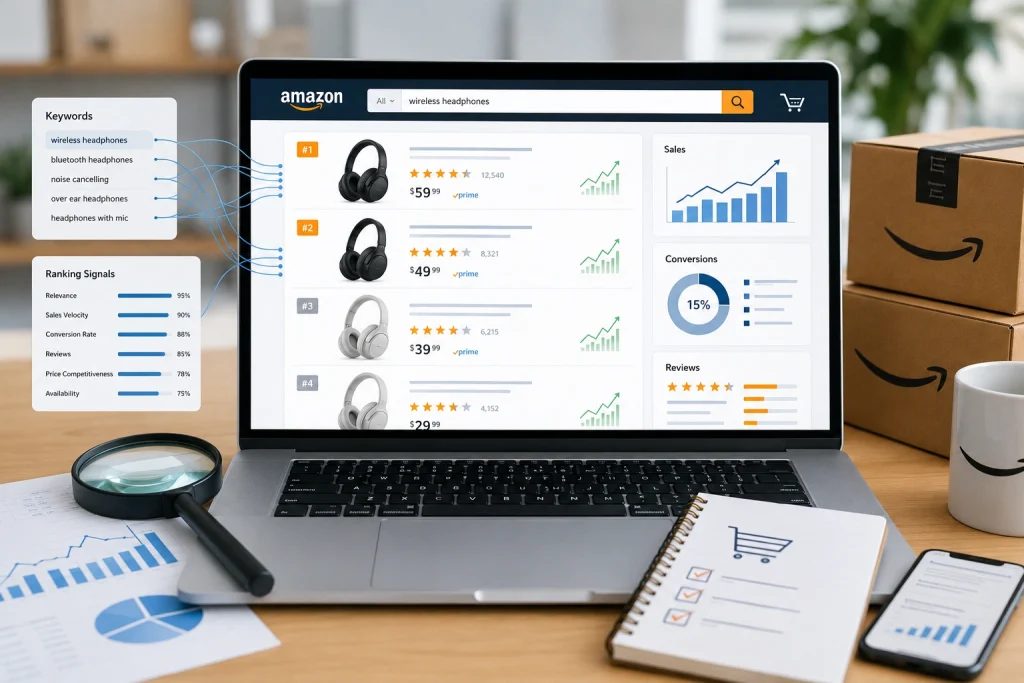
Amazon’s search algorithm is designed to connect shoppers with the products they are most likely to purchase. When a customer enters a search query, Amazon first analyzes the keywords and matches them with relevant product listings. This process helps determine which products qualify to appear in the search results. Proper keyword optimization in titles, bullet points, descriptions, and backend search terms is essential for visibility.
After identifying relevant products, Amazon evaluates performance metrics such as click-through rate (CTR), conversion rate, sales history, and customer engagement. Listings that consistently attract clicks and generate sales are viewed as more relevant to shoppers. This allows Amazon to prioritize products that have a higher probability of satisfying customer intent.
The Amazon A10 algorithm also considers factors beyond keywords, including customer behavior, seller performance, review quality, and external traffic sources. Products that demonstrate strong customer satisfaction and consistent sales performance tend to rank higher over time. Understanding how the Amazon search algorithm works helps sellers improve both visibility and organic rankings.
Amazon A10 Ranking Factors Checklist
Amazon A10 uses multiple ranking signals to determine where products appear in search results. The most important factors include keyword relevance, conversion rate, click-through rate, sales velocity, review quality, inventory health, and seller authority. Optimizing these areas creates a stronger foundation for long-term organic growth on Amazon.
Keyword optimization remains one of the core Amazon ranking factors. Sellers should strategically place primary and secondary keywords throughout their listings while maintaining natural readability. A well-optimized listing helps Amazon understand the product and match it to relevant customer searches.
Beyond keywords, Amazon places significant weight on customer experience metrics. High conversion rates, positive reviews, low return rates, and strong account health signals indicate that customers trust the product and seller. Monitoring these Amazon A10 ranking factors regularly can help maintain and improve search visibility.
How to Increase Amazon Conversion Rate
Amazon conversion rate measures the percentage of visitors who purchase after viewing a product listing. A higher conversion rate signals strong buyer intent and product relevance, making it one of the most important Amazon SEO metrics. Improving conversion rates can directly contribute to higher organic rankings and increased sales.
One of the best ways to increase Amazon conversion rate is by optimizing listing content. High-quality product images, compelling titles, informative bullet points, and persuasive A+ Content help shoppers understand the product’s value. Product videos can further boost buyer confidence and improve engagement.
Customer reviews and competitive pricing also play a major role in conversions. Products with strong ratings and a healthy number of reviews often outperform similar listings. Additionally, offering coupons, discounts, or promotional pricing can encourage more purchases and improve overall conversion performance on Amazon.
Does Amazon PPC Directly Affect Organic Ranking?
Amazon PPC does not directly increase organic rankings through ad spend alone. Simply spending more money on advertising will not automatically move a product higher in organic search results. However, PPC campaigns can generate valuable sales data that indirectly influences ranking performance.
When Amazon PPC campaigns drive qualified traffic and produce conversions, those sales contribute to the product’s overall sales velocity. Since sales velocity is a major ranking factor within the Amazon A10 algorithm, successful advertising campaigns can support improved organic visibility over time.
The most effective strategy is to use Amazon PPC alongside strong listing optimization. Well-targeted campaigns help generate traffic, while optimized listings convert that traffic into sales. This combination creates positive performance signals that can strengthen organic rankings and improve long-term profitability.
When to Hire an Amazon SEO Agency
Hiring an Amazon SEO agency can be a smart decision when your product listings struggle to gain visibility or sales despite your efforts. Professional agencies understand Amazon ranking factors, keyword research, listing optimization, and advertising strategies that can accelerate growth. They can also identify issues that may be limiting your performance.
Many sellers choose to work with an Amazon SEO agency when launching new products, entering competitive categories, or scaling their businesses. Agencies often provide advanced tools, competitor analysis, and data-driven insights that are difficult to replicate without specialized experience. This can help sellers avoid costly mistakes and improve efficiency.
Before hiring an Amazon SEO agency, evaluate their case studies, client results, and expertise in your product category. A reputable agency should offer transparent communication, proven strategies, and measurable outcomes. Choosing the right Amazon SEO partner can help improve rankings, increase sales, and maximize your return on investment.
How to Measure Amazon A10 Performance Using Brand Analytics
Measure Amazon A10 performance by tracking whether your target search queries generate more impressions, clicks, cart additions, and purchases. Use Amazon Brand Analytics’ Search Query Performance dashboard to identify the queries leading customers to each ASIN and compare click-through and conversion rates over time.
Separate branded and non-branded searches when reviewing performance. Growth in non-branded visibility, keyword coverage, click share, and conversion rate generally indicates stronger organic relevance. However, consider advertising, pricing, promotions, inventory, and seasonality before attributing improvements to listing changes.
How to Optimize Product Listings for the Amazon A10 Algorithm
To optimize a product listing for Amazon A10, align every listing element with the customer’s search intent. Include the primary keyword naturally in the title and use bullet points, product descriptions, backend terms, images, and attributes to explain features, benefits, compatibility, dimensions, materials, and use cases.
Avoid keyword stuffing and inaccurate claims. Improve conversion potential through competitive pricing, reliable inventory, fast fulfillment, positive reviews, clear images, and complete product information. Test major listing changes individually and use Brand Analytics to measure their effect on clicks and purchases.
How Amazon Rufus and COSMO Are Changing Product Search
Amazon product search is shifting from exact keyword matching toward conversational and intent-based discovery. Rufus—now incorporated into Alexa for Shopping—can answer questions, compare products, and provide AI-generated overviews within search results and product pages.
COSMO helps Amazon understand implied customer needs by connecting products with real-world situations, audiences, and use cases. Sellers should therefore optimize listings for natural-language questions, detailed attributes, compatibility, customer scenarios, and clearly stated benefits—not keywords alone.
Frequently Asked Questions (FAQs)
There’s a lot of information out there about the A10 algorithm, and it can be confusing. Here are some quick answers to the most common questions sellers ask.
The biggest change is the focus on more than just sales. A10 also looks at seller authority, how customers engage with your listing, and traffic from outside Amazon. It rewards overall brand health, not just quick sales.
It is very important. Driving traffic from sources like social media or Google sends a strong signal to Amazon that your brand is popular. Amazon’s algorithm rewards sellers who bring new shoppers to the platform.
Yes, keywords are still essential. They tell Amazon what your product is. Make sure to place relevant keywords in your title, bullet points, and description so customers can find you easily. Good keyword placement is the foundation of your listing.
You can, but it is much harder. Using FBA (Fulfillment by Amazon) helps you meet the fast shipping times that both customers and the A10 algorithm love. Prime eligibility is a major advantage for getting seen.
Yes, reviews are critical. A lot of positive reviews build trust and increase your conversion rate. The A10 algorithm sees this as a sign of a high-quality product, which helps boost your ranking significantly.
Focus on getting more organic sales. While ads help with visibility, A10 gives more weight to organic purchases. Use ads to start your momentum, but aim for sales that come naturally from search results.
Your Partner in the New Era of Amazon
While the term “A10” might be an unofficial label, the changes it represents are very real. Success on Amazon is no longer about finding a single loophole or trick.
It’s about building a solid foundation based on what customers want. And they basically want a great product, a trustworthy seller, and a seamless shopping experience.
This can feel like a lot to manage, but you don’t have to do it alone. At BrandsBro, we partner with sellers to navigate this complex landscape.
We handle the data, the ads, the creatives, and the strategy, so you can focus on what you do best: creating amazing products. Our team is dedicated to managing your ranking, optimizing your ad spend, and designing listings that convert.
Ready to take your Amazon business to the next level? Let’s talk.
