

How to recover from google algorithm update? Start with the truth. Do not panic and do not change everything at once.
First, find out what changed. Then, see if your site was really hit. After that, fix the real problem step by step. Google says broad core updates are meant to improve search results, not punish one site by name.
A lot of site owners see a ranking drop and think they got a penalty. Sometimes that is wrong. A drop can come from a core update, a spam issue, weak content quality, or a Technical SEO problem. Google also says helpful, reliable, people-first content is what its systems try to reward.
So, this guide will cover the full path. We will look at what a Google update is, the types of update, why updates happen, how to know if your site is affected, and how to fix the problem.
What is a Google update?
A Google update is a change in Google Search. It changes how pages are judged, sorted, and ranked.
Some updates are small. Others are broad and shake many search results at once. That is why search rankings can move even when you did not touch your site. Google says its ranking systems keep changing so they can show better results.
Think of it like a school test. The teacher may change how papers are scored. Your paper is still the same, but the score may go up or down.
That is why a google update can cause a ranking drop, lower Search visibility, or less Organic traffic. Next, you need to know the main types of update.
Types of Google updates you need to know

Not all Google updates work the same way. Some change how content is ranked across the web, while others focus on spam, abuse, or policy violations. That is why this section matters. If you understand the main update types, it becomes much easier to diagnose the problem, choose the right fix, and avoid wasting time on the wrong changes.
Broad core updates
A broad core update is a wide change to Google’s main ranking systems. It can affect many sites, many topics, and many page types at the same time. Google says core updates are designed to improve how its systems assess content overall and surface more helpful, relevant results.
This means a page can drop even if it did not break any rules. In many cases, Google is reassessing which pages seem more helpful, more relevant, or more satisfying for the query. That is why a core update drop is usually a reassessment, not a punishment.
Core updates can affect blog posts, service pages, category pages, product pages, comparison pages, and review pages. They can also change rankings, impressions, clicks, CTR, search visibility, and traffic across page or query groups.
That is why a core update can feel confusing. One section of a site may drop, while another section stays stable. Sometimes only a few key pages lose visibility, while the rest of the site holds steady.
After a core update, pages may perform better when they are more helpful, more relevant to the query, and more satisfying for users than competing pages. In practice, that often means clearer answers, better topic coverage, better intent match, stronger evidence, and more trust.
So, when people ask how to recover from a google algorithm update, this is often the update type they mean. The fix is usually not a request for reversal. The fix is better usefulness, better content quality, stronger trust, and a better match to what users actually want.
Spam updates
Spam updates target rule-breaking behavior and low-value tactics. These updates are meant to reduce pages that try to game search instead of helping users. Google says sites that break spam policies may rank lower or may be removed from search results.
This can include cloaking, hacked content, hidden text, doorway pages, scraped content, link spam, scaled content abuse, site reputation abuse, and expired domain abuse.
Google added clearer policy language in March 2024 for expired domain abuse, scaled content abuse, and site reputation abuse. Those additions matter because they explain newer abuse patterns more directly.
Expired domain abuse happens when someone uses an old domain mainly to take advantage of its past reputation, then fills it with unrelated low-value content. Scaled content abuse happens when many pages are produced at scale mainly to manipulate rankings. Site reputation abuse happens when a trusted site hosts third-party or unrelated pages mainly to use the host site’s ranking signals.
Spam updates matter because the recovery path is different. If the problem is a spam-policy violation, the risky tactic has to be removed. Better copy alone will not fix that kind of issue.
Helpful content and people-first signals
Google wants content made for people first. It does not want pages made mainly to pull traffic from search without giving enough value back to the reader.
Google says its systems are designed to prioritize helpful, reliable content created to benefit people. It also asks creators to think about who made the content, how it was made, and why it was made.
This is important because many site owners still think of helpful content as one old update. In practice, the people-first idea is now tied more deeply into Google’s broader ranking systems and content guidance.
Pages are more likely to do well when they solve the user’s problem clearly, show real knowledge, show real experience, fulfill the intent behind the search, stay on topic, avoid filler, avoid fake expertise, and avoid clickbait promises.
If a page drops after a broad update, better questions to ask are whether the page answered the search well, added anything original, showed real knowledge, looked trustworthy, and left the reader satisfied. Those questions are usually more useful than asking whether the keyword was used enough.
E-E-A-T is not a score, but it still matters
E-E-A-T stands for experience, expertise, authoritativeness, and trust. Google does not give site owners a visible E-E-A-T score in Search Console or anywhere else. It is not a number you can track like impressions or clicks.
Still, E-E-A-T matters because Google’s quality guidance makes it clear that trustworthy, useful, experience-backed content is an important goal of its systems. Google also explains that quality raters are trained to look at E-E-A-T when evaluating results, although those ratings do not directly rank pages.
In real terms, E-E-A-T can show up through clear authorship, first-hand experience, accurate claims, useful sourcing, strong site reputation, clear business identity, and trust across the site.
So, the right question is not “What is my E-E-A-T score?” The better question is whether the page looks genuinely useful, reliable, well-supported, and created by someone who knows the topic. That is much closer to how Google frames quality.
Google spam policies and unhelpful content
Google separates spam-policy violations from low-quality or unhelpful content. That distinction is very important because the recovery path is not always the same. Spam-policy violations can lead to pages or whole sites being ranked lower or removed from search. Unhelpful content may simply perform poorly because it does not satisfy users well enough.
Google’s spam policies cover deceptive tactics. Google’s people-first guidance covers content that may not break a spam rule but still fails to help readers.
Content is more likely to feel unhelpful when:
- it is made mainly for search engines
- it adds little original value
- it covers topics outside the site’s real focus
- it promises answers it does not really give
- it feels shallow or rushed
- it lacks clear expertise or trust
- it leaves the reader unsatisfied
That is why better wording is not always enough. If the content is unhelpful at its core, the page usually needs a stronger rewrite, better structure, clearer expertise, and more useful information. If it is a spam-policy issue, the tactic itself has to be removed.
Manual actions
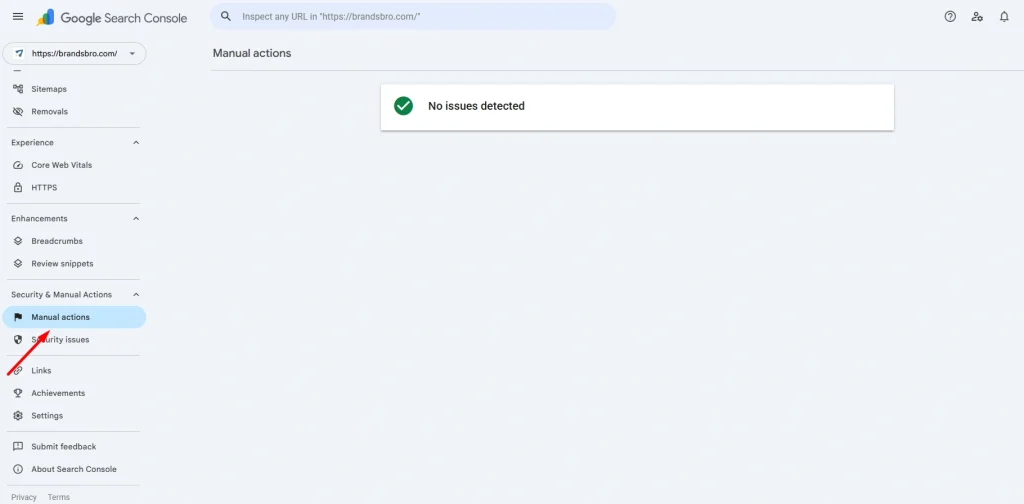
A manual action is different from an algorithmic change. It happens when a human reviewer at Google decides that pages on a site are not following Google’s spam policies. Google says manual actions are shown in the Manual Actions report in Search Console.
This is why people often confuse core update drops with penalties. But these are not the same thing. A broad core update is algorithmic. A manual action is a direct enforcement step by Google’s review team.
Manual actions can affect one page, one folder, one pattern of pages, or the whole site. Common reasons can include unnatural links, thin spammy pages, pure spam, cloaking, user-generated spam, and structured data abuse.
If a site has a manual action, the usual path is to find the policy problem, remove or fix it, document the cleanup, and request reconsideration if needed.
That is very different from core update recovery. With a core update, there is often no message and no reconsideration request. With a manual action, there is a direct issue to solve and a report to review.
Reviews system
Google also has a reviews system. Google says this system is designed to better reward high-quality review content with original research, insightful analysis, and content written by people who know the topic well.
This matters if your site publishes product reviews, software reviews, service reviews, best lists, comparison pages, or affiliate content.
Thin review pages often fail because they repeat product specs, copy what other sites say, add no real testing, add no insight, add no proof, and add no clear recommendation logic.
So, if your review or affiliate content drops, this system may matter more than a generic core update label.
Link spam systems and link-related quality checks
Google also works to fight link spam. Manipulative link practices can violate Google’s spam policies, and weak link quality can be one part of a larger trust problem. Still, not every ranking drop is caused by backlinks alone.
A Backlink audit can help when anchor text looks over-optimized, many referring sites are low quality, links are off-topic, or trusted links were lost to key pages.
Links are only one piece of the picture. Many sites lose after updates because of weak content quality, weak trust, or poor intent match, not just because of links.
Technical issues that feel like updates
This is not a named Google update type, but it belongs here because site owners confuse it with updates all the time.
A big traffic drop may happen around the same time as a Google rollout, yet the real problem may be blocked pages, no-index tags, bad canonicals, broken redirects, crawl errors, render problems, mobile issues, or internal linking gaps.
Google’s Search Essentials and starter guidance make clear that crawlability, indexing, and technical health still shape how pages appear in search. That is why crawlability, indexing, canonicals, redirects, and internal linking should always be checked before blaming the algorithm.
So, before you decide that a Google update caused everything, make sure the site can still be crawled, indexed, and understood the right way.
Named updates vs always-on systems
Another point many articles miss is this: not all ranking changes come from a named update.
Google has many ranking systems that work all the time. Some changes are announced, like broad core updates. Others are quieter and happen as systems keep improving. Google’s ranking systems guide makes clear that Search uses multiple systems, not one simple switch.
That means:
- a drop may happen during a named update
- a drop may happen between named updates
- a drop may come from stronger competitors
- a drop may come from your own site issues
Why do Google updates happen?

Google updates happen to improve search results. That is the big reason. Google wants to show pages that are more helpful, more reliable, and more relevant. It also wants to reduce spam and low-value pages.
Search habits change too. New topics appear. New search intent shows up. So, Google changes its systems to keep up.
This is where E-E-A-T matters. That means experience, expertise, authoritativeness, and trust. Google says creators should think about who made the content, how it was made, and why it was made.
In simple words, Google wants pages that feel real. It wants pages with clear facts, real experience, and true value. That brings us to the most important question. How do you know if your site is affected?
How to know if your site is affected
A traffic drop can feel scary. Still, do not jump to conclusions too fast. The best way to know what happened is to check the data in a clear order.
- Check the date of the drop and match it with a confirmed Google update.
- Review clicks, impressions, CTR, and average position in Google Search Console.
- Find the pages that lost the most traffic and mark them for review.
- Check which queries lost rankings, clicks, or search visibility.
- See if the drop is sitewide or limited to one section of the site.
- Compare blog posts, product pages, category pages, and service pages.
- Look for search intent shifts by checking what type of pages rank now.
- Rule out technical issues like no-index tags, broken canonicals, crawl errors, and redirect problems.
- Review recent site changes like redesigns, migrations, plugin updates, or template edits.
- Check for thin, outdated, or weak pages with poor content quality or internal linking.
This step matters more than most people think. A clean diagnosis helps you fix the real issue and build a stronger recovery plan.
Was it a core update, a penalty, or a technical issue?
This step saves time. It stops you from fixing the wrong thing. If you got no manual action notice and the drop lines up with a broad update, you may be dealing with a core update impact. That means Google likely judged other pages as more useful or more relevant.
If Search Console shows a manual action, then you need to fix the policy issue first. That is a different path. If neither of those is true, check Technical SEO. Look for crawl errors, indexing issues, bad redirects, robots blocks, weak internal linking, and broken templates. These can crush search visibility even with good content.
How to recover from google algorithm update? First, name the problem the right way. Then the fix becomes much easier.
Why sites lose rankings after an update
Most sites do not drop for one random reason. In most cases, there is a clear pattern behind the loss. The good news is that these issues can usually be found, fixed, and improved over time.
Google says core updates are broad changes meant to keep search results helpful and reliable. It also says these updates do not target one site or one page. Instead, Google reassesses content across the web and may rank other pages higher if they seem more useful, more trustworthy, or a better fit for the query.
Weak content quality
A lot of pages drop because they are simply not strong enough. Some are too thin. Some repeat what every other page already says. Some hide the answer too deep in the page.
Google says its systems are designed to prioritize helpful, reliable, people-first content. That means your page should solve the user’s problem clearly, give real value, and leave the reader feeling satisfied. Pages that feel generic, shallow, or made mainly to rank often struggle after updates.
This often looks like:
- weak topic coverage
- little original insight
- outdated facts
- no examples or proof
- filler text
- poor structure
If a competitor explains the topic better, faster, and with more trust, Google may choose that page instead.
Search intent mismatch
Sometimes the page is not bad. It is just the wrong fit.
Google’s ranking systems try to match results to the meaning of the query and the kind of result users want. If people want a guide, a sales page may drop. If they want a product page, a broad article may lose ground. Google also uses relevance signals beyond exact keywords, so ranking well is not just about using the phrase more times.
This is why a page can lose rankings even when the writing is decent. The page may no longer match the current SERP.
Common intent mismatch issues include:
- a blog post ranking for a buyer query
- a service page ranking for a research query
- a broad article ranking for a specific product search
- old content formats competing with newer SERP formats
Weak trust signals
Trust matters more than many site owners think. A page with no clear author, no proof, no sources, and no business details can feel weak next to stronger competitors.
Google’s helpful content guidance asks creators to think about who made the content, how it was made, and why it was made. Its broader quality approach also values reliable information and signals of trust. That is why clear authorship, real experience, strong sourcing, and solid site trust pages can support better performance.
Weak trust signals often include:
- no author bio
- no expert review
- no citations
- unclear business identity
- weak About or Contact pages
- bold claims with no proof
These gaps may not hurt right away. But after a broad reassessment, they can become more visible.
Technical SEO problems
Good content can still lose if Google cannot crawl, index, or understand it well.
Google Search Essentials makes clear that technical requirements still matter for visibility. If key pages are blocked, misindexed, duplicated, or poorly linked, rankings can fall even if the content itself is solid.
Common technical causes include:
- no-index tags
- broken canonicals
- crawl errors
- bad redirects
- orphan pages
- weak internal linking
- render problems
- poor mobile usability
These issues often look like an algorithm hit from the outside. But the real problem is technical.
Backlink and authority problems
Links are not the answer to every drop. Still, they remain part of how Google evaluates trust and authority.
Google says one quality factor is whether other prominent websites link to or refer to the content. Its ranking systems guide also notes that spam detection systems work to handle manipulative behaviors that violate spam policies. So, low-quality or irrelevant link patterns can hurt, while strong topical mentions can help.
This is where a Backlink audit can help. It can uncover:
- spammy referring domains
- over-optimized anchor text
- irrelevant links
- lost trusted links
- weak authority around key pages
Still, not every ranking drop is a link issue. Many sites blame backlinks too fast when the bigger problem is content quality or intent mismatch.
Spam-policy risks
Some sites lose because they cross into spam territory. This is a very different issue from a normal core update drop.
Google’s spam policies say pages or whole sites can rank lower or be left out of results if they use deceptive or manipulative tactics. Google also specifically calls out practices like scaled content abuse, site reputation abuse, and expired domain abuse.
This can affect sites that publish:
- mass low-value pages
- borrowed-authority content
- off-topic third-party content
- recycled content at scale
- pages made mainly for search traffic
If this is the issue, better copy alone will not be enough. The risky setup itself has to be fixed.
Stronger competitors
Sometimes your site did not get much worse. Other sites simply got better.
Core updates reassess content across the web, so if competing pages become more complete, more trusted, or better aligned with search intent, they can move ahead of you. Google’s core update guidance makes clear that these changes are broad and reflect overall improvements in how results are ranked.
That means ranking losses can happen because competitors now:
- answer faster
- cover more subtopics
- show more expertise
- use better structure
- offer stronger proof
- satisfy users better
This is why recovery often starts with SERP comparison, not just on-page edits.
Most ranking losses come from a handful of common causes. Weak content, poor intent match, low trust, technical issues, backlink problems, spam risks, or stronger competitors can all play a role.
The key is to diagnose the right cause before you make changes. Once you know why the page dropped, the fix becomes much clearer.
How to fix the site after a Google update

A ranking drop can make people rush into random fixes. That is usually a mistake. The best recovery plans are calm, focused, and based on real data. Instead of changing everything at once, start with the pages and problems that matter most.
A good fix is not about guessing. It is about finding what changed, understanding why it changed, and improving the parts of the site that now look weaker than the current winners.
Step 1: Wait until the rollout is done
Do not make huge sitewide edits in the middle of a rollout. Wait until the update finishes, then judge the damage.
Many top competitors say the same thing. Search Engine Journal also frames recovery as a step-by-step checklist, not a panic move.
Step 2: Find your biggest losers
Look at the pages that lost the most clicks and impressions. Group them by page type and topic.
This helps you see patterns. Maybe all your category pages dropped. Maybe only old blog posts dropped. That is a big clue.
Step 3: Improve content quality
Make the page clearer. Answer the query faster. Add missing facts, examples, and sections.
Cover the main entity and the related entity set. For this topic, that means Google algorithm, core update, manual action, search intent, content audit, Search Console, backlink profile, internal links, and site quality.
Also cover the key attributes. These include rollout date, affected pages, affected queries, clicks, impressions, CTR, position, trust signals, and recovery plan.
Step 4: Match search intent better
Look at the current winners on page one. What kind of pages are they?
If the winners are step-by-step guides, make your page a guide. If the winners are checklists, add a checklist. If the winners explain causes and fixes, your page should do both.
Step 5: Strengthen E-E-A-T
Add a real author. Add a short note on the author’s SEO experience. Use good sources and link to strong evidence.
Show your work. Explain what you checked and why. Google says helpful content should leave people feeling they learned enough to reach their goal.
Step 6: Fix Technical SEO
Check crawlability. Check indexing. Check canonicals, robots rules, sitemaps, mobile use, page speed, and internal linking.
For stores that need deeper help, a natural next step is to review Shopify SEO services from BrandsBro. That can help uncover template, collection-page, and site structure issues that block ranking recovery.
Step 7: Review backlinks and trust
Run a Backlink audit. Look for bad patterns, weak relevance, and lost high-value links.
Also review trust on the site. Strong About, Contact, and policy pages help users and support site trust. Google’s spam and quality docs both support a clean, reliable site setup.
Step 8: Watch recovery over time
Do not expect a fix in one day. Some sites improve only after Google crawls, indexes, and reassesses the pages.
Google says recovery after major reassessment may take time. Spam-related fixes may also take months for systems to learn that the site now follows the rules.
Recovery usually comes from steady improvements, not one quick trick. Once you fix the main issues, keep tracking the pages, queries, and signals that matter most. Over time, this helps you see what is working and what still needs work. That way, your site does not just recover from one update. It becomes stronger for future updates too.
How to improve content quality after an update
This part matters a lot. Many pages lose because they feel thin, unclear, or incomplete. So, once you find the weak pages, the next step is to make them more useful, more clear, and more complete.
- Define the topic clearly so readers understand it right away.
- Cover the full topic so the page feels complete and useful.
- Explain what the update is in simple and direct words.
- Explain why the update happened and what changed in search.
- Show how to tell if a site was affected by the update.
- Explain the fix in clear steps that are easy to follow.
- Add related subtopics so the page has stronger topical depth.
- Use simple headings so readers can scan the page fast.
- Keep the structure clean so each section has one clear job.
- Add real examples so the advice feels practical and helpful.
- Run a content audit after update for weak or outdated pages.
- Use semantic keywords naturally so the copy stays easy to read.
- Add useful ngrams where they fit in a normal way.
- Improve weak sections with better answers and clearer details.
- Answer the main query faster instead of hiding it in fluff.
- Strengthen internal linking so related pages support each other.
- Remove filler text that does not help the reader at all.
- Update old facts so the page stays accurate and trustworthy.
- Support recovery with the right channels while rankings improve.
Better content helps readers faster. It also gives your page a better chance to earn back trust, rankings, and visibility.
How to recover from google algorithm update penalties
This phrase matters because many users search for it. Still, the answer depends on the type of issue. If it is a manual action or spam issue, fix the rule break first. Review Google’s spam policies and remove the problem.
Google says sites that violate spam rules may rank lower or disappear from results.If it is a broad core update, then the fix is not a penalty appeal. The fix is better usefulness, better trust, stronger search intent match, and better site quality. That is a very different path.
How to recover from the google medic algorithm update
People still search for this term. It usually points to trust-heavy sites that are lost after a broad quality reassessment. The lesson from Medic is still useful today. If your topic touches health, money, safety, or big life choices, trust matters even more.
Use expert review. Show real experience. Add strong sources. Remove weak claims. Search Engine Journal also noted that bigger sitewide changes may be needed for some Medic-hit sites, not just small edits.
Recovery checklist
Here is the short version. Use this checklist to stay focused and fix the most important issues first.
- Check the update dates first.
- Review clicks, impressions, CTR, and average position.
- Find the pages with the biggest losses.
- Group pages by type, topic, and intent.
- Rule out manual actions first.
- Check for indexing and crawl issues.
- Fix content quality on weak pages.
- Improve trust signals across the site.
- Run a full technical SEO audit.
- Run a clean Backlink audit.
- Strengthen internal linking sitewide.
- Track recovery and watch trends.
If you want better results and a faster path forward, we are here to help you fix the problem, rebuild trust, and grow with confidence. A simple expert review can save time and help you recover faster.
BrandsBro helps ecommerce brands fix ranking drops with clear SEO, Shopify SEO, PPC, and Google Ads strategies backed by real growth experience. We focus on the issues that matter most, so you get a smarter recovery plan and stronger long-term results.
Frequently Asked Questions (FAQs)
Even after the main steps are clear, a few common questions still come up. These quick answers cover important points that site owners often miss during recovery.
How long does it take to recover after a Google update?
Recovery time can vary a lot. Some sites see small gains in weeks, while bigger recoveries may take months. Google says broad core update improvements may not be recognized until a later core update or reassessment.
Should you delete old content after a ranking drop?
Not always. Delete or no-index pages only if they are truly low value, off-topic, or unhelpful. In many cases, improving weak pages is better than removing content that still serves a clear purpose.
Can AI-written content cause ranking drops?
AI content is not automatically a problem. Google focuses more on quality and usefulness than on the tool used. Pages can drop if they are scaled, thin, inaccurate, or made mainly to manipulate rankings.
Should you disavow links right after a Google update?
Usually, no. Do not rush into disavowing links unless you find clear spam or manipulative patterns. Many ranking drops come from content quality or intent issues, not from backlinks alone.
How often does Google release core updates?
Google says broad core updates tend to happen every few months. Smaller changes happen more often, but major core updates are less frequent and usually affect rankings more broadly across many sites.
Can paid search help while SEO is recovering?
Yes, it can help protect traffic and leads while organic rankings recover. Paid search will not fix the SEO issue, but it can support demand and reduce the business impact during the recovery period. This is an inference based on how paid and organic channels work together, not a direct Google recovery recommendation.
Ready to recover and grow stronger?
A Google update does not have to stop your growth. With the right plan, you can find the real issue, fix weak pages, improve trust, and build a stronger site for the long term. The key is to stay calm, use the data, and make smart changes that match what users and Google both want.
If your rankings have dropped and you want a clear way forward, BrandsBro is here to help. Our team knows how to find what is wrong, fix it the right way, and build a recovery plan that supports real business growth. Reach out today and let’s turn that traffic drop into a comeback.
