
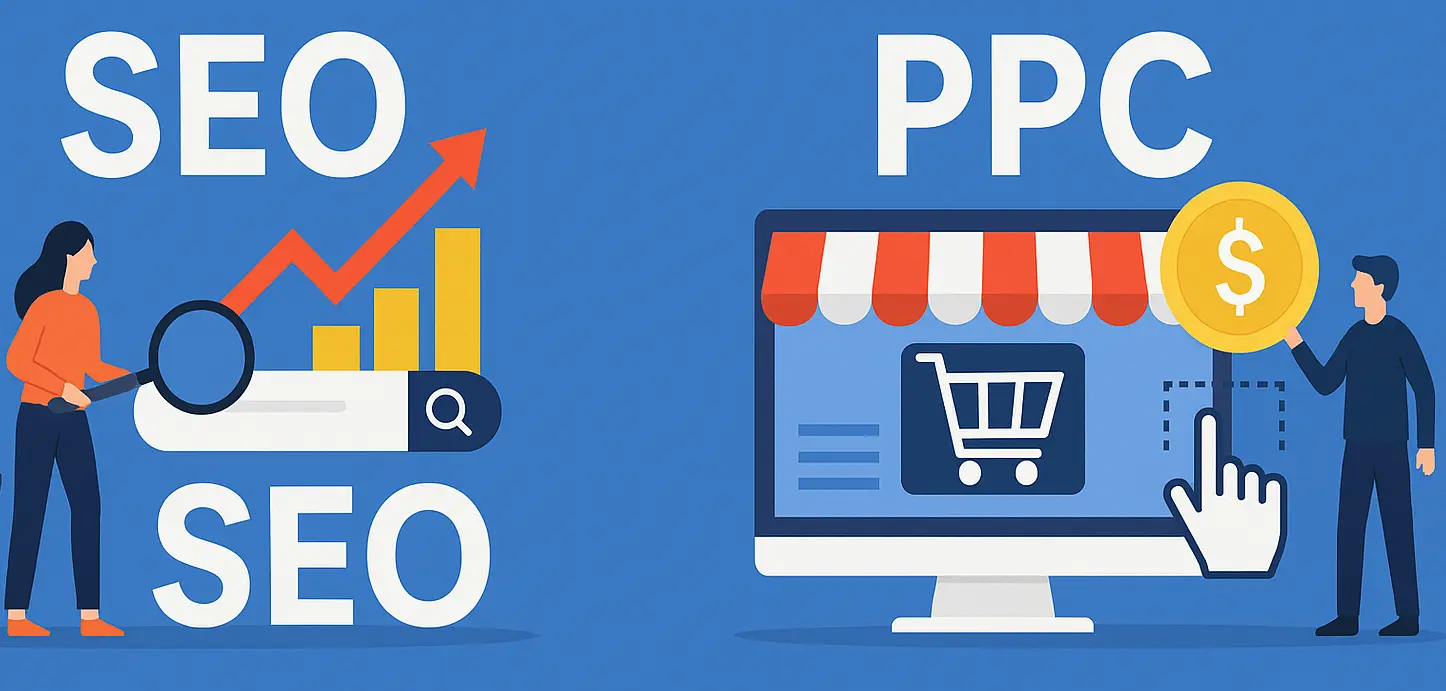
You launch your e-commerce store, add your best products, and wait. But days pass. No visitors. No sales. You wonder what’s missing and start searching online. Soon, you come across SEO and PPC as possible solutions. But one question stays with you: Do ecommerce sites need SEO and PPC to grow?
The short answer is yes. E-commerce sites need both SEO and PPC to grow online. SEO improves visibility by ranking your store in search results. PPC drives instant traffic by showing your products on search engines and shopping ads. Together, they bring qualified visitors and boost sales more effectively than using one alone.
In this blog, you’ll learn how SEO and PPC help e-commerce sites grow. You’ll see when to use each, how they work together, and which fits your goals. You’ll find a clear path to drive more traffic and sales on Amazon, Shopify, WooCommerce, or any platform.
What is SEO and How Does It Work for E-Commerce?
When people search online, they usually click the first few results. E-commerce SEO helps your store become one of them. It’s how online stores show up in search results without paying for ads.
Over time, this builds steady organic traffic and brings more people to your store for free.
Key Elements of E-Commerce SEO
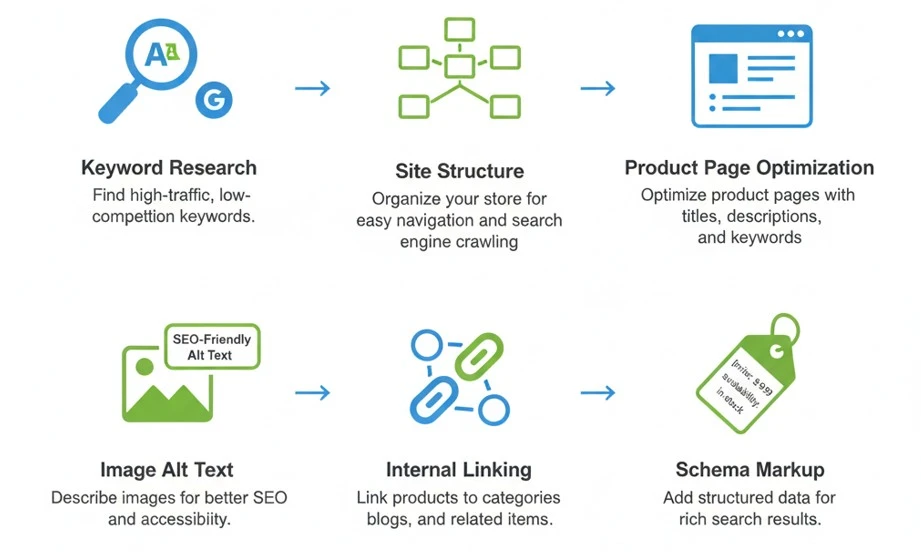
To get found on search engines, your store needs a few core SEO elements working together.
- Keyword Research: Start by finding what buyers type into Google when they look for your products. Use tools like Ahrefs, Moz, or Google Search Console to discover high-traffic and low-competition keywords. You can also track keyword rankings over time using Google Search Console or Ahrefs.
- Site Structure: A clean layout helps search engines crawl your site. Organize your store into clear categories and subcategories. Every product should be easy to reach within a few clicks. Tools like Screaming Frog help identify site issues and improve structure.
- Product Page Optimization: Focus on your title tag, meta description, H1, and product descriptions. Add keywords naturally. Use clear, helpful language that shows what the product is and why it matters.
- Image Alt Text: Describe each image clearly. It helps with SEO and supports users who rely on screen readers.
- Internal Linking: Link your product pages to categories, blogs, or related items. This builds stronger SEO and improves user experience.
- Schema Markup: Add structured data like price, rating, and availability. It helps your products stand out with rich results in search listings.
Example: A product page for a protein shaker bottle should target the keyword “best protein shaker bottle.” Include the keyword in the title tag, meta description, H1, and product description.
Use it naturally in the image alt text as well. Add customer reviews, high-quality images, and key features to build trust and improve search rankings. These elements help the page rank higher and guide buyers to take action.
What is PPC and How Does it Work for E-Commerce?
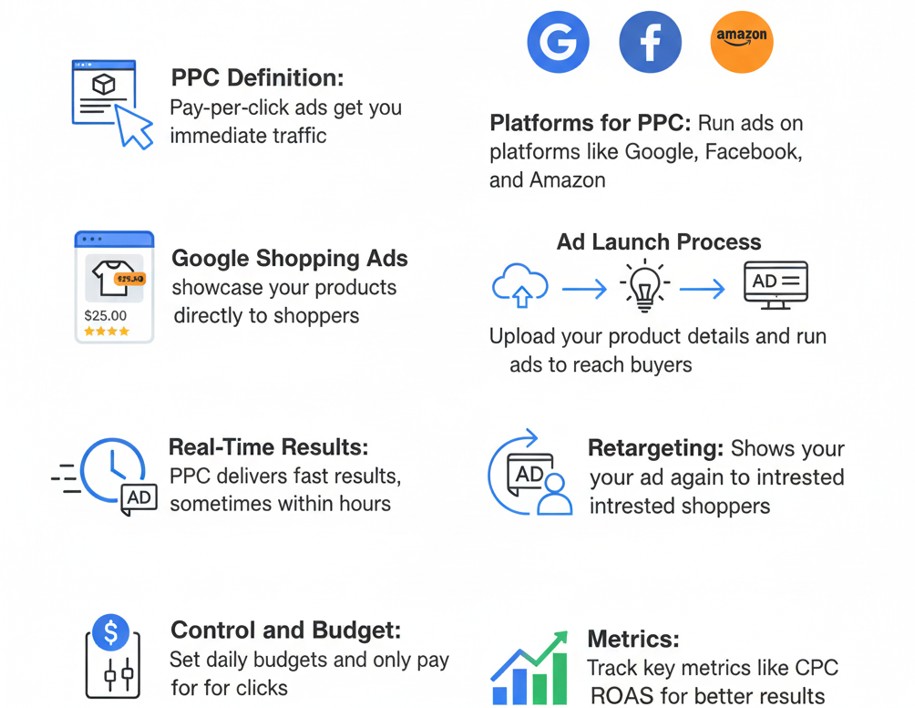
PPC stands for pay-per-click. It lets you show ads for your products and only pay when someone clicks.
E-commerce brands use PPC to get fast traffic and reach buyers already searching for what they sell. You can launch a campaign and see real results within just a few hours.
Platforms like Google Ads (formerly AdWords), Facebook Ads, and Amazon Ads help sellers run these campaigns.
One of the most used formats is Google Shopping Ads, which show your product with a photo, price, and rating. This makes it easy for shoppers to click straight to your page.
How E-Commerce PPC Works
Here’s how it works. First, you upload your product feed, which includes details such as titles, prices, and photos. Then, you run paid ads across platforms like Google or Facebook.
Your products appear when buyers search for similar items. Some shoppers click and buy right away. Others see your ad later through retargeting.
For example, you launch a new water bottle and run a paid ads strategy through Google Shopping. A shopper searches “buy water bottle” and sees your ad the same day. You get your first sale that evening. That’s the speed PPC offers.
You stay in control by setting your daily budget. You only pay for actual clicks, not views. Metrics like CPC (cost-per-click) and ROAS help you track your return and improve your results.
Ecommerce sites need SEO and PPC to attract buyers, rank higher, and drive faster sales. At BrandsBro, we build strategies that improve visibility and bring qualified traffic.
We manage SEO and PPC together so your store gets long-term growth and immediate results.
Do eCommerce Sites Need SEO and PPC?
Most e-commerce stores need both SEO and PPC to grow. Relying on just one often slows progress or wastes money. If your store needs steady traffic and quick wins, this marketing mix works best.
An SEO strategy helps people find your store in search results. It builds trust and organic traffic over time. PPC campaigns drive instant clicks by showing ads to buyers already looking to purchase. One builds long-term strength. The other creates fast results.
This combination works because it fills the gaps each method leaves behind. SEO takes time to gain traction. PPC can drain your budget without a plan. Together, they form a complete e-commerce marketing mix.
You reach more people, improve online visibility, and convert more visitors into buyers. Your conversion rate rises as your store shows up at the right moments. This mix also supports steady lead generation as both channels bring quality traffic.
Using both gives your business more control. You can launch with PPC and scale with SEO. One supports your short-term goals. The other builds long-term growth without constant spending.
Why SEO and PPC Work Better Together?
Many store owners think they must choose between SEO and PPC. That mindset often limits e-commerce growth. The truth is that using both brings stronger results. Smart brands don’t separate the two. They connect them.
Without PPC, you wait for traffic. You miss fast feedback and slow-down page testing. Without SEO, your paid traffic costs more and ends the moment your budget runs out. That’s a risky way to grow.
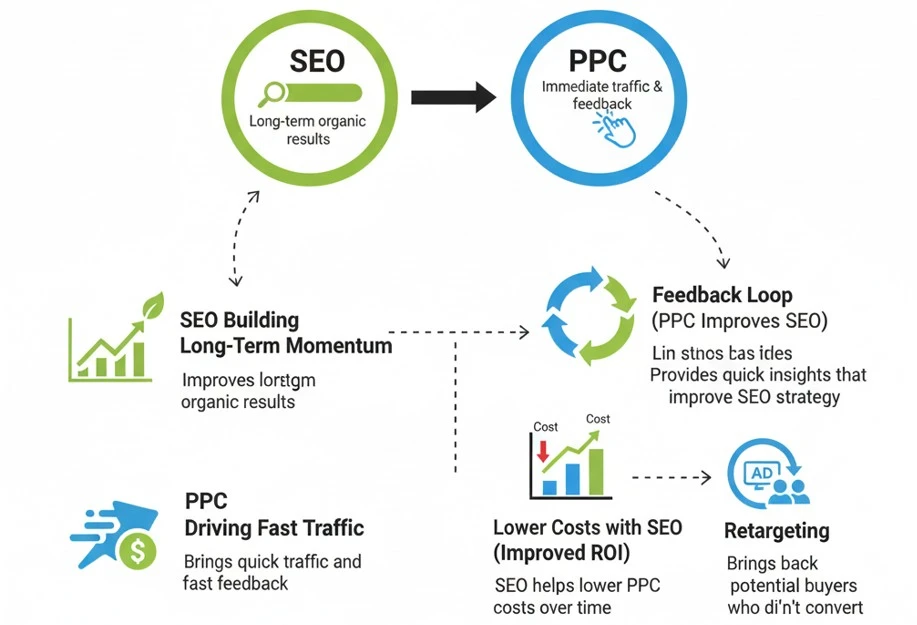
When you combine SEO and PPC, they support each other. PPC brings traffic right away and shows what headlines or pages work best. Tools like Google Analytics and Keyword Planner help you learn what real shoppers respond to. This improves your content, design, and audience targeting. Retargeting ads bring back visitors who clicked but didn’t buy.
SEO then takes those lessons and builds long-term momentum. Good content lowers bounce rates and improves your landing pages. That makes ads cheaper and more effective. It also increases trust, which helps people convert when they return. This improves your results and supports conversion rate optimization across the site.
Together, they improve every part of the sales funnel. You get faster feedback, better leads, and stronger ROAS. You also spend less to earn more. Brands that combine both usually grow faster and waste less budget.
You don’t need to choose. You need to link both strategies. That’s how real, steady ecommerce growth happens.
SEO or PPC? Make the Right Call for Your Business
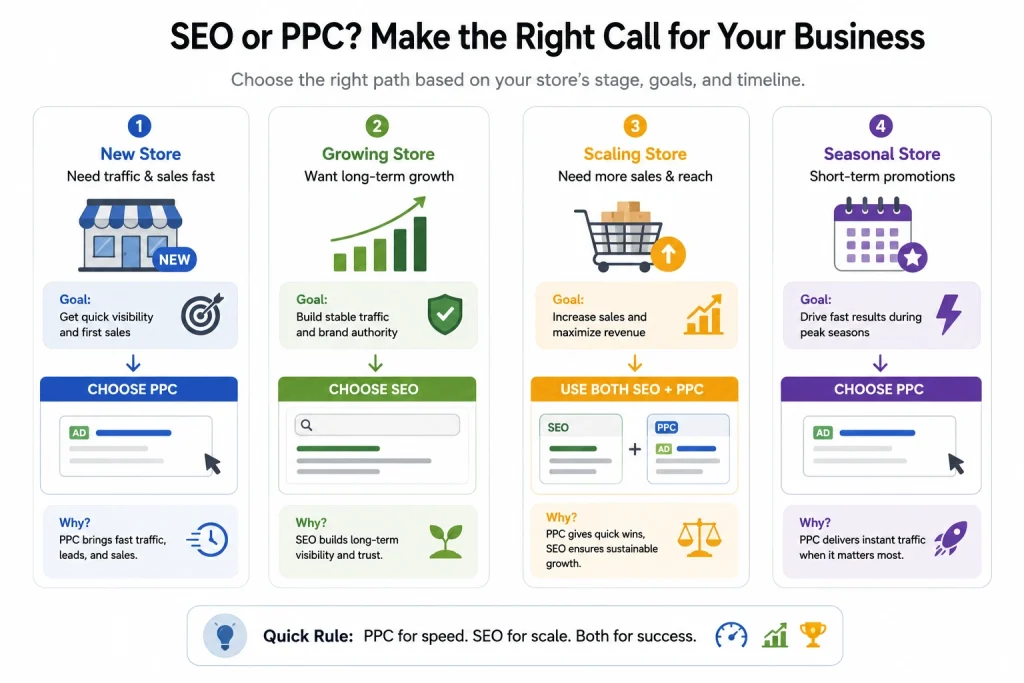
Many e-commerce owners struggle to decide how to start their marketing. SEO and PPC seem similar, but they work in different ways. One brings long-term growth. The other brings fast results. So, which one should you choose?
That depends on where your store is right now and how quickly you need to see results. You don’t need to guess. Below are four simple paths based on your store’s current stage, goals, and timeline.
This will help you decide when to use SEO, when to choose PPC, and when it makes sense to use both.
Just Launched? Start with Speed
If your store is brand new, getting quick traffic helps you test what works. PPC gives you that speed. You don’t have to wait for rankings or SEO efforts to build over time.
Instead, you can test product headlines, pricing, and landing page performance right away.
You also gain helpful keyword and audience data from day one.
- Launch ad campaigns in just hours
- Target real buyers actively searching
- Use retargeting to bring visitors back again
Growing Steady? Build Organic Strength
If your site already brings in traffic, SEO helps you grow without extra ad spend. It supports long-term goals.
When you publish helpful content and update product pages, search engines reward that effort. Your store becomes easier to find, and buyers are more likely to trust you.
Selling on a Deadline? Choose Control
Running a flash sale or promoting a seasonal launch? PPC gives full control over timing and budget.
You can reach specific audiences, adjust campaigns in real-time, and pause or restart based on performance.
- Perfect for time-sensitive campaigns
- Budget-friendly with pay-per-click setup
- Instant visibility for high-demand products
Want Long-Term Wins? Use Both
The best results often come when you use SEO and PPC together. PPC delivers quick feedback and traffic. SEO builds trust and keeps traffic flowing over time. When combined, they support every stage of your growth.
Using both helps you scale faster, spend smarter, and keep your brand visible in the short and long term.
How Do AI Overviews Affect SEO and PPC?
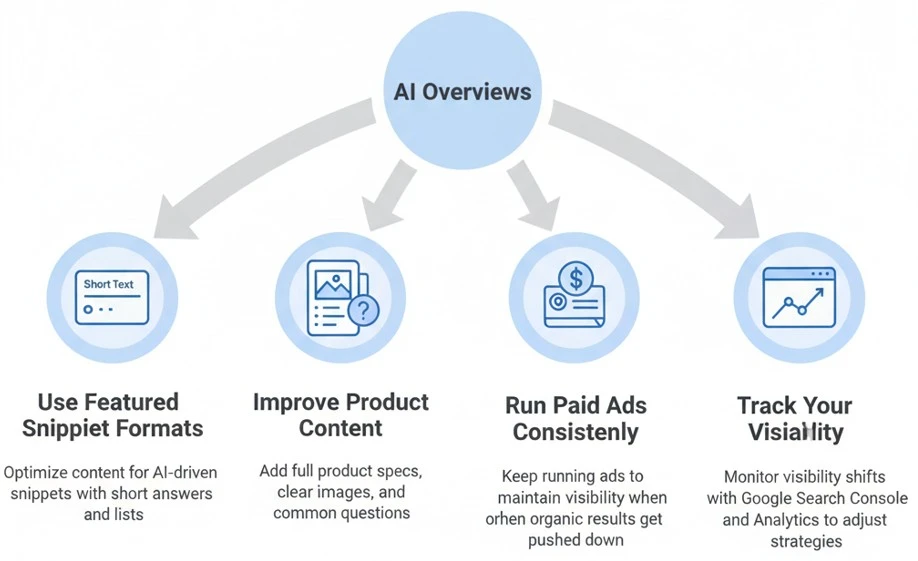
Google’s new AI Overviews (SGE) are changing how search results look and work. Instead of sending users to websites, Google now shows full answers right on the page. This means fewer people click search results, even when your site ranks well.
For ecommerce brands, this shift reduces organic traffic. But it also makes quality content and paid ads more important. If your product details or blog content are clear and useful, they may be shown inside the AI answer. That helps your brand stay visible, even without a click.
PPC now plays a bigger role. As organic reach drops, ads keep your products in front of the right people. Google Shopping, Meta Ads, and Amazon Ads help you reach buyers during searches and on social platforms.
To prepare for this change:
- Use featured snippet formats: Add short answers, lists, and product info to key pages.
- Improve product content: Include full specs, clear images, and common questions buyers ask.
- Run paid ads consistently: This helps you appear when organic results get pushed down.
- Track your visibility: Use Google Search Console and Analytics to watch traffic shifts and update your strategy.
How Much Should Ecommerce Stores Spend on SEO and PPC?
Ecommerce stores should usually spend based on their growth stage, profit margin, and customer acquisition goal. A new store may spend more on PPC at the beginning because paid ads can bring faster traffic, product testing data, and early sales. SEO takes longer, but it builds long-term visibility and reduces dependency on ads over time.
A practical starting point is to divide the marketing budget between short-term sales and long-term growth. For many ecommerce stores, PPC may take 60–70% of the budget in the early stage, while SEO gets 30–40%. Once the store has proven products, stable conversion rates, and enough sales data, the balance can shift toward SEO.
The real answer depends on profit. If your product has low margins, spending heavily on PPC can quickly destroy profit. If your average order value and repeat purchase rate are strong, PPC can scale faster. SEO should always receive consistent investment because product pages, collection pages, blog content, and technical optimization keep working even when ad spend stops.
When Should an Ecommerce Store Focus More on SEO Than PPC?
An ecommerce store should focus more on SEO than PPC when paid ads are becoming too expensive or the store depends too much on constant ad spending. If every sale requires a high click cost, weak conversion rate, or aggressive discount, PPC is not building a healthy business. It is just renting traffic.
SEO becomes more important when customers search for products, comparisons, guides, reviews, and solutions before buying. For example, if people search “best running shoes for flat feet” or “how to choose a portable oxygen concentrator,” SEO can capture buyers before they click on paid ads. This helps the store build trust earlier in the buying journey.
Stores should also prioritize SEO when they have many products, collections, or informational topics to rank for. A store with only a few products may need PPC to create demand. But a store with strong category depth can win organic traffic through optimized collection pages, product descriptions, buying guides, and internal links.
Which Ecommerce Pages Need SEO Before Running PPC?
The most important ecommerce pages to optimize before running PPC are product pages, collection pages, landing pages, and checkout-related pages. Sending paid traffic to weak pages is a waste of money. If the page has thin content, poor product information, slow loading speed, or unclear buying reasons, PPC will only expose those problems faster.
Product pages need SEO because they must answer buyer questions clearly. This includes product benefits, specifications, use cases, shipping details, return policy, FAQs, reviews, and comparison points. A good product page does not only rank better; it also converts paid traffic better.
Collection pages also need SEO before PPC because many shoppers search by category, not by exact product name. Pages like “portable oxygen concentrators,” “AGM powersport batteries,” or “Shopify SEO services” should include helpful category copy, filters, internal links, and clear product sorting. These pages can rank organically and also work as strong PPC landing pages.
Blog posts and buying guides should support both SEO and PPC strategy. They help educate customers who are not ready to buy immediately. A store should not rely only on ads to push products. SEO builds the path, PPC speeds up the traffic, and optimized pages turn visitors into buyers.
Frequently Asked Questions(FAQs)
You’ve learned how SEO and PPC can grow your store and how new changes are shaping search. However, some questions still come up when applying these strategies in real life. Here are clear answers to help you move forward with confidence.
PPC campaigns provide immediate insights into which keywords and ad copies drive conversions. By analyzing this data, you can identify high-performing keywords to target in your SEO efforts, optimizing content for terms that have already proven effective in paid search.
Voice search is becoming increasingly prevalent, with users often phrasing queries as questions. Optimizing content and ads for conversational keywords and natural language can improve visibility in both organic and paid search results, catering to this growing segment of search behavior.
Absolutely. Mobile users often have different search behaviors and intent compared to desktop users. It helps to ensure your website is mobile-friendly, with fast load times and responsive design, and improves SEO. For PPC, consider mobile-specific ad formats and bidding strategies to effectively reach this audience.
AI-generated search results, like Google’s AI Overviews, can reduce clicks to traditional listings. To adapt, focus on creating comprehensive, authoritative content that answers specific user questions, increasing the likelihood of being featured in these AI summaries and maintaining visibility.
Yes. Combining SEO and PPC allows for a cohesive approach to keyword targeting and audience engagement. Insights from PPC can inform SEO priorities, while strong organic rankings can reduce reliance on paid ads over time, leading to a more efficient and effective marketing strategy.
Ready to Grow? Brand's Bro Is Built for This!
You’ve seen what SEO and PPC can do. Now, it’s time to turn that into results. But results don’t come from knowledge alone. They come from building, testing, refining, and doing it all with consistency.
That’s where most brands stall.
At Brands Bro, we don’t just offer advice. We bring over 12 years of hands-on experience in SEO, PPC, and e-commerce growth. We’ve helped brands scale with strategies that actually work. From Google Ads and Amazon PPC to full-funnel SEO, we know how to drive results. But that’s just one side of what we do.
We also handle everything from A+ content, listing optimization, and storefront design to Amazon account support and creative direction. If it happens on Amazon, we’ve done it and done it well.
You already know what’s possible. Let’s move to what’s next together.
