
Running an online shop on Shopify is much like owning a physical store. You want every person who visits to find what they need. You also want to help them find other items that make their life better.
This goal is often measured by a metric called revenue per session. In the current Shopify world, it is not enough to just get people to your site. You must focus on maximizing the value of every single click.
A big part of this strategy involves choosing between a post purchase upsell vs cart upsell for your store. Many owners get stuck trying to decide which one is better for sustainable growth. They both help you sell more, but they work at different times.
Some stores fail because they add too much friction when a customer is trying to buy. This can make people leave the site without finishing their order. Understanding how to avoid this is key to building a successful brand.
What Are Cart Upsells and Post-Purchase Upsells?
Before we dive deep, let’s make sure we understand these two terms. They are simple ideas, but knowing the difference is very important for your store’s success.
Defining the Cart Upsell
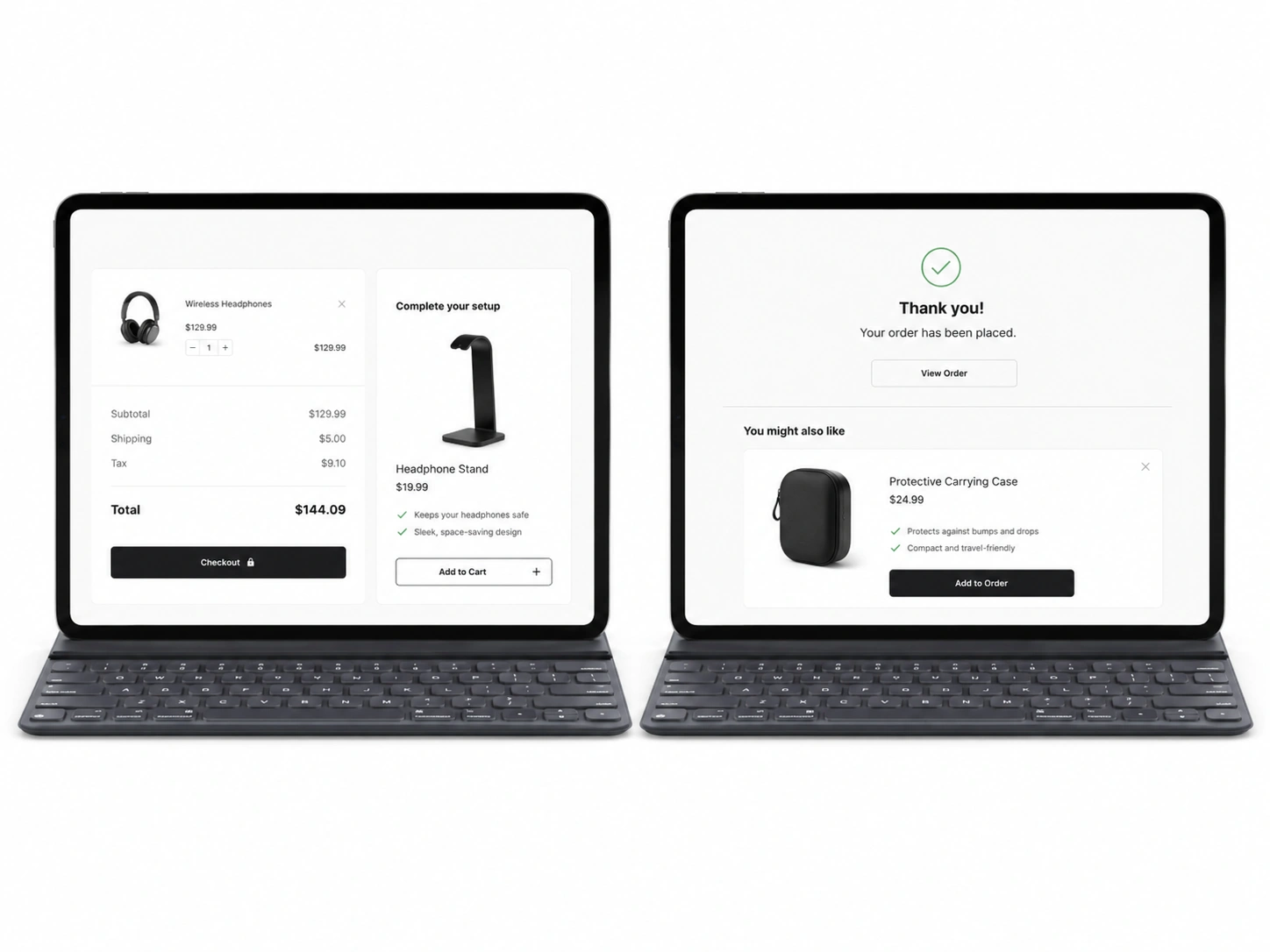
A cart upsell is an offer you show to a customer before they pay. When they add an item to their basket and go to view it, you suggest another product. It happens right there on the cart page or in the cart drawer.
Defining the Post-Purchase Upsell
A post-purchase upsell is an offer you show after a customer has already paid. They complete their order, and on a special page before the final receipt, they see a one-time offer. They can add it to their order with just one click.
Now that we have a clear definition, let’s explore the cart upsell in more detail.
The Cart Upsell: Maximizing Intent Before the Transaction
A cart upsell happens while the customer is still looking at their shopping basket. This is the moment when they have shown a clear intent to buy something. You can use this time to show them items that go perfectly with their choice.
Mechanics of the Cart Drawer and Progress Bars
Many Shopify stores use a slide-out cart drawer to keep things simple. Inside this drawer, you can add visual cues like progress bars. These bars might say that the customer is only ten dollars away from free shipping.
This is a great example of a cart offer that feels like a game. The customer feels like they are winning a prize by adding one more small item. It makes the shopping experience feel more fun and less like a transaction.
The Logic of Frequently Bought Together
You can also use logic to show items that are often bought together. If a person buys a camera, you should show them batteries or a carry bag. This uses specific product attributes like relevance and price point to help the customer.
Using these tools involves cross-selling and product bundling to increase your total sales. Here are some of the most common ways to use the cart area:
- In-Cart Cross-selling: Show a matching accessory that fits the main item.
- Tiered Discounts: Give a better deal if the customer buys two or three of the same thing.
- Shipping Thresholds: Remind the customer how much they need to spend to avoid shipping fees.
These methods work well because they are very visible. Every person who goes to the checkout will see these offers. They are great for small items that do not require a lot of thought.
However, there is a small risk when you add items to the cart. If you show too many messages, the customer might get confused. This can lead to a high cart abandonment risk where the sale is lost entirely.
Because of this risk, some owners prefer to wait until the payment is done. This brings us to a very different way of selling more products.
The Post-Purchase Offer: Leveraging the "Buyer’s High"
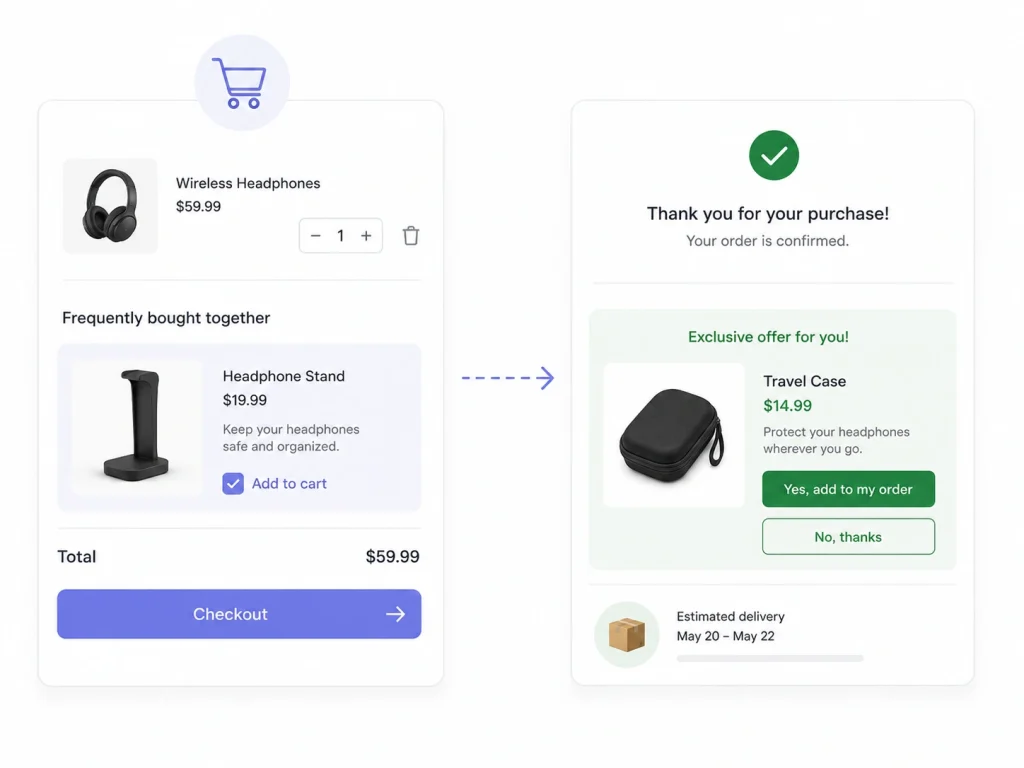
A post-purchase offer happens in a very special window of time. It appears after the customer has paid but before they see the final thank you page. This is often called an intermediate page because it sits in the middle of the flow.
This strategy is built on a few key ideas. The most important one is the one click upsell feature. The customer can accept the new deal with just one tap on their screen.
They do not have to enter their credit card numbers a second time. This works because it uses Shopify checkout extensibility to keep the payment secure. It is a very smooth way to offer a bonus deal.
Since the customer has already paid for their first order, there is zero risk to the original sale. Even if they say no to the upsell, you still have their money for the first item. This is why many people find it to be a very safe way to grow.
Setting this up requires some care to keep the customer happy. If you rush the setup, you might make common mistakes related to upsell that hurt your brand. You want the offer to feel like a special gift for a new buyer.
The timing of this offer is what makes it so powerful for Shopify brands. It uses the natural excitement a person feels after they make a purchase. Now we can look at a direct comparison of these two popular methods.
Post Purchase Upsell vs Cart Upsell: Comparative Analysis
When you compare a post purchase upsell vs cart upsell, you have to look at the data. Cart offers are seen by more people, but they often have lower conversion rates. Post-purchase offers are seen by fewer people, but those people are already proven buyers.
Most stores see a higher average order value when they use both strategies together. A post purchase upsell vs cart upsell choice depends on your specific goals. You must decide if you want more eyes on your products or higher conversion from your buyers.
Key Differences at a Glance
This table breaks down the main points of comparison between the two strategies.
Feature | Cart Upsell (Pre-Purchase) | Post-Purchase Upsell |
Timing | Before the customer pays | After the customer pays |
Risk | High risk of cart abandonment | Zero risk to the original sale |
Visibility | High (seen by all shoppers) | Lower (seen only by buyers) |
Conversion Rate | Generally lower (1-3%) | Generally higher (3-10%) |
Best For | Low-cost items, free shipping goals | Higher-value items, impulse buys |
Conversion Rate vs. Risk Assessment
Cart upsells have high visibility because every shopper sees the basket. The downside is that you might distract someone who is about to pay. This is a risk that some high-volume stores try to avoid.
Post-purchase offers are only seen by people who have finished their checkout. This makes them 100% safe for your initial conversion rate. You are essentially asking for a second sale from someone who just said yes to the first one.
Technical Flow on Shopify
Shopify handles these two types of offers in different ways. The cart offer lives in your theme files or your cart drawer. The post-purchase offer lives inside the secure checkout area.
This helps provide a frictionless checkout where the customer does not feel any bumps in the road. It also helps prevent buyer’s remorse because the first deal is already finished. The customer can focus on the extra value without worrying about their first order.
Understanding the mind of the shopper is the next step in this journey.
Customer Psychology: The Micro-Commitment vs. The Impulse
Human behavior is the biggest factor in why these offers work. When a person pays for an item, they have made a commitment. This makes them more likely to say yes to a second, smaller request.
The Momentum of Yes
Psychologists call this the momentum of a micro-commitment. Once a user has entered their details and paid, they are in a buying mode. This state of mind makes a post-purchase offer very effective.
It feels like adding a candy bar at the grocery store checkout. The big decision is over, so the small decision feels easy. This is why these pages often have such high success rates.
Impact on Shipping and Logistics
There is also a physical side to these choices. A cart upsell can help a merchant optimize their shipping costs. By adding more items to the first box, you increase the physical density of the package.
This means you pay less in shipping for each item you sell. It is a smart way to use the cart to save money on labels and boxes. However, you must make sure the items actually fit together in one shipment.
This whole process is much clearer when you understand the difference between thank you page upsells and one click offers and how they affect the mood. One happens while the buyer is excited. The other happens after they have finished their task.
The bridge between a good offer and a great offer is relevant. You must show the right item to the right person at the perfect time. This leads us to how you can build a funnel that converts.
Building a High-Converting Funnel Architecture

To get the most out of your store, you need a plan for revenue optimization. This means you do not just guess what will work. You create a system that shows the best items based on what is in the cart.
Setting Priority Rules and Logic
You should decide which products show up as a post purchase upsell vs cart upsell based on your goals. Use the cart for items that people often forget, like socks or cleaning kits. Use the post-purchase page for items that are a bit more expensive.
You can set rules that say if a person buys a laptop, show them a mouse in the cart. If they buy that mouse, show them a mouse pad after they pay. This keeps the offers logical and helpful.
The Role of Down-selling
A down-sell is a second offer that you show if the customer says no to the first one. It is usually a cheaper item or a smaller version of the first offer. This gives you one last chance to help the customer before they leave.
Here are the basic rules for a high-converting funnel:
- Price Anchoring: The upsell should usually cost less than the main item.
- Urgency Triggers: Use a countdown timer to show the deal is for a limited time.
- Relevance: Only show items that actually make sense with the first purchase.
Following these steps will help you create a post-purchase upsell funnel that works. It will feel like a natural part of the shopping trip. This builds trust and keeps people coming back to your store.
You must also think about how these offers look on a mobile phone. Many people shop on their phones while they are on the go. The buttons should be large and the text should be very easy to read.
If a customer finds the process too hard, they will just close the window. Keep your layout clean and focus on the benefit of the product. Now we should talk about how you can measure your success.
Data and Testing: The Path to Topical Authority
You cannot improve what you do not measure. A successful Shopify store always looks at the numbers to make smart decisions. Instead of guessing what your customers want, you can use data to know for sure.
Starting with Simple A/B Testing
The best way to begin is with A/B testing. This sounds technical, but it is a very simple idea. You show one offer to half of your visitors, and a different offer to the other half.
For example, you can try showing a discount for one week and a free gift for the next week. Then, you see which one makes more people click the buy button. This data helps you understand your customers on a deeper level.
You can test more than just the offer type. Try testing different products, different discount amounts, or even different headlines. Small changes can often lead to big results.
What Key Numbers Should You Watch?
When you run these tests, you need to watch a few important numbers. These metrics will tell you if your strategy is working.
First, look at your average order value (AOV). This is the average amount of money each customer spends. When your AOV goes up, you know your upsells are adding real value.
Next, track the conversion rate of the offer itself. This tells you how many people said “yes” to the extra item. A higher conversion rate means your offer is a good match for your customers.
This strategy also improves the Customer Lifetime Value (CLV). This is a measure of how much a customer is worth to your business over time. Happy customers who get good deals are more likely to come back and buy again. This is a key part of retention marketing.
Finding Patterns in Your Sales Data
It is important to check your results at least once a month. Over time, patterns will start to show up in your data. This information is very valuable for planning.
You might find that some items only sell well on weekends. Or perhaps certain offers work much better during big holidays. This knowledge helps you create a sales calendar that is much more effective.
When you understand these patterns, you can show the right offers at the right times. This makes your marketing feel more personal and less like a generic advertisement.
Using Data to Become a Leader
Sharing these wins with your team can help everyone stay focused on growth. It also helps you stay ahead of your competitors. Most stores do not take the time to test their offers this way.
By being the one who tests, you become the leader in your niche. You will know exactly what your customers want before they even ask. This is the final piece of the puzzle for building a great Shopify store that lasts.
Frequently Asked Questions (FAQs)
You still might have a few questions about how all this works. Here are some quick and simple answers to the most common things people ask about upselling on Shopify.
For brand new stores, a cart upsell is often easier to start with. It helps customers reach free shipping goals and is very simple to set up. It builds good habits for you and your shoppers from day one.
Yes, you should use both for the best results. They target customers at different moments in their buying journey. Using both allows you to maximize your average order value without being too pushy or distracting at any single step.
Upselling is offering a better, more expensive version of the same product. Cross-selling is offering a related but different product. An upsell focuses on value, while a cross-sell focuses on adding more items to the cart.
Yes, post-purchase offers almost always have higher conversion rates. This is because the customer has already decided to trust you with their money. The offer is also risk-free, so it feels like a safe and easy choice to make.
Look at your sales data to see what items are frequently bought together. You can also test different offers to see what your audience responds to best. The right product should always feel helpful and relevant to the original purchase.
They can if they are not relevant or helpful. The key is to make offers that add real value to the shopping experience. If an offer feels like a special bonus, customers will appreciate it instead of feeling annoyed.
Ready to Grow Your Store? Start Upselling Today!
You now have the playbook for smarter selling on Shopify. The choice between a cart upsell and a post-purchase offer is all about balance. One captures early interest, while the other secures risk-free revenue from your happiest buyers.
Don’t just wait for more traffic to find you. Start testing these strategies today to make more from the customers you already have. Turn every single transaction into an opportunity and watch your average order value climb higher than ever before. The right offer at the right time is the key to scaling your business. Go build a better funnel
