
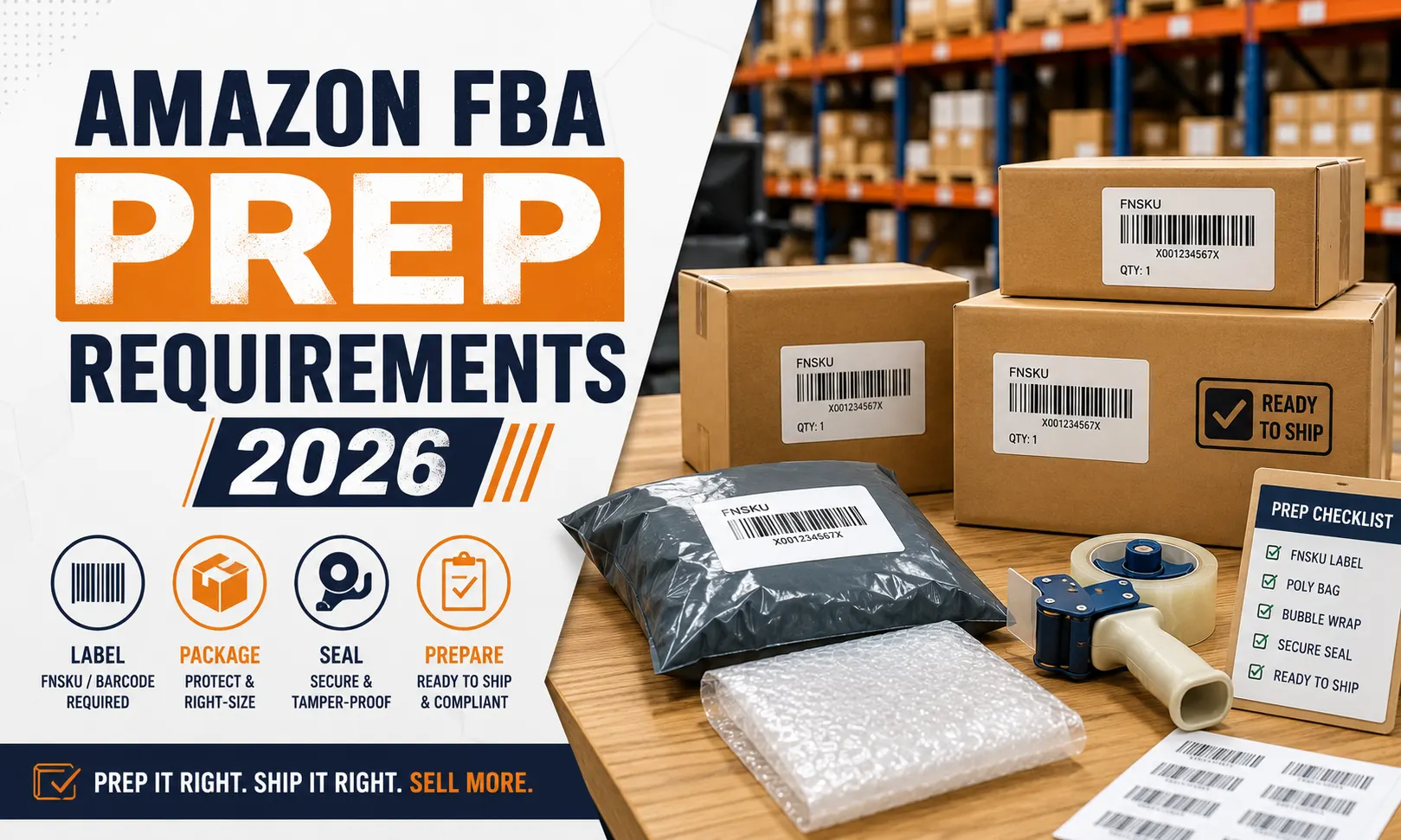
FBA prep used to be something Amazon handled for sellers. That changed. Now every product must arrive at the warehouse ready to scan and sell.
One of our clients shipped 400 units without updated FNSKU labels last quarter. Amazon held the entire shipment for three weeks. Storage fees added up while inventory sat unprocessed.
At Brand’s Bro, we have served 350+ Amazon sellers in the USA, Canada, and Australia. One client saw 27% higher revenue after we rebuilt the listing and fulfillment setup.
Understanding Amazon FBA prep requirements 2026 matters before the first box ships. This guide covers 10 rules that prevent delays and rejected inventory.
What Changed for FBA Prep in 2026
Amazon removed its U.S. prep and item labeling service for sellers. Products must now arrive at the fulfillment center ready to scan. Sellers who relied on Amazon for barcode labels need a new workflow.
The Send to Amazon tool also updated its box content requirements. Incorrect carton data now creates longer receiving delays at fulfillment centers. Manual processing fees apply when Amazon has to fix label or packaging problems.
These changes put full prep responsibility on the seller before shipping. Third-party prep centers have grown as a result of this shift.
What Counts as Amazon FBA Prep
FBA prep covers every packaging and labeling step needed before shipping to Amazon. Barcode labels and protective packaging are the main prep tasks. Warning labels and box-level data are also part of the process.
Each product type has its own prep rules inside Seller Central. Glass items need bubble wrap, while loose-part products go in poly bags. Sets of multiple units need a “Sold as Set” sticker on the outside.
The purpose of prep is to make each unit ready for the warehouse shelf. Amazon staff should not need to open or repackage anything after check-in.
10 Amazon FBA Prep Requirements 2026 Sellers Must Follow
These 10 requirements cover what every seller must complete before shipping to FBA. Each one addresses a specific check-in standard at the fulfillment center. Missing any of them can delay inventory or trigger extra charges.
1. Apply the Correct Barcode to Each Unit
Every FBA unit needs a scannable barcode before it ships to Amazon. FNSKU is Amazon’s barcode tied to your specific seller account. UPC and EAN codes work if commingled inventory is enabled in settings.
Each label must sit on a flat surface of the product packaging. Wrinkled or covered barcodes cause scan failures during warehouse check-in.
2. Use Poly Bags Where Required
Products with loose parts or fabric surfaces need poly bags before shipment. The poly bag must be at least 1.5 mil thick for FBA. Bags larger than 5 inches at the opening need a suffocation warning.
Toys and plush items often need poly bag prep before shipping. Clothing shipped in poly bags follows this same thickness rule.
3. Add Suffocation Warning Labels
Poly bags larger than 5 inches need a printed or attached suffocation warning. The warning text must be readable in at least 24-point font size. Amazon may reject inventory that arrives in unmarked bags.
Many sellers print the warning on the bag during production. A separate sticker works too if the text meets the size standard.
4. Wrap Fragile Items in Bubble Wrap
Glass and ceramic products need bubble wrap before going into the carton. The wrap should cover the entire surface with no exposed areas. A drop test from table height helps confirm the packaging works.
Fragile items without proper cushioning risk damage during warehouse handling. Amazon may charge a manual processing fee for items that need repackaging.
5. Label Multi-Unit Sets Correctly
Products sold as a bundle or set need a “Sold as Set” label on the outside. This tells warehouse staff not to separate the items for individual sale. Missing set labels can cause order errors and buyer complaints.
The label must be visible without opening any packaging. A clear “Do Not Separate” line works alongside the set label.
6. Follow Expiration Date Rules
Products with expiration dates must show the date on the outer packaging. Amazon requires the format to be legible and in a standard date layout. Products within 90 days of expiration cannot be sent to FBA.
Lot numbers and batch codes should appear near the expiration date. Amazon uses these codes for tracking in case of recalls or removals.
7. Complete the Dangerous Goods Review
Products with batteries or flammable contents need a hazmat review in Seller Central. Sellers must submit a Safety Data Sheet for each affected product. An exemption sheet covers items that look hazardous but are not.
FBA Dangerous Goods program enrollment is required for these items. Products that fail the review cannot ship through FBA at all.
8. Enter Box Content Information
Every shipping carton must have accurate box content data in Seller Central. This data tells Amazon what products sit inside each box. Missing or wrong data creates receiving delays and manual processing fees.
Case-packed boxes contain one SKU per carton. Mixed-SKU boxes need item-level detail for each product inside.
9. Print and Apply FBA Shipment Labels
Each carton going to Amazon needs an FBA box ID label from Seller Central. This label connects the physical box to the digital shipment record. A missing box label stops the carton from entering the receiving line.
The label must sit on a flat side of the box. Tape should not cover the barcode area of the shipment label.
10. Create the Shipment in Send to Amazon
The Send to Amazon workflow in Seller Central creates the shipment plan. It generates carton labels and assigns fulfillment center destinations. Sellers choose between small parcel or pallet delivery during this step.
Amazon partnered carriers offer discounted shipping rates inside this tool. The shipment becomes active after all box content data is confirmed.
FBA Prep Checklist Before Shipping
These 10 items match the prep requirements above in sequence. Each one prevents a specific receiving delay or compliance charge.
Check | Prep Area | What to Confirm |
1 | Barcode | FNSKU or eligible UPC on each unit |
2 | Poly bag | 1.5 mil thickness with sealed opening |
3 | Suffocation warning | Printed on bags over 5 inches wide |
4 | Bubble wrap | Full coverage on glass or fragile items |
5 | Set label | “Sold as Set” visible on bundled products |
6 | Expiration date | Legible date with 90+ days of shelf life |
7 | Dangerous goods | SDS or exemption sheet on file |
8 | Box content data | SKU details entered for each carton |
9 | Shipment labels | FBA box ID printed on every carton |
10 | Send to Amazon | Shipment plan created and confirmed |
Running through this list before sealing cartons catches most prep gaps. A second review after sealing confirms all labels are visible and scannable.
FBA Barcode Types and Placement Rules
FNSKU and manufacturer barcodes are the two barcode types accepted for FBA. FNSKU is Amazon’s label tied to your seller account and inventory. Manufacturer barcodes like UPC and EAN apply if commingling is enabled.
Sellers new to FBA should review the FBA barcode process before printing any labels. Each barcode needs at least a quarter-inch of white space around it. Labels placed on curves or corners fail scans during warehouse check-in.
Covering the barcode with tape or shrink wrap can block the scanner. A flat surface away from edges gives the best scan results at check-in.
FBA Prep Fees and Manual Processing Costs
Amazon charges a manual processing fee when products arrive without proper prep. The fee applies per unit that needs relabeling or repackaging at the center. These charges add up fast on large shipments with repeated prep errors.
Sellers who want to avoid FBA shipment delays should run the checklist before every shipment. Inbound placement fees also apply when Amazon routes boxes to multiple warehouses. The inbound placement service lets sellers pay to control which centers receive stock.
Repeated prep problems can trigger a coaching warning on the seller account. Multiple warnings may restrict future FBA shipping access for that seller.
Common FBA Prep Mistakes
Most FBA receiving delays start with missing labels or incomplete box content data. These prep errors create fees and slow down inventory availability on the listing.
- Shipping units without FNSKU labels after the labeling service ended.
- Using poly bags thinner than the 1.5 mil minimum thickness.
- Forgetting suffocation warnings on bags over 5 inches wide.
- Sending fragile items without bubble wrap or cushion material.
- Omitting the “Sold as Set” label from bundled products.
- Shipping products within 90 days of the expiration date.
- Skipping the dangerous goods review for battery-powered items.
- Entering wrong SKU quantities in the box content section.
- Placing barcode labels on curved or taped surfaces.
- Missing the FBA box ID label on one or more cartons.
A pre-shipment audit catches most of these errors before the carrier picks up. Prep issues on a single product can hold up the full carton at receiving. Assigning one team member to run the final check on every outbound order reduces repeat mistakes.
How We Help Sellers With FBA Prep at Brand's Bro
We help Amazon sellers build prep processes that pass warehouse check-in on the first attempt. Our team has managed listing and fulfillment projects for 350+ brands. That work spans product content through full operational support.
For FBA sellers, we start with barcode and packaging compliance review. We also pair prep work with optimized product listings so inventory converts traffic as soon as it goes live. One client reduced receiving delays by 80% after we rebuilt their prep workflow.
Strong prep and strong listings reduce wasted ad spend together. Sellers gain a process that holds up as order volume grows over time.
Inbound Placement and Shipment Routing
Amazon assigns fulfillment center destinations during the Send to Amazon workflow. Shipments may be split across multiple warehouses based on regional demand. The inbound placement service lets sellers pay to send boxes to fewer locations.
A full walkthrough of shipping to Amazon FBA covers the Send to Amazon steps for new sellers. Small parcel and pallet options are both available during shipment creation. Amazon partnered carriers offer lower rates than most third-party shipping providers.
Choosing the right carrier and placement option affects both cost and speed. Pallet shipments move through check-in faster at high-volume fulfillment centers.
Frequently Asked Questions (FAQs)
FBA sellers ask common questions about prep rules before shipping inventory. These answers cover the topics that cause the most check-in delays.
No. Amazon ended its U.S. prep and item labeling service. Sellers must complete all prep and labeling before shipping inventory to FBA.
FNSKU is Amazon’s preferred barcode for FBA products. UPC or EAN works if the seller enables commingled inventory in Seller Central.
Yes, for bags with an opening larger than 5 inches. The warning text must appear in at least 24-point font size.
Amazon may delay receiving and charge a manual processing fee per unit. Repeated data errors can trigger coaching warnings on the seller account.
No. Products within 90 days of their expiration date cannot ship to FBA. Amazon removes expired inventory and may charge disposal fees.
Yes. Products with batteries need a dangerous goods review in Seller Central. A Safety Data Sheet or exemption sheet must be on file before shipping.
The inbound placement service lets sellers pay to send stock to fewer fulfillment centers. Without it, Amazon may split shipments across multiple warehouse locations.
Ship Inventory That Passes Check-In on the First Attempt
Clean prep and accurate box data prevent the delays that cost sellers time. Barcode placement and compliant packaging are the base of every FBA shipment. Expiration rules and dangerous goods review add extra steps for specific products.
The Amazon FBA prep requirements 2026 updates shifted full responsibility to the seller. Every unit must arrive scannable and shelf-ready at the fulfillment center.
Brand’s Bro helps sellers build prep systems that scale with the product catalog. Strong prep paired with strong listings gives every product a better launch.
