
Amazon repricing strategies help you stay competitive and protect your profit. Prices on Amazon change constantly, and without a clear strategy, you risk losing sales. That’s why you need a good strategy to keep your prices smart, fair, and profitable.
Not every pricing strategy works the same for every seller. Some might help you win more sales but hurt your profit. Other strategies protect your margin but lower your visibility. The goal is to find a strategy that balances both and fits how you sell.
In this guide, we have covered the most effective Amazon repricing strategies for you to choose from. These proven strategies will help increase your sales and maximize profit.
What Is an Amazon Repricing Strategy?

An Amazon repricing strategy is a way to change your prices so you stay competitive and still make money. Prices on Amazon don’t stay the same for long. They go up and down all the time.
If you don’t have a plan, you might price too low and lose profit. Or you might price too high and miss sales. A good repricing strategy helps you find that balance. It tells you when to lower your price, when to raise it, and when to leave it alone.
Some sellers do amazon repricing strategy by hand. Others use tools that change prices for them based on rules they set. Either way, the goal is to keep your products in front of buyers and avoid losing money.
With the right strategy, you don’t need to guess. You’ll have a clear system that helps you grow with confidence.
Why Repricing Matters on Amazon?
Pricing plays a big role in how well you sell on Amazon. It’s not just about picking a number and sticking to it. Things move fast, and your price needs to keep up.
If your price doesn’t stay competitive, you could lose out fast. The Buy Box is where most sales happen. Pricing is one of the key things Amazon looks at when deciding who gets it.
But going too cheap can backfire on your selling’s. If you drop your price too low, you might end up making little to no profit after fees and shipping. On the other hand, if your price is too high, shoppers might skip your product completely.
A good repricing strategy helps you find the sweet spot. It keeps you visible without hurting your profit. It’s about knowing when to lower, when to hold, and how to price with purpose.
Types of Repricing Strategies for Amazon

Not all repricing works the same way. Here are the most common types sellers use to stay competitive:
Dynamic Repricing: This strategy automatically changes your price based on real-time market activity. It tracks competitors, adjusts quickly, and helps you stay competitive without manual effort. Great for busy sellers who want to keep up with constant price changes and avoid missing out on the Buy Box.
Rule-Based Repricing: This method uses simple rules you choose. For example: you can set your price to stay $0.10 below the lowest offer. It gives you more control and works well for sellers who want to balance sales with profit.
Cost-Plus Repricing: This strategy starts with your product cost and adds a fixed margin for profit. It includes all extra fees like shipping and Amazon charges. It’s a safe way to price your products and make sure you’re not selling at a loss. It’s perfect for steady and long-term sales.
Target-Based Repricing: This strategy helps you reach a specific goal, like hitting a set profit margin or ideal price point. Instead of reacting to competitors, you focus on your business goals. It’s useful when you want pricing to support long-term growth, not just short-term wins.
Aggressive Repricing: This approach lowers your prices often to win the Buy Box fast. It works in high-competition markets but can hurt your profit if used too much. Best for sellers chasing quick sales or launching new products – but risky if you don’t watch your margins.
We provide Amazon repricing strategies to help sellers stay competitive, protect margins, and improve Buy Box chances with smarter pricing decisions.
Our team analyzes market trends, competitor pricing, and profit goals to build a repricing strategy that supports steady Amazon growth.
Choosing the Right Repricing Tools
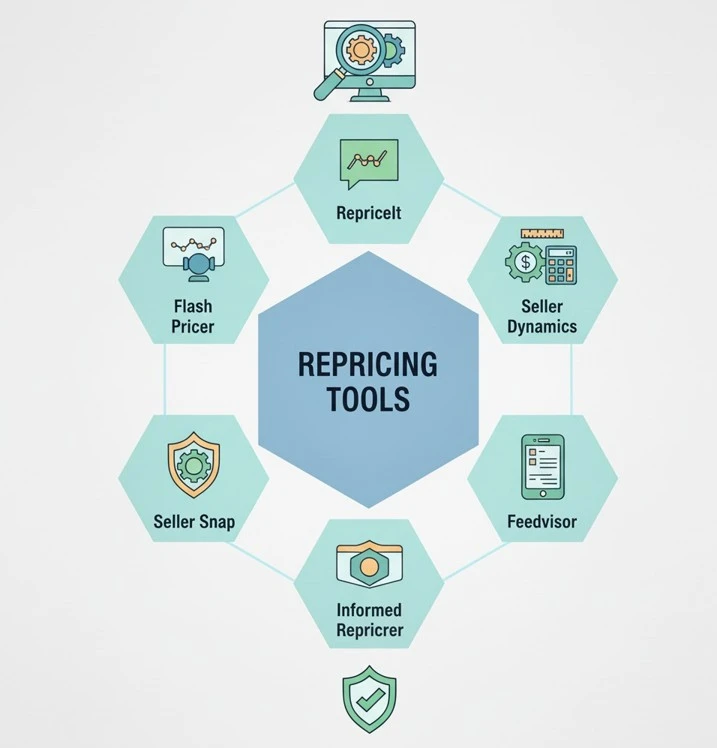
There comes a point where you can’t keep changing prices by hand. That’s when repricing tools come in.
Here are some tools you can use based on where you are and what you need.
- RepriceIt is one of the oldest tools and still works well for small sellers. It’s easy to set up and doesn’t cost much.
- Flash Pricer is a free option you can use in your browser. It helps you check competitor prices, but it doesn’t automate your pricing.
- Aura gives you a clean dashboard and simple rules. It’s user-friendly and great if you want something easy to manage, although it’s not the cheapest.
- Seller Dynamics is more popular with UK sellers. It has more features, but it can feel a bit complex. It’s better to use for experienced sellers.
- Seller Snap uses AI to reprice based on buyer behavior. It’s powerful and smart, but it comes with a higher price tag. Best tool to use for sellers with a large volume.
- Feedvisor is another premium tool with full automation and deep insights. It’s meant for advanced sellers or brands and isn’t the best pick for beginners.
- Informed Repricer offers flexible rule settings with a simple layout. It’s a good step up for sellers who are growing and want more control.
- BQool is one of the most popular tools across all seller levels. It works for both beginners and advanced users. You can start with simple rules and upgrade as you grow.
How to Win the Amazon Buy Box Without Losing Profit
The Buy Box is where most Amazon sales happen. Around 80% of all sales happen through that box. That’s why every seller wants to win it.
But here’s the thing: the lowest price doesn’t always win the Buy Box. Amazon gives the Buy Box to sellers based on more than just price.
It also checks how fast you ship, how good your reviews are, and how often you cancel orders. If you’re always lowering your price just to stay in the Buy Box, you’ll end up hurting your profit over time.
The smarter move is to follow the Buy Box price, rather than chasing it. That means staying close to the current winning price, but not always going for it.
If you’re using a repricing tool, you can set a rule to match the Buy Box. That keeps you competitive without cutting into your profits.
Amazon Repricing Strategies To Outsell Your Competitors
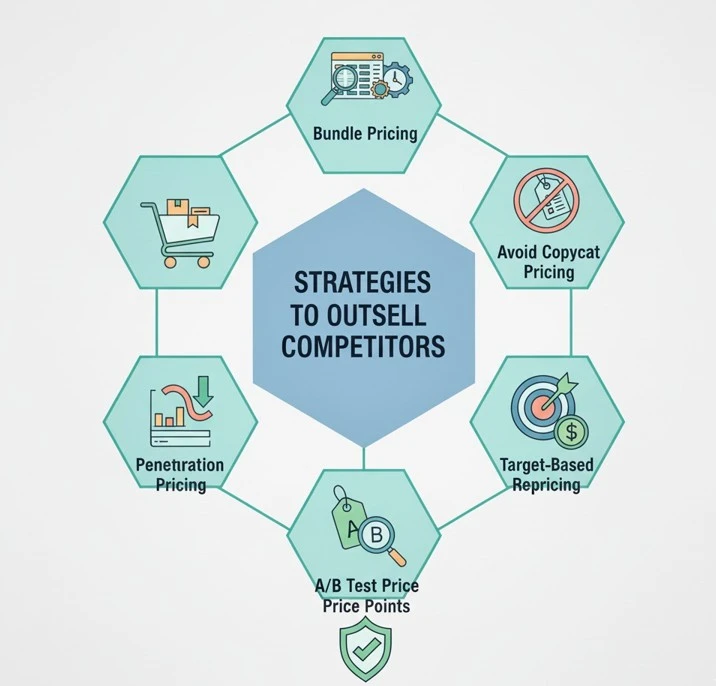
You don’t always need the lowest price to win on Amazon. In fact, some of the most successful sellers charge more and still outsell the competition.
Let’s go through the top pricing strategies that can help you stand out and win more sales.
Bundle Pricing to Avoid Direct Comparison
One of the easiest ways to outsell others is to offer something they can’t. Instead of selling a single item, bundle it with something useful, like a related accessory or bonus item. Buyers can’t directly compare your offer to others because it’s no longer the same product. This gives you room to raise your price while offering better value.
Start with Penetration Pricing, Then Adjust
If you’re launching a new product, it’s okay to start with a lower price to gain early traction. This is called penetration pricing. It helps you get reviews, rank better, and collect some early sales data. But don’t stay there too long. Once you’ve built momentum, slowly adjust your price to where you’re still competitive.
A/B Test Price Points with Sellerly
Sometimes, even a small price change can impact your conversion rate. With a tool like Sellerly, you can test different price points and see what works best. Maybe $21.99 works better than $19.99 -but you won’t know unless you test. This lets you find the sweet spot where you earn more without hurting sales.
Avoid Blind Copycat Pricing with Replicate
Many sellers use tools that copy competitor prices without thinking. The problem? You don’t know their costs, their goals, or how much they’re losing. Don’t follow their prices blindly. Focus on your own margins, strategy, and customer value. That’s how real sellers stay in the game and stay profitable.
Amazon Repricing Strategies Based on Fulfillment Method (FBA vs FBM)
What many new sellers miss is that your pricing strategy should change based on how you fulfill it.
FBA and FBM are treated differently by both Amazon’s algorithm and the customer. If you price the same way for both, you could lose sales.
If You’re Using FBM
FBM sellers handle their own packing and shipping. That means longer delivery times, added shipping costs, and less buyer trust. You can still compete, but you have to work smarter.
Make sure your total price (product + shipping) still looks fair. If your shipping takes longer, your base price needs to be lower to keep up with Prime offers. Buyers expect speedy delivery, so use your price to make up the difference.
If You’re Using FBA
FBA sellers ship through Amazon, which means fast delivery, better trust, and a Prime badge. That alone gives you pricing power. Many buyers are happy to pay more for the convenience.
If your product is FBA, you don’t always have to match the lowest offer. You can price a little higher and still win the Buy Box, as long as your account health is strong and your item is in stock.
Advanced Repricing Tactics to Protect Your Profits
Once your Amazon business is up and running, pricing becomes more about control. You’ve worked hard to build momentum. Now it’s time to use smarter strategies that adjust in real time and protect your margins.
Drop Prices Only When the Buy Box is Lost. Lowering your price without a reason hurts your profit. One smart move is to set a rule that only drops your price when you lose the Buy Box. If you’re already holding it, there’s no need to go lower. This protects your margin and keeps you from chasing price drops that don’t matter.
Raise Prices When Inventory Runs Low. When your stock starts to dip, it’s time to raise your price. Low inventory means less availability, and that gives your listing more value. Use a rule that increases pricing as your stock decreases. It helps you stretch the remaining units while keeping profit strong.
Increase Prices When Competitors Go Out of Stock. If your top competitors run out of stock, your product becomes one of the few options left. Use a rule that bumps up your price automatically when that happens. Shoppers still buy, and you make more on each sale.
Using these kinds of rules helps you price with purpose. You’re not just reacting to changes- you’re thinking ahead and making smarter moves.
Common Pricing Challenges Faced by Amazon Sellers
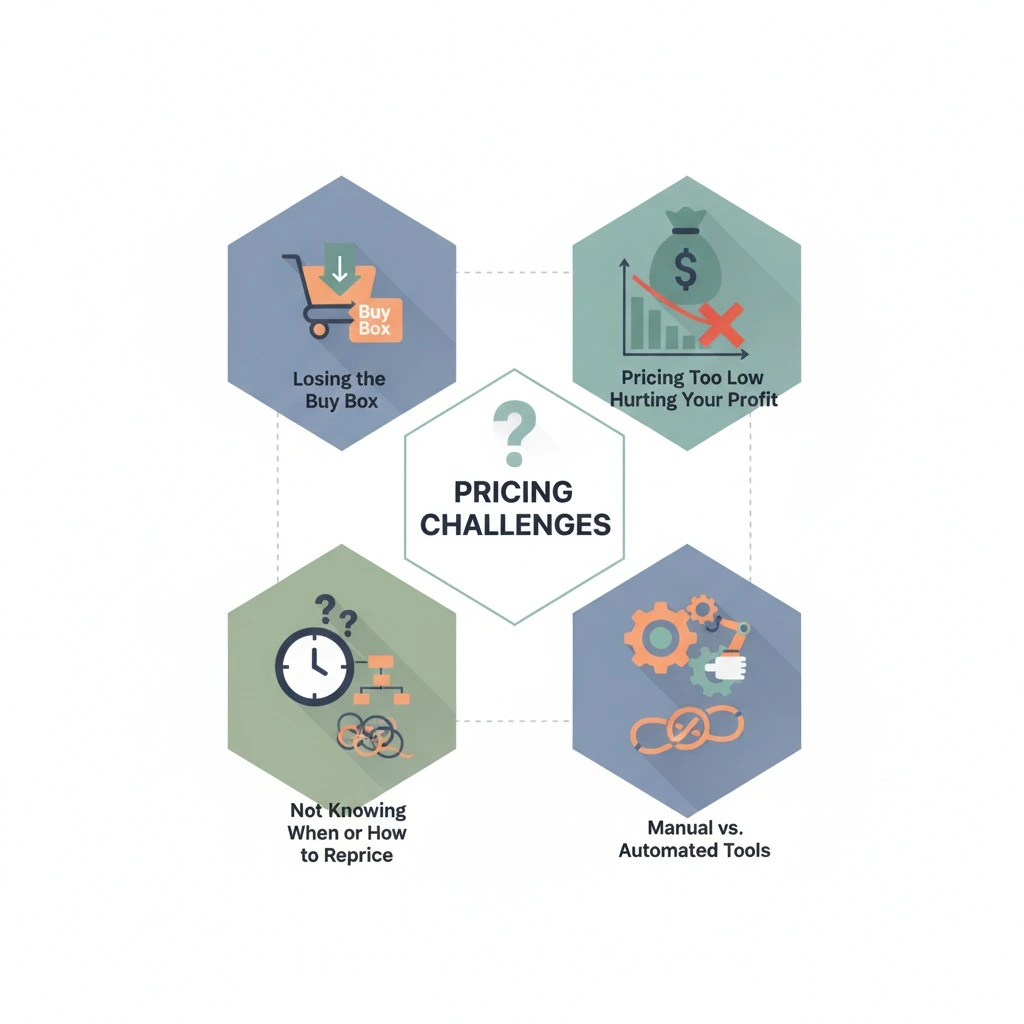
Selling on Amazon is not as easy as just listing a product and waiting for sales. New sellers often face some common pricing challenges on Amazon.
Here are the biggest pricing problems faced by new Amazon sellers.
Losing the Buy Box to Cheaper Competitors
The Buy Box is where most Amazon sales happen. It’s the main “Add to Cart” button that buyers click first. But the lowest price doesn’t always win. Amazon also looks at shipping speed, reviews, and how reliable you are. A seller with a slightly higher price but better performance can still beat you to the Buy Box.
Pricing Too Low and Hurting Your Profit
Some sellers think dropping the price will lead to more sales. But it doesn’t always work that way. If you go too low, you could end up making little to no profit. So, you should start by knowing your break-even point -the price where you don’t lose or gain money. This includes your product cost, shipping, and Amazon fees.
Not Knowing When or How to Reprice
Amazon prices change all the time, but many sellers don’t know when or how to adjust. Some wait too long and lose sales. Others change prices without a plan. Start by checking your prices daily. Then use a tool that follows clear rules, like lowering your price only if you lose the Buy Box. This keeps you competitive without hurting profit.
Feeling Stuck Between Manual and Automated Tools
Not sure if you should reprice manually or use a tool? Start with manuals to learn the basics. Then switch to an automated tool to save time and set rules that keep your prices smart and profitable.
How to Calculate Your Minimum and Maximum Repricing Limits
Your minimum repricing limit is the lowest price you can sell at without losing profit. To calculate it, add your product cost, Amazon referral fee, FBA fee or shipping cost, storage cost, ad cost, and any other operating expense. Then add your target profit margin.
A simple formula is: Minimum Price = Total Cost + Desired Profit. For example, if your total cost is $18 and you want $5 profit, your minimum price should be $23. Setting this too low is dangerous because repricing tools may win the Buy Box while slowly killing your margins.
Your maximum repricing limit is the highest price you are willing to charge while staying competitive. Amazon allows sellers to set minimum and optional maximum price boundaries in Automate Pricing, and pricing rules work within those limits.
How to Set Up Amazon Automate Pricing in Seller Central
Amazon Automate Pricing helps sellers automatically adjust product prices based on rules they create. These rules can respond to events such as Featured Offer price changes, also known as Buy Box price movement.
To set it up, go to Seller Central > Pricing > Automate Pricing. Choose an existing rule or create a custom pricing rule. For example, you can set your price to match, beat, or stay above the Featured Offer price by a fixed amount or percentage.
After creating the rule, select the SKUs you want to automate and enter your minimum and maximum price limits. Amazon states that sellers control automated prices through rule parameters, minimum prices, maximum prices, and selected SKUs.
Amazon Automate Pricing vs Third-Party Repricing Tools: Which Should You Use?
Amazon Automate Pricing is best for sellers who want a free, simple repricing option inside Seller Central. It works well if you have a smaller catalog, basic Buy Box competition, and clear minimum price limits.
Third-party repricing tools are better for sellers who need advanced control. They often provide smarter competitor tracking, profit-based rules, sales velocity logic, inventory-based pricing, and deeper reporting. This matters if you sell many SKUs or compete in aggressive categories.
Use Amazon Automate Pricing if you are starting out or only need basic rule-based repricing. Use a third-party repricer if pricing directly affects your profit, Buy Box share, inventory movement, and ad performance. The honest answer: free tools are fine for simple stores, but serious Amazon sellers usually outgrow them.
Frequently Asked Questions (FAQs)
Repricing is one of the most talked-about parts of selling on Amazon. Sellers want to know how to stay competitive without losing money. Here are the most common questions sellers ask when refining their Amazon repricing strategy.
Does the lowest price always win the Buy Box?
Is manual repricing still worth it?
How often should I reprice?
Can I reprice without losing money?
Which repricing tool is best for beginners?
Need Help Setting Up Your Repricing Strategy? Brand’s Bro Is Ready to Help
12+ years helping Amazon sellers price smarter and win more Buy Boxes with real-time strategy support.
We also help with Amazon PPC, storefront design, and Amazon SEO to improve visibility, and boost conversions.


