

What if your rankings look good, but your traffic keeps falling? That is a question many businesses are asking today. You spend time creating content, tracking keywords, and publishing regularly, yet the results often fail to match the effort.
The reason is that search behavior is changing. Google’s AI Overviews frequently answer questions before users click a website. On top of that, AI tools like ChatGPT, Perplexity, and Gemini are becoming new discovery channels.
This is exactly why choosing the best AI SEO tools matters more than ever.
At Brand’s Bro, we have seen this challenge across e-commerce, wellness, and consumer product brands. Most teams struggled to identify weak pages and missed content opportunities despite using multiple SEO tools.
After we implemented workflows using AI-driven seo tools, manual research time dropped by nearly 45%. All while content production increased by more than 60%.
For wellness brands, these improvements contributed to a 38% increase in organic visibility. And consumer electronics companies reduced content planning time by 52%.
In 2026, SEO AI tools must do more than track rankings.
They need to help you find content gaps, understand user intent, and improve visibility across both search engines and AI-powered platforms.
What Are AI SEO Tools? (And How LLMs Changed the Game)
The search world is currently split between “blue links” and “generated answers.” SEO is no longer just about ranking a URL on the first page of Google.
Instead, we are moving from “ranking links” to “ranking entities.” Generative search experiences like ChatGPT and Perplexity do not just show a list of sites. They pull data, summarize it, and cite their sources.
This means the impact of LLMs on SEO is massive. We are now optimizing for LLM citations and citation share, and the best AI tools for seo optimization are adapting to ensure regional queries are captured by these models.
Search rankings now jump around constantly. A study from Semrush on AI Overviews shows how crazy it is. They looked at over 3,000 keywords. Not a single keyword had the same URLs 100% of the time. In fact, 96% of AI Overviews swapped out domains frequently.
The volatility is real. Around 91% of tracked URLs got kicked out of AIOs at some point. Only 43% of those URLs ever made it back.
This is why AI search optimization is a daily battle. We need seo tools for AI visibility to parse UI-level data from these answers to see who is actually winning.
Feature | Traditional SEO Tools | AI Content Generators | AI Visibility Trackers |
|---|---|---|---|
Primary Goal | Rank #1 in blue links | Create text at scale | Monitor LLM citations |
Data Source | SERP crawlers | Large Language Models | Real-time AI answer parsing |
Key Metric | Keyword position | Word count / Content score | Share of voice in AI |
Why Trust Our AI SEO Tool Reviews
Most “best of” lists are written by people who have never actually ranked a page. This one is different. We live and breathe practitioner-led SEO every single day. We do not just read the marketing slides; we dig into the settings and run the reports.
Our testing methods are grounded in reality. We reached out to team members at these companies to ask hard questions. We spent hours on Reddit reading unfiltered reviews from real users.
Most importantly, we used these AI tools for seo marketing on our own sites. We watched our rankings climb, and we watched them drop during core updates. To keep things fair, we score every tool on five specific axes:
- Engine Coverage: Do they track ChatGPT, Gemini, Perplexity, and AI Overviews?
- Citation Fidelity: Do they give us parsed URLs or just messy screenshots?
- Update Frequency: Is the data fresh or a week old?
- Reporting Depth: Can we see sentiment and competitor positioning?
- Pricing Fairness: Does the cost match the value?
Using this framework helps us spot the difference between helpful tech and marketing fluff. We want you to avoid expensive mistakes.
The 3 Categories of Best AI SEO Tools (Our Tested Opinion)
These are categories. Not the AI tools themselves. If you try to buy one tool to do everything, you will likely end up disappointed. The market has split into three distinct categories.
We understand this split is the secret to building a winning stack. Most successful teams now use at least two different tools to cover all bases.
First, we have AI visibility tools. This is the new version of rank tracking. These tools tell you if an AI engine is citing your brand as a source. They monitor generative engine optimization (GEO) and tell you who is stealing your citations.
Second, there is content optimization software. These tools help you write the kind of deep, expert pages that AI engines love to quote. They use NLP scoring to make sure you cover a topic better than anyone else.
Third, we have the full-suite SEO software. These are legacy giants like Semrush or Ahrefs. They have bolted on AI features to their massive databases. They are great for bundled value, but they often lack the depth of specialist tools.
Pro Tip: Do not expect an all-in-one tool to be the best at everything. We recommend picking a specialist citation tracker and pairing it with a high-end content optimizer. This will help you get the best data for both strategy and execution.
Category 1: Best AI SEO Tools For Visibility & Citation Tracking
This category is the front line of the AI SEO war. These platforms do not just look at Google; they look at the models themselves. They help you understand your share of voice in the places where modern customers are actually searching.
If you want to know why Perplexity is citing your competitor instead of you, these AI mode seo tracking tools are the tools you need.
Focusing on citations is the only way to measure success in a post-link world. We have tested these for data accuracy and how well they parse complex AI responses.
1. Profound – Best for Enterprise AEO & Multi-Engine Tracking
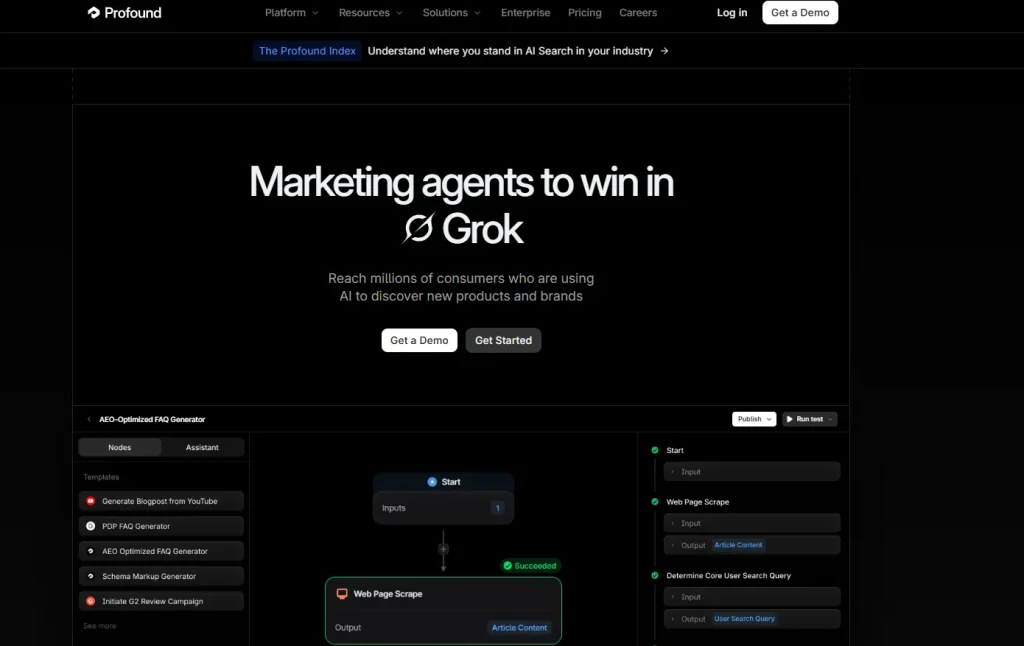
Profound is built for enterprise brands, SEO teams, marketing agencies, and businesses. Its focus is to improve visibility across AI search engines. The platform tracks brand mentions, citations, sentiment, and rankings across multiple AI tools, including ChatGPT, Grok, DeepSeek, and Meta AI.
Start by adding your brand and competitors to the dashboard. Use Conversation Explorer to discover the questions people ask AI assistants and create content around those topics. Monitor Agent Analytics to ensure AI crawlers can access and understand your website.
By identifying citation gaps and strengthening authoritative content, Profound helps increase AI visibility and search performance.
Key Features:
- Wide Engine Coverage: Tracks ChatGPT, Claude, Gemini, and long-tail engines.
- Sentiment Analysis: Tells you if the AI is saying nice things about you.
- Conversation Explorer: Shows you real-time AI search volume for your niche.
Competitive Edges:
- Most polished UI for executive reporting.
- Includes sentiment and context analysis.
- Tracks niche engines others ignore.
Vulnerabilities:
- API access is restricted to higher tiers.
2. KIME – Best for Daily Accuracy and Actionable AI Opportunities
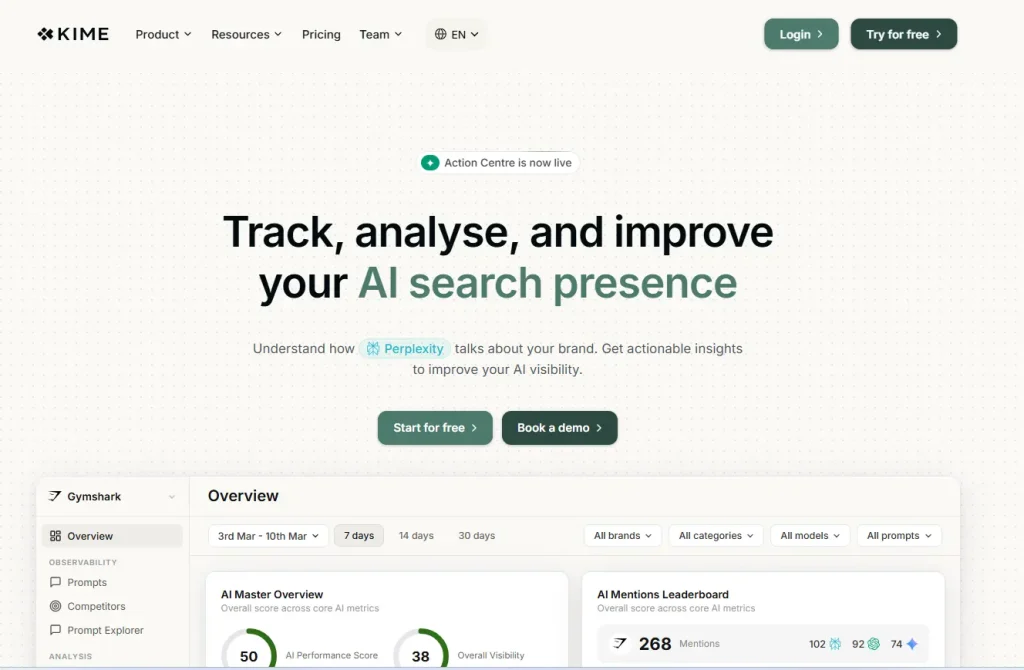
Tracking your brand is only half the battle. We have been testing KIME for almost three months, and it has become a staple in our workflow. It is a dedicated AEO platform that listens. We sent feedback to their team, and they shipped updates within weeks. That kind of speed is rare in the software world.
As one of the leading AI mode seo analysis tools, KIME stands out in how it breaks down data. It separates “Overall Visibility” from the “AI Performance Score.” Visibility tells you how often you show up. The Performance Score tells you how well you show up. It looks at your placement and the sentiment of the mention. If a bot mentions you in a negative light, KIME will flag it.
Key Features and Insights:
- Daily Refreshes: Most tools update weekly, but KIME gives you daily data for ChatGPT and Perplexity.
- Action Tab: It gives you a “to-do” list of suggested improvements to boost your AI search optimization.
- Bulk Uploads: You can add hundreds of prompts at once, which is a massive time saver.
Competitive Edges:
- Unlimited workspaces mean you can track many domains.
- Daily data updates keep you ahead of the curve.
- Includes a clean sentiment analysis report.
Vulnerabilities:
- Not really suited for small bloggers.
3. AthenaHQ – Best for Revenue Attribution & Competitor Displacement
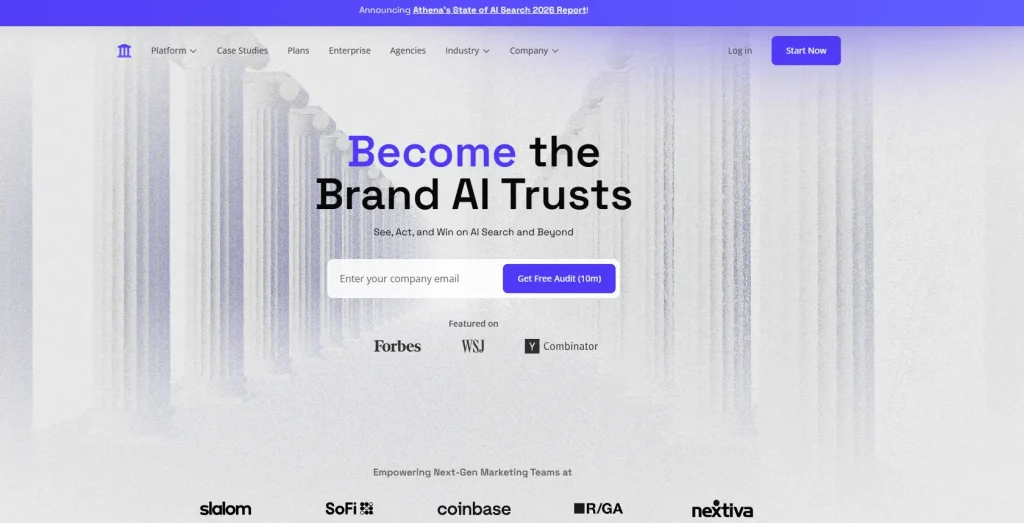
Revenue is the only metric that truly matters to a boss. AthenaHQ understands this perfectly. The founding team came out of Google Search and DeepMind. They have built a tool that maps your LLM citations directly to estimated revenue. This helps B2B teams prove the value of their AI marketing spend.
We were impressed by the “Competitor Displacement” report. It shows exactly which competitor took your citation slot and when it happened. This is not just data; it is a battle map. If you are in a high-stakes niche like SaaS or Finance, this level of detail is worth the investment.
Competitive Edges:
- Strong revenue-attribution modeling.
- Backed by Y Combinator and top search experts.
- Excellent for reporting to executive stakeholders.
Vulnerabilities:
- Starts at $295/month, which is pricey.
4. OtterlyAI – Best Budget Entry Point for Small Site Owners

Not everyone has an enterprise budget. We know that spending $300 a month just to “test” the waters is a big ask. That is why we recommend OtterlyAI for beginners and hobbyists. It offers a $29/month entry point that still gives you daily performance updates.
You can track 15 prompts across ChatGPT, Perplexity, and Google AI Overviews. It is a low-friction way to start your journey into generative engine optimization, and it serves as a great entry point among ai mode seo checking tools for service SEO. While it lacks the deep sentiment analysis of Profound, it gives you the “ground truth” of whether you are appearing in answers or not.
Competitive Edges:
- Most affordable entry point at $29/month.
- Daily tracking for a low price.
- Supports Google AI Mode and Copilot.
Vulnerabilities:
- Reporting is focused on frequency, not deep citation URLs.
5. Peec AI – Best for Visual AI Tracking & Brand Presence
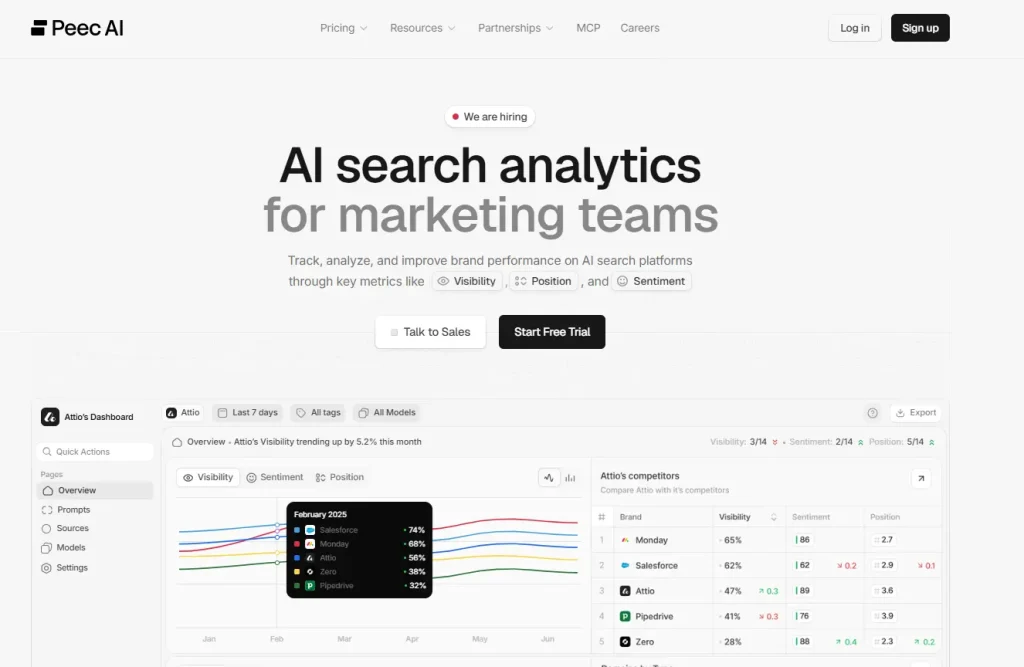
Search is no longer just text. Peec AI recognized this early and built a platform that tracks how your brand appears in multimodal AI answers. If an AI engine generates an image or a video carousel alongside text, Peec captures it.
We ran a test for a fashion brand, and Peec showed us that AI engines were pulling outdated product images. Without this tool, we would have never known. It is the ultimate brand shield for visual and e-commerce companies.
Competitive Edges:
- Tracks text, image, and video AI outputs.
- Excellent for e-commerce and fashion brands.
- Sends real-time alerts for brand misrepresentations.
Vulnerabilities:
- Text-only sites won’t get much value from the visual tracking.
6. Scrunch AI – Best for Enterprise AI Search Analytics
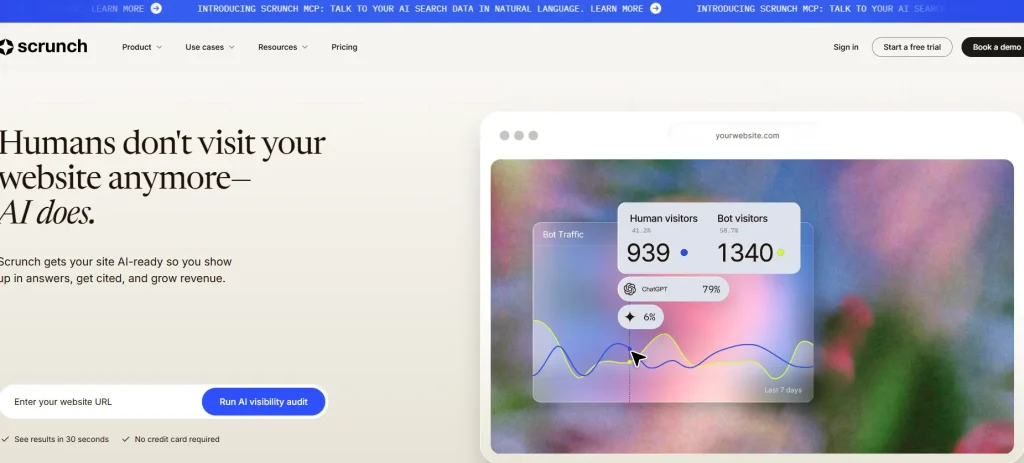
Scrunch AI focuses heavily on the enterprise side of AI search optimization. They do not just track citations; they analyze the entire AI answer to show your share of voice compared to competitors. Their data pipeline connects directly to your CRM, allowing you to tie AI visibility directly to pipeline generation.
Competitive Edges:
- Deep CRM integrations (HubSpot, Salesforce).
- Tracks the full conversational journey, not just single prompts.
- Helps fix AI hallucinations about your brand.
Vulnerabilities:
- Overkill for small or mid-sized teams.
Category 2: Best AI SEO Tools For Content Optimization & Generative
Once you know where you stand, you have to improve the content itself. This category is about ai seo optimization tools, covering AI content generation and semantic depth. These tools do not just guess what keywords to add. They analyze the top-ranking pages to find the semantic relevance that AI engines look for.
Whether you are refining product descriptions for Amazon search optimization or scaling blog content for Shopify, writing for today means writing for both humans and AI bots.
We used these AI tools for seo content optimization to fix pages that dropped after the latest core updates. Here is what we found works best.
1. Surfer SEO – Best for NLP-Driven Content Scoring

Surfer has been a favorite of ours for years. It has evolved from a simple on-page tool into a full AI search optimization suite, making it one of the best seo tools for ai mode. The “Content Editor” is like having a data scientist sitting next to you. It suggests NLP term usage based on real-time SERP analysis.
We recently used the “Coverage Booster” on a long-form guide. It suggested specific facts we had missed. After adding them, our topical authority score jumped. But here is a warning: do not just blindly accept every suggestion. We always review the draft to ensure the content sounds human. Over-optimization is a real risk that can hurt your organic rankings.
Key Tools:
- Surfer AI: Generates 2,000+ word articles in minutes.
- AI Tracker: Monitors your brand mentions inside ChatGPT.
- Auto-Optimize: Tweaks your drafts automatically to hit target scores.
Competitive Edges:
- Industry-standard NLP scoring that integrates directly with Google Docs.
- Robust AI writer that drastically speeds up draft generation.
- The “Coverage Booster” is uniquely helpful for finding missing facts.
Vulnerabilities:
- Can lead to over-optimization and robotic-sounding text if used blindly.
2. MarketMuse – Best for Topical Authority & Cluster Planning
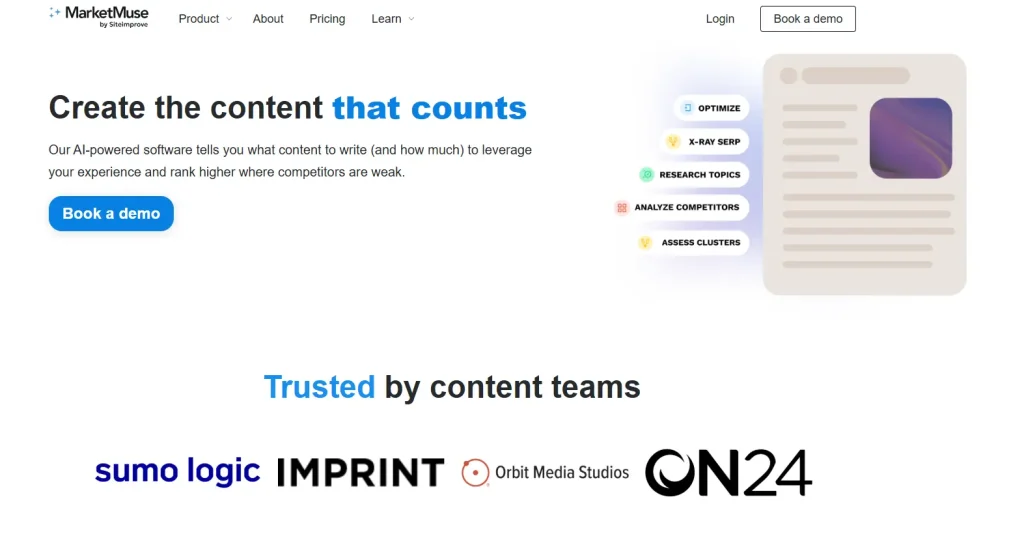
Authority is the currency of the modern web. MarketMuse is built to help you spend it wisely. Their “Personalized Difficulty” score is a feature we love. It does not just tell you how hard a keyword is in general. It tells you how hard it is for your specific site.
If your site has zero authority on a topic, MarketMuse will tell you to start with smaller clusters. This helps you build the entity strength that drives LLM citations. It is a strategic tool for teams who want to play the long game.
Competitive Edges:
- Best-in-class topic-cluster modeling.
- Helps you find content gaps you didn’t know existed.
- Free tier available for basic testing.
Vulnerabilities:
- UI feels a bit dated compared to newer competitors.
3. Frase – Best Budget Choice for GEO Scoring

If you want the best bang for your buck, Frase is a strong contender. And we do have a Lifetime Deal option that we got from Appsumo. So, for us, it’s basically free.
Frase has leaned hard into AEO with their new scoring system. Its research found that FAQ-marked pages are 3.2x more likely to appear in AI Overviews. They have baked this data directly into their platform.
We like their “dual SEO + GEO scoring.” It gives you one score for traditional rankings and another for AI extractability. It is a smart way to make sure your content is ready for the future of search without breaking the bank.
Competitive Edges:
- Best budget choice for GEO scoring.
- Dual SEO + GEO scoring system guarantees content is ready for both types of search.
- Fast research outlines that save hours of manual work.
Vulnerabilities:
- UI can be clunky when managing large projects.
4. Clearscope – Best for Enterprise Content Semantics
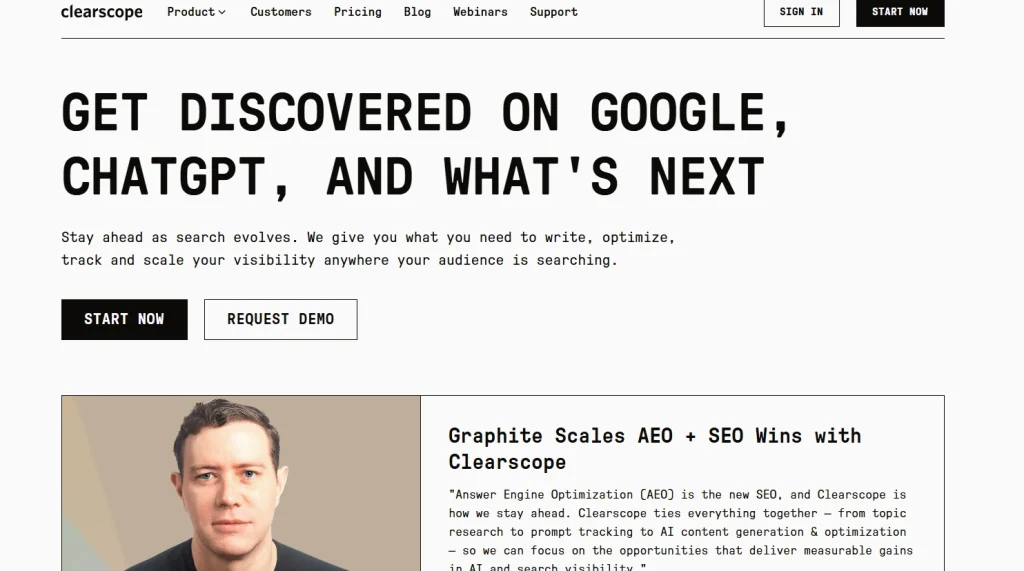
Clearscope has always been the gold standard for NLP-driven content grading, and their 2026 updates make them even more relevant for AEO. Their reports are concise, focusing purely on the semantic terms that AI models use to understand a topic.
We love how their Google Docs add-on works. You can write your draft and watch your content grade climb in real-time without switching tabs. It forces writers to cover topics comprehensively, which is exactly what LLMs look for when pulling citations.
Competitive Edges:
- Most accurate NLP data in the industry.
- Very minimal learning curve.
- Integrates seamlessly with Google Docs and WordPress, making it one of the top AI seo tools for wordpress.
Vulnerabilities:
- Lacks the rank tracking features of other suites.
5. NeuronWriter – Best Value for Content Planning & NLP
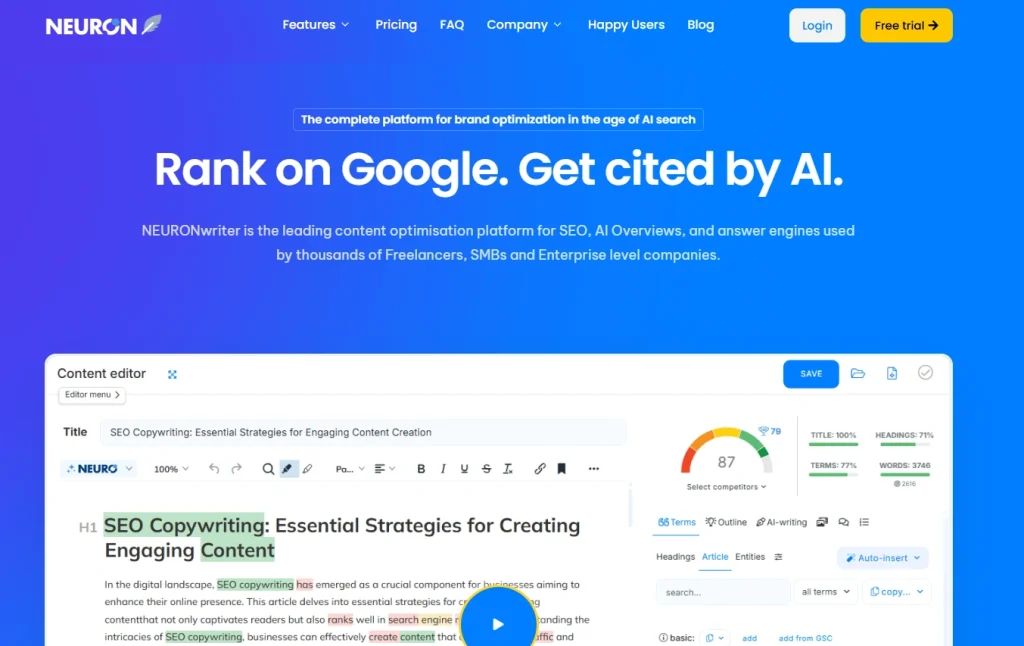
NeuronWriter is the hidden gem of content optimization. It offers a very similar NLP scoring engine to Surfer and Clearscope, but at a fraction of the cost. It uses Google’s own NLP API to analyze SERPs and give you content recommendations.
We tested it on a batch of 30 blog posts, and the AI recommendations were spot-on for improving our AI Overview visibility. It even includes a basic content planner to help you map out your clusters.
Competitive Edges:
- Extremely cost-effective (plans start around $23/month).
- Uses Google NLP API for accurate recommendations.
- Good AI writing assistant included.
Add Your Heading Vulnerabilities: Here
- Customer support can be slow during peak hours.
6. Byword – Best for Programmatic AI Content
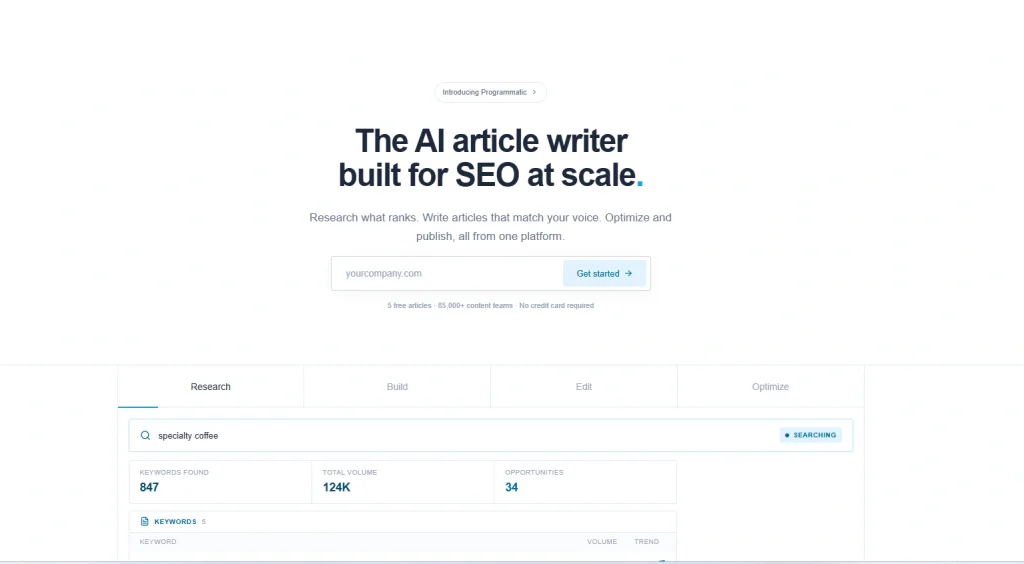
If you need to scale content production to hundreds or thousands of pages, Byword is the tool to use. As far as AI writing tools for seo go, it is built for programmatic SEO. You can upload a list of keywords or a CSV file, and Byword will generate highly optimized articles for every single row.
We used Byword to create a massive glossary of terms for a tech client. The content was well-structured, included proper H2/H3 tags, and ranked within weeks. It handles AI content generation at a scale that manual writing simply cannot match.
Competitive Edges:
- Unmatched for bulk content generation.
- Built-in internal linking automation.
- Very fast processing times.
Vulnerabilities:
- Output requires a human edit for brand voice.
Category 3: Best All-in-One SEO Suites with AI Features
Sometimes, you just want one tool to do it all. The legacy giants are trying to fill this gap. They have added AI marketing toolkits to their existing platforms. These AI seo tools for businesses are best for teams who already have a subscription and do not want to add more software to their bill.
1. Semrush One – Best Bundled Value for Agencies

We open Semrush every single day. It is still the gold standard for keyword research. With the new “Semrush One” tier, they have added a solid AI Visibility toolkit. It tracks your brand across ChatGPT and Perplexity in multiple regions, making it one of the top-rated seo AI tools if you need granular data across American markets.
One of the coolest features we tested is the MCP server. You can connect Semrush data directly to Claude or ChatGPT. Instead of getting generic AI answers, you get answers powered by real search data. It makes AI search optimization feel much more grounded in reality.
Competitive Edges:
- Massive database and gold-standard keyword research.
- Excellent bundled value for agencies managing multiple clients.
- MCP server integration bridges the gap between AI assistants and real data.
Vulnerabilities:
- AI visibility features are still playing catch-up to specialist tools.
2. Ahrefs Brand Radar – Best Authority-Driven AI Strategy

Ahrefs has always been the king of backlink data. Their new “Brand Radar” tool continues that legacy. It monitors your visibility across 243 million prompts. These prompts are not random. They come from real “People Also Ask” data.
We find their research on AI search optimization very compelling. They ran a study on 75,000 brands. The data showed a high correlation between branded web mentions and LLM citations. Basically, if people talk about you on Reddit or YouTube, AI engines are more likely to cite you. This proves that authority is still the biggest factor in organic rankings.
Competitive Edges:
- Uses a massive corpus of search-backed prompts.
- Connects backlink data to AI visibility.
- Reliable data for high-level strategy.
Vulnerabilities:
- Newer than specialist tools like Profound.
3. Search Atlas – Best for AI-First Agencies
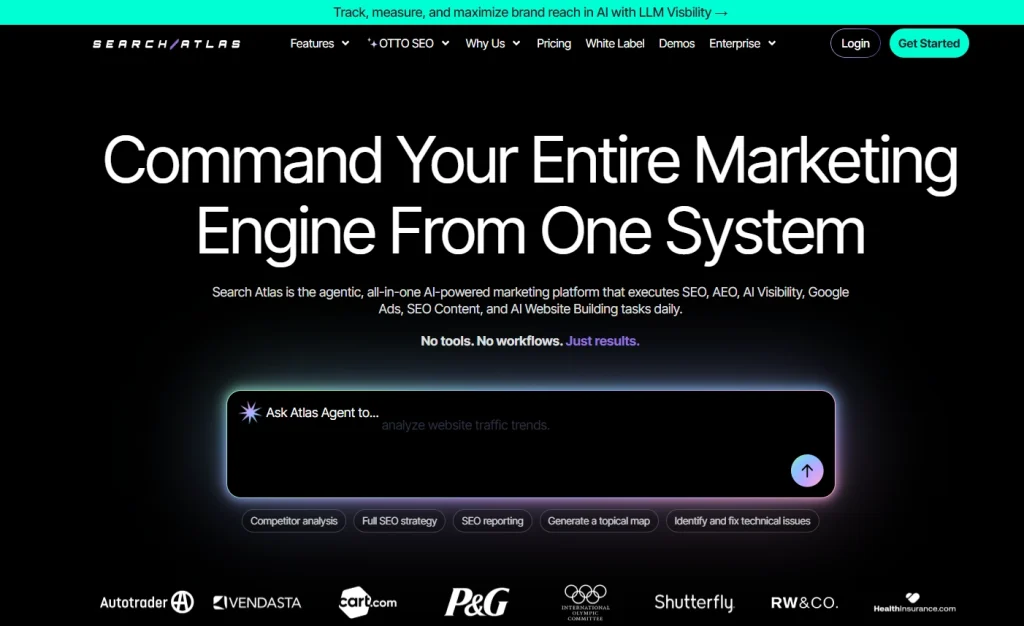
Search Atlas is a fresh alternative to the industry giants. It positions itself as a native AI SEO platform. We met their team at a conference in Toronto, and they are moving fast. They bundle content generation, keyword research, and AI engine tracking into one spot.
But we have to be honest about the user experience. During our January test this year, we had some issues. The tool crashed several times while we were running reports. We also found that their “OTTO SEO” feature can be risky. If you remove the script from your site, your content might revert to the old version. It is a powerful tool, but it requires careful handling.
Competitive Edges:
- Excellent for agencies managing multiple clients.
- Includes a built-in AI assistant for site audits.
- Competitive pricing for a full bundle.
Vulnerabilities:
- Requires a script installation for full features.
4. SE Ranking – Best Affordable All-in-One Suite
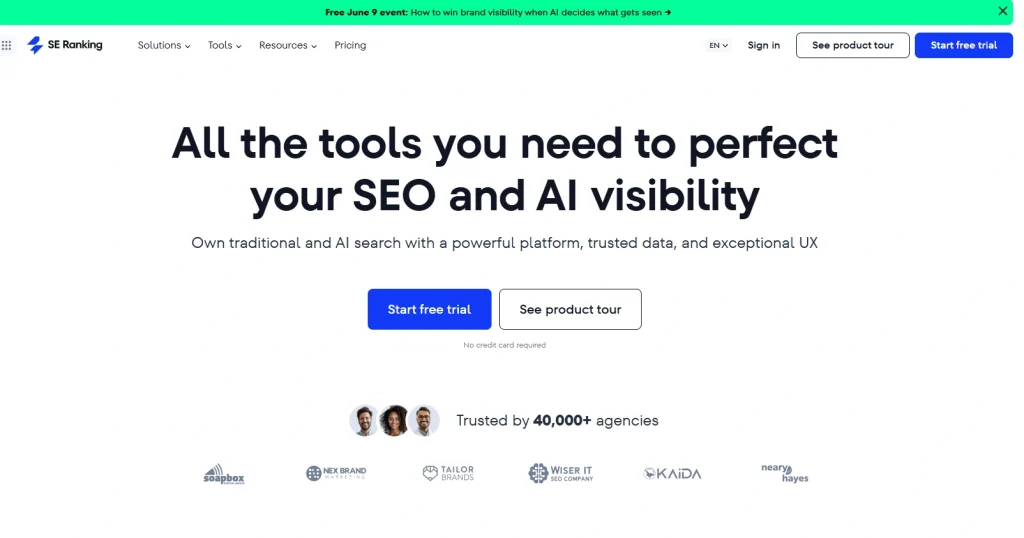
For agencies looking for AI tools for seo optimization, SE Ranking has quietly built one of the most complete SEO platforms on the market, and their 2026 AI integrations are impressive. They now offer an AI Content Editor that rivals Surfer, combined with their highly accurate rank tracker.
What sets them apart is the price-to-feature ratio. You get keyword research, competitive analysis, an AI writer, and an on-page checker for a fraction of what the big suites charge. We recommend this for mid-sized teams that need depth without the premium price tag.
Competitive Edges:
- Highly accurate rank tracking with granular updates.
- Very affordable entry point.
- Excellent AI content scoring tool.
Vulnerabilities:
- Lacks dedicated LLM citation tracking.
5. Ubersuggest AI – Best for Solopreneurs & Beginners
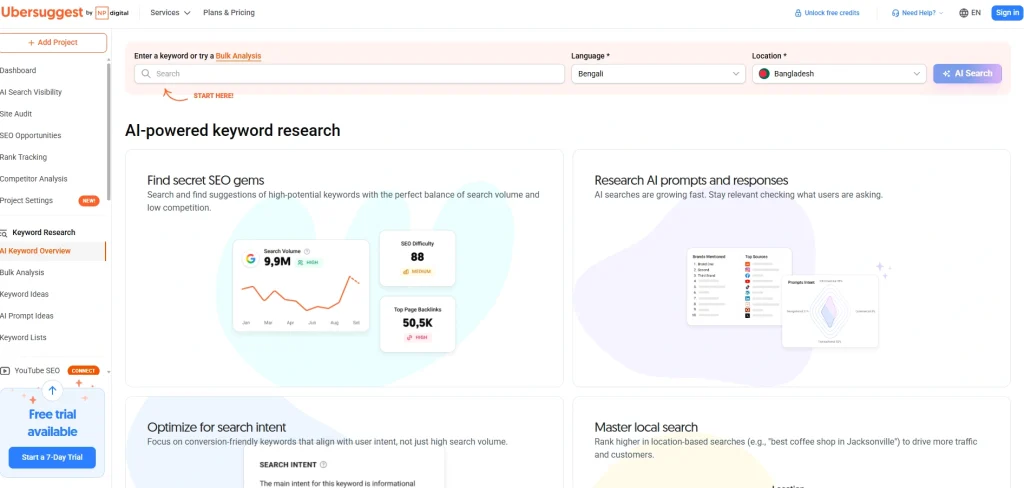
Neil Patel’s Ubersuggest has fully embraced AI, positioning itself as one of the top AI seo tools for small businesses. It is no longer just a keyword research tool. The “Ubersuggest AI Writer” now generates full blog posts, and the “AI Opportunity Finder” suggests exactly which pages on your site need updating.
As we mentioned in the FAQ, this is our top pick for small businesses on a tight budget. You can grab a lifetime deal and use the AI tools to find quick wins without paying a monthly subscription. It is basic, but it gets the job done for beginners.
Competitive Edges:
- Lifetime deals available (no monthly fees).
- Very easy to use for non-SEO experts.
- Good for finding quick content wins.
Vulnerabilities:
- Data limits are strict on lower tiers.
Side-by-Side Comparison: Best AI SEO Software
Choosing the right platform can be a bit of work. We’ve built this AI seo tools comparison table to help you compare the best AI SEO tools at a glance. We pulled this data from our recent tests to make sure the pricing and features are up to date.
Tool Name | Best For | AI Engines Covered | Starting Price |
|---|---|---|---|
Enterprise AEO | 10+ (DeepSeek, Grok) | $99/mo | |
Daily Visibility | ChatGPT, Perplexity, AI Mode | ~$174/mo | |
Revenue Attribution | Big Four Engines | $295/mo | |
Budget Tracking | ChatGPT, AIO, Perplexity | $29/mo | |
Visual AI Tracking | Multimodal Engines | $149/mo | |
Enterprise Analytics | Full Conversational | Custom | |
Content Scoring | ChatGPT (via tracker) | $89/mo | |
Cluster Planning | N/A (Strategy focus) | $49/mo | |
GEO Scoring | AIO, Featured Snippets | $15/mo | |
Content Semantics | N/A (Content focus) | $170/mo | |
Budget NLP | N/A (Content focus) | $23/mo | |
Programmatic AI | N/A (Generation focus) | $99/mo | |
All-in-One | ChatGPT, AIO, Gemini | ~$140/mo | |
Authority Strategy | 243M+ Prompts | $129/mo | |
AI-First Agencies | Basic AI tracking | $99/mo | |
Affordable Suite | N/A (Content focus) | $65/mo | |
Beginners | N/A (Content focus) | $29/mo (or LTD) |
How to Choose the Best AI SEO Tool: A Decision Tree
One AI tool promises higher rankings, while another claims to increase traffic fast. After a while, they all start sounding similar.
The reality is that the best tools and the right seo strategies for AI visibility tools depend on your goals, budget, and workflow. Every business needs a different approach.
To make things easier, here is a simple way to narrow down the options.
- Need to prove SEO revenue and ROI: Choose AthenaHQ or Scrunch AI. Their attribution capabilities are designed to connect SEO efforts directly to business outcomes.
- Looking for affordable AI citation tracking: Start with OtterlyAI. It offers one of the most cost-effective ways to monitor LLM mentions and visibility.
- Want to optimize content for AI Overviews: Consider Surfer SEO, Frase, or NeuronWriter. Their NLP and GEO optimization features are among the strongest available today.
- Planning to scale content production: Explore Byword. It remains a leading option for generating large volumes of content efficiently.
- Already using an SEO platform: Use the AI features within Semrush or Ahrefs. They cover most common AI visibility and SEO needs without requiring an additional subscription.
The goal is not to use every tool available. The goal is to build a workflow that feels simple and efficient. We almost always recommend a two-tool approach to balance your organic versus paid strategy. Use a specialist for tracking and a research suite.
The Reality of AI SEO: Commodity vs. Non-Commodity Content
In April 2026, we attended the first Google Search Central Live event in Canada. Danny Sullivan, Google’s Director of Search, gave a talk on AI. We sat in the front row and took careful notes. He answered the question everyone is asking: Is AI SEO different from regular SEO?
His answer was a firm no. He explained that SEO and AI SEO are not separate disciplines. The helpful content system rewards the same things it always has. However, Google now makes a big distinction between commodity vs non-commodity content.
Commodity content is generic. It is the kind of standard advice or listicle that AI can rewrite in seconds. If your content is a commodity, AI will summarize it, and you will get zero traffic. Non-commodity content is grounded in genuine experience and original data. It is content that an LLM cannot easily fake.
To succeed in AI search success, you must move away from generic writing. Use the best AI SEO tools to find topics, but use your own brain to add depth. Google wants to see who is behind the content and why they are qualified.
| Factor | Commodity Content | Non-Commodity Content |
|---|---|---|
| Definition | Generic content that repeats common information already available online. | Original, experience-based, strategic content that adds new value. |
| AI Risk Level | Very high. AI can produce this easily and cheaply. | Lower. AI can assist, but humans must add insight, proof, and judgment. |
| Examples | Basic “What is SEO?”, “Benefits of content marketing,” generic product descriptions. | Case studies, expert opinions, original research, comparison data, customer stories, real experiments. |
| SEO Value | Weak long-term value because many sites publish similar content. | Stronger long-term value because it is harder to copy and more useful. |
| Ranking Potential | Hard to rank unless the site already has strong authority. | Better chance to rank because it can satisfy search intent more deeply. |
| User Trust | Low to moderate. Readers may feel they have seen the same information before. | High. Readers see real expertise, proof, and practical insight. |
| Content Depth | Surface-level, predictable, and often repetitive. | Detailed, specific, and shaped by real knowledge or experience. |
| Brand Differentiation | Poor. It makes the brand look like everyone else. | Strong. It gives the brand a unique voice and position. |
| AI’s Role | Can generate most of it with minimal input. | Useful for research, structure, editing, and scaling, but not as the main source of truth. |
| Human Input Needed | Low. Basic prompts can create it. | High. Requires strategy, expert review, examples, opinions, and data. |
| Best Use Case | Supporting pages, FAQs, basic definitions, glossary content. | Money pages, thought leadership, service pages, case studies, and high-value blog content. |
| Business Impact | Usually low unless used at scale with strong topical structure. | Higher because it builds authority, trust, leads, and conversions. |
| Main Problem | Easy to copy, easy to replace, easy to ignore. | Takes more time, effort, and expertise to create. |
| Future of AI SEO | Will become cheaper and less valuable over time. | Will become more important because search engines and users need proof, originality, and trust. |
AI SEO Tools That Sound Helpful (But Rarely Move Rankings)
This is the part most experts skip. We have tested over 30 platforms, and only 17 of them worked truly. You can finally get beautiful graphs that translate into more traffic. You need to be careful with your AI marketing budget.
For example, our competitors saw a massive drop after the 27 Mar 2026 core update. They ran our content through several popular optimizers. Those AI tools all did show a “perfect” score. But rankings did not budge. Why? Because, the tools focused on keyword density, which is a metric from the past. Now, let’s look at some parameters that don’t work now:
On-Page Content Optimizers (The Keyword Density Trap)
Most tools compare your text to what already ranks. They tell you to add more keywords. But post-2026, Google cares about quality signals, not word counts. Adding more keywords will not fix a “thin content” problem. If a tool only tracks “content scores,” take its advice with a grain of salt.
Basic AI Content Generators
Do not pay $100 a month for a tool that just uses the GPT API. You can get the same results from Claude or ChatGPT for free. Everything depends on how well you train the AI. If you do not feed it your unique voice, the output will be “commodity content.”
Manual-Prompt Visibility Trackers
Some tools ask you to guess which prompts to track. This is a losing game. Prompts are conversational and long-tail. People ask questions in thousands of different ways. You cannot guess them all. You need tools that offer automated prompt research, not a guessing game.
Best AI SEO Tools by Use Case: Our Quick Recommendations
The best AI SEO tool depends on the task. Semrush and Ahrefs are strong choices for keyword research, competitor analysis, backlink tracking, and technical SEO.
Surfer SEO and Clearscope are better for content optimization, while Frase works well for creating briefs and answering search intent. Screaming Frog is ideal for technical audits.
For AI-assisted writing, ChatGPT and Jasper can speed up research, outlines, titles, FAQs, and content updates. However, every AI-generated draft should be reviewed for accuracy and originality.
Best Free vs Paid AI SEO Tools: Features, Limits, and Upgrade Costs
Free AI SEO tools are suitable for basic keyword ideas, content outlines, metadata, and limited site audits. Popular options include Google Search Console, Google Keyword Planner, ChatGPT’s free plan, and limited versions of Semrush or Ahrefs tools.
Free plans often restrict searches, reports, projects, exports, and historical data. They may work for beginners but are usually insufficient for agencies or growing websites.
Paid AI SEO tools typically cost around $20 to several hundred dollars per month. Upgrading is worthwhile when you need competitor data, automated reporting, content scoring, rank tracking, or multiple user accounts.
How We Tested and Scored the Best AI SEO Tools
We evaluated each tool based on keyword data, content recommendations, technical auditing, usability, integrations, reporting, pricing, and AI output quality.
We also compared whether the recommendations matched real search intent and provided actionable SEO improvements. Tools that produced generic or inaccurate suggestions received lower scores.
Pricing, free trials, usage limits, customer support, and scalability were also considered.
Recommended AI SEO Tool Stacks by Business Type and Budget
Small businesses can combine Google Search Console, ChatGPT, and a basic Semrush or Ubersuggest plan.
Content-focused websites may benefit from Ahrefs or Semrush, Surfer SEO, and ChatGPT.
E-commerce businesses should consider Semrush, Screaming Frog, Google Search Console, and an AI content optimization tool.
SEO agencies need a broader stack that includes Ahrefs or Semrush, Screaming Frog, Looker Studio, Surfer SEO, and an AI writing assistant.
Frequently Asked Questions (FAQs)
We get asked about AI and SEO constantly. Here are the answers to the most common questions we see in our inbox.
Which AI tool do you use most often for your daily SEO tasks?
Semrush One is the go-to tool for daily keyword research. It stays open on many desks every single day. For small teams, Ubersuggest is a popular choice for basic tracking. Users call it "fine, not great," but its low price makes it very useful.
Which AI tools are most effective for content creation and SEO?
Surfer SEO and NeuronWriter are the most effective tools for creating content. They offer top-tier NLP scoring. Many pros avoid basic generators. They use Claude or ChatGPT with custom prompts to add real expertise. This makes sure every page sounds human and hits ranking targets.
What is the difference between AI visibility tracking and traditional rank tracking?
Traditional tracking looks at your position in blue links. AI visibility tracking looks at whether you are a cited source in an AI answer. It also tracks the sentiment of that mention.
Can AI content rank in Google search?
Yes. AI-generated content does not hurt your rankings, but you have to do it right. As long as the content is helpful and original, Google will rank it. Just avoid using AI to manipulate the helpful content system.
How does E-E-A-T affect AI SEO and LLM citations?
It is everything. AI engines want to cite experts. To boost your chances, add clear author bios. Link to your social profiles. Share real-world case studies that a bot could never invent.
Are AI SEO tools worth the cost for small businesses?
For small teams, start with a lifetime deal on Ubersuggest or the $29 plan on OtterlyAI. You can also explore free AI tools for seo like Google Business Profile, to complement your stack. You do not need enterprise tools to see results for local SEO.
Do llms.txt files improve AI search visibility?
No. Data shows that llms.txt files have no measurable impact on citations. It is a modern-day meta-keywords tag. Focus on your content instead.
Start Building a Sustainable SEO Strategy With AI Tools
At Brand’s Bro, we see AI changing the way people search for information, discover products, and find brands online. New tools appear every year, and search engines continue to evolve.
But the foundation of SEO has not changed. Strong rankings still come from a clear strategy, valuable content, and a great user experience.
AI can make many tasks faster. It helps with keyword research, technical audits, competitor analysis, and uncovering new opportunities. Yet, tools alone cannot build a successful SEO campaign.
That’s where experience and creativity matter. Our focus is helping businesses create original, high-quality content that delivers real value to their audience and stands out in crowded search results.
As search becomes more competitive, the brands that combine AI-powered efficiency with human expertise will have the advantage. That balance helps improve visibility, attract the right customers, and support long-term growth in 2026 and beyond.
