
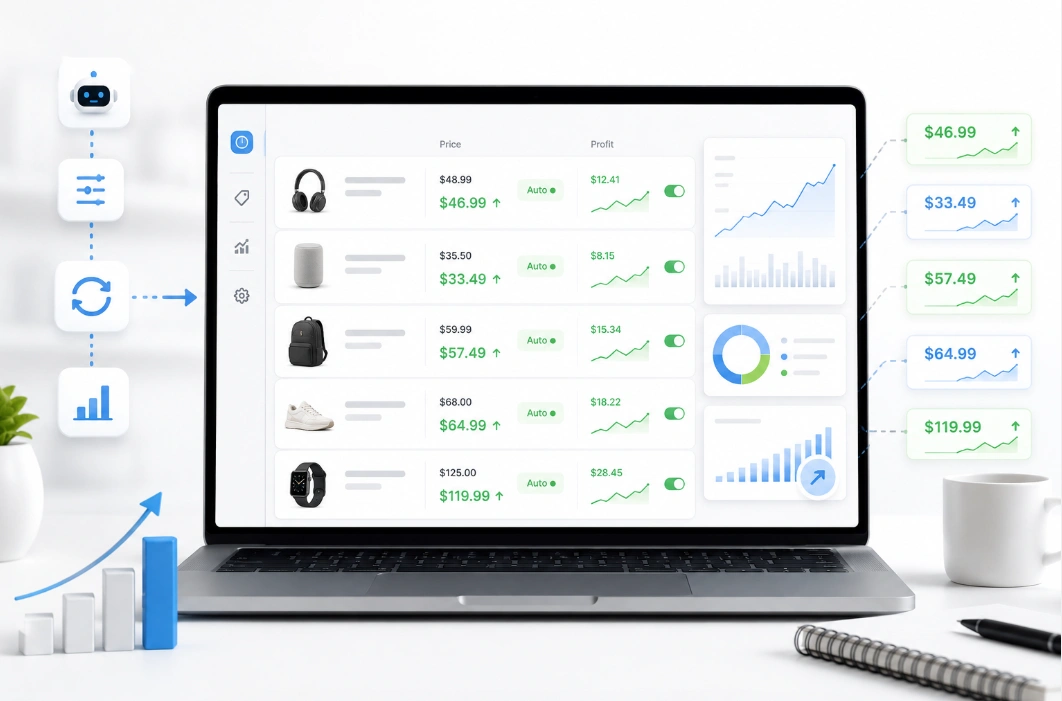
Selling on Amazon feels simple at first. You find a product, create a listing, and wait for sales to come in. Then competition shows up.
Prices change throughout the day. The Buy Box moves between sellers. One moment you are making sales, and the next, orders slow down for no obvious reason. That gets frustrating fast.
The problem is that Amazon’s marketplace moves quickly. Manually updating prices is almost impossible, especially when competitors use an automated repricing tool.
That’s where Amazon repricing software comes in. These tools automatically adjust prices based on market conditions, helping sellers stay competitive without constantly monitoring listings.
Finding the best Amazon repricer in 2026 can make a huge difference. The right software helps protect margins, improve Buy Box wins, and save valuable time. Not every Amazon repricer works the same way, though.
Some focus on aggressive price matching. Others use AI-driven strategies designed to maximize profits instead of simply lowering prices. Certain tools work better for high-volume sellers, while others are ideal for smaller businesses looking to stay competitive without spending a fortune.
Choosing the wrong tool can lead to lower margins, missed Buy Box opportunities, and unnecessary costs. Choosing the right one can help create a more efficient and profitable Amazon business.
In this guide, we’ll compare the repricing software for sellers in 2026 and help you find the option that fits your business best.
What Are Amazon Repricing Tools? Why Do You Need The Best Ones?
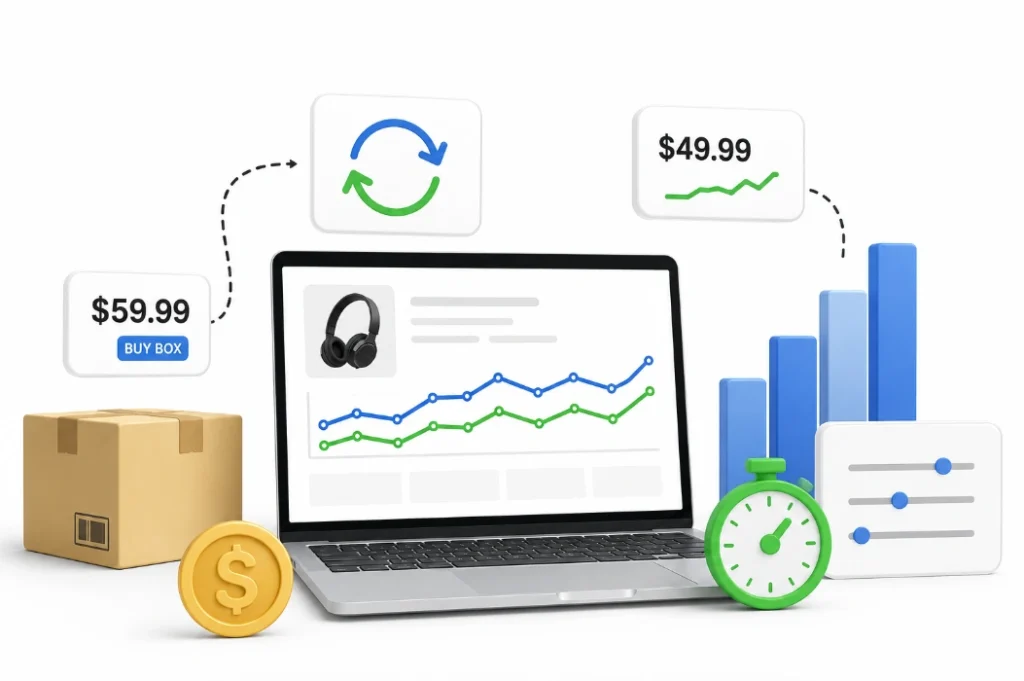
Managing prices on Amazon can feel like a full-time job. Competitors change prices constantly. Market conditions shift throughout the day. Trying to keep up manually takes time and often leads to missed opportunities.
That’s where an Amazon seller repricer comes in. These tools automatically adjust your product prices based on market activity. They monitor competitors, track Amazon competitor pricing, and update listings in real time.
But the best tools do more than simply match the lowest price. They help protect profit margins, avoid unnecessary price wars, and react to market changes much faster than manual pricing ever could.
With the right Amazon price automation, sellers save valuable time and improve their chances of winning the Buy Box. Instead of making endless price adjustments by hand, they can focus on growing the business while the software handles pricing in the background. Those looking to maximize their boosting Amazon listing conversions can also benefit from pricing consistency.
At BrandsBro, we help Amazon sellers grow with smarter pricing strategies and marketplace insights. In one recent campaign, a seller increased monthly revenue by 28%.
Contact us to improve your profitability, increase conversions, and scale your Amazon business with confidence.
Rule-Based vs. AI Amazon Repricers: What’s Better
It is the ultimate showdown. Old rules versus smart Amazon price automation. Many sellers still use rule-based repricers because they are simple. But Amazon’s marketplace has become far more competitive.
A tool that only reacts to price changes can leave profits on the table. That’s why understanding Amazon rule-based repricing versus AI repricing software matters. Rules follow instructions. AI adapts to market conditions and pricing trends.
A rule-based repricer uses simple “If/Then” statements. For example: “If a competitor sells at $20, price my product at $19.99.”
The problem? If competitors use the same strategy, prices can keep falling. Profit margins shrink, and price wars become difficult to avoid. AI repricers take a different approach.
They analyze competitor inventory, shipping speeds, sales history, and marketplace trends. Instead of reacting to every move, they predict what may happen next and adjust pricing strategically.
Amazon’s Buy Box updates also shifted the focus toward pricing parity rather than simply rewarding the lowest price. That means sellers can often win the Buy Box without being the cheapest, if they use smarter Buy Box repricing strategies. A well-planned approach to product pricing plays a huge role here.
Feature | Rule-Based Bot | AI Machine Learning Bot |
Logic | If/Then Statements | Predictive Modeling |
Speed | Fast | Fast |
Profit Safety | Low | High |
Price War Risk | High | Very Low |
Rule-Based Repricing still works well for products with strict MAP pricing requirements. It is easy to set up and helps maintain brand pricing policies.
However, AI Algorithmic Repricing performs better on competitive ASINs. It recognizes pricing patterns, predicts competitor behavior, and avoids unnecessary price drops.
Instead of chasing the lowest price, AI focuses on winning the Buy Box while protecting margins.
So, which should you choose? If you sell products with strict pricing rules, a rule-based repricer may be enough. But for most Amazon sellers competing in active marketplaces, AI repricing software is the better option.
It helps reduce price wars, protect profits, and make smarter pricing decisions automatically. The goal is not just to win the Buy Box. It is to win it while keeping your margins healthy.
Amazon Repricing Tools Compared: 2026 Pricing & Features
Long reviews help, but data makes decisions easier. This Repricer Comparison Matrix compares the top Amazon pricing tool options in one place. Match features and pricing to your needs, choose the best fit, and focus on growing profits.
Tool | Best For | Starting Price | AI Logic |
Multi-Channel Speed | $69/mo | Reactive AI | |
Protecting Profits | $49/mo | Game Theory | |
Beginners on a Budget | $25/mo | Basic ML | |
European Sellers | $69/mo | Reactive AI | |
Large Enterprise | $1,000+/mo | Deep AI | |
Product Launches | $47/mo | Velocity | |
Tracking Profits | $19/mo | Rule-Based |
Pro-Tip: Check the comparison table above to find the best fit. Choose based on your budget, profit goals, growth plans, or business size, then get started.
7 Top Amazon Repricing Tools: Reviews To Win the Buy Box
Meet the leading repricing platforms. We analyzed the data and tested the top Amazon FBA repricer options and e-commerce pricing tools. This breakdown compares speed, cost, and strategy.
We evaluated how well each protects margins while winning the Buy Box. Review the pros, cons, and features to decide.
1. Aura Repricer: Best for Fast Multi-Channel Selling
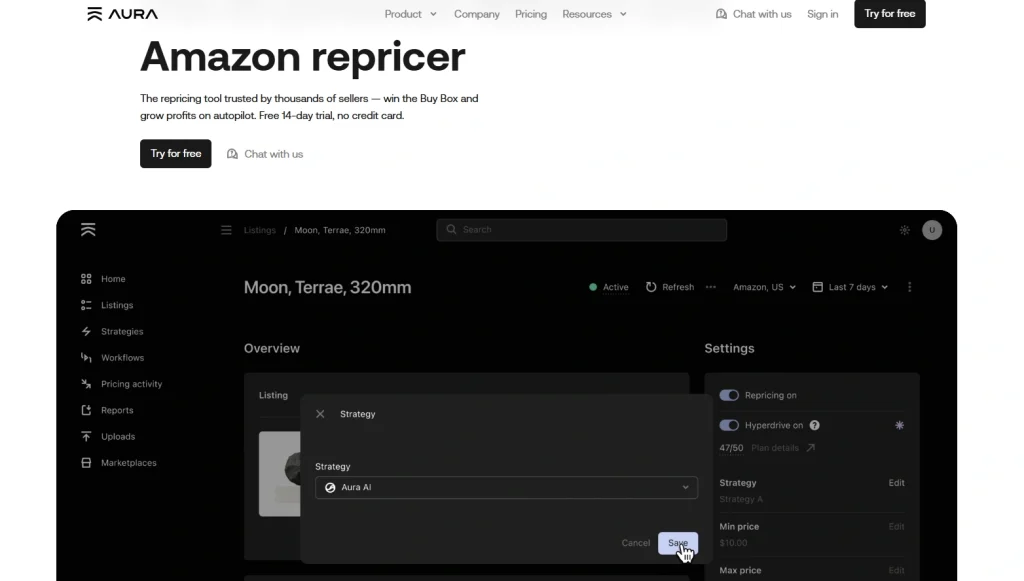
Speed wins on Amazon. Aura Repricer targets sellers who refuse to lose by seconds. As an Aura Repricer Multi-Channel AI system, it updates your prices every single minute. This Aura repricer review, an instantaneous multi-channel Amazon price automation pioneer tool, shows why speed matters.
It connects your Amazon store to eBay and Shopify perfectly. You avoid overselling. You catch buyers fast. The interface is clean. The logic is aggressive. If you run a large catalog across many platforms, Aura moves your stock quickly.
You can push prices hard to win the box before competitors even blink. Faster, fiercer, and more effective on the go.
Product Specifications:
- Repricing speed updates exactly every single minute per cycle.
- Native multi-channel sync across Amazon, eBay, and Shopify stores.
- Uses reactive AI to match competitor pricing changes instantly.
Pros:
- Blazing fast speed.
- Great user interface.
- Strong eBay sync.
- Stops overselling stock.
Cons:
- No free trial
2. Seller Snap: Best for Protecting Profits
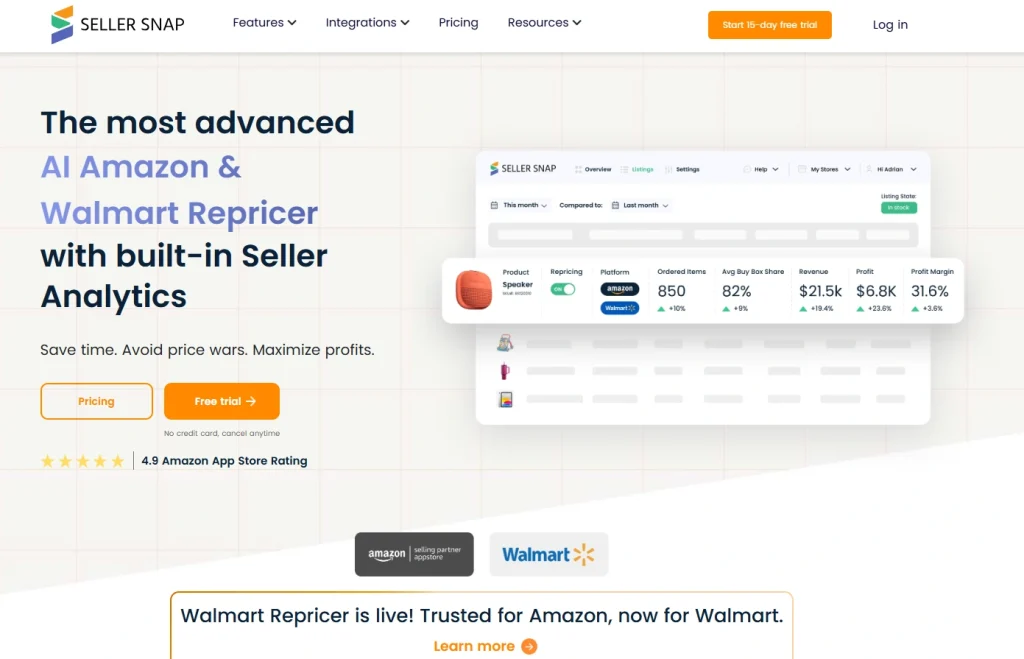
Seller Snap helps Amazon sellers avoid the race to the bottom on pricing. Many tools keep lowering prices until profits disappear. That gets expensive fast.
What makes this Amazon Buy Box tool different is its game-theory approach. Instead of reacting to competitors, it assumes they will react and plans several moves ahead. The goal is simple: win the Buy Box without sacrificing healthy margins.
Setup is quick, and the software starts working in minutes. The dashboard may feel a little dated, but the strategy behind it is anything but old. Seller Snap helps stabilize competitive markets, protect profits, and make pricing decisions smarter, not cheaper.
Product Specifications:
- Utilizes advanced game-theory logic to prevent destructive price wars.
- Repricing speed averages exactly two minutes for optimal reactions.
- Focuses heavily on strict net profit margin protection strategies.
Pros:
- Stops price wars.
- Protects profit margins.
- Very easy setup.
- Excellent customer support.
Cons:
- Uses game-theory logic only
3. BQool BoostBuy: Best for Beginners on a Budget
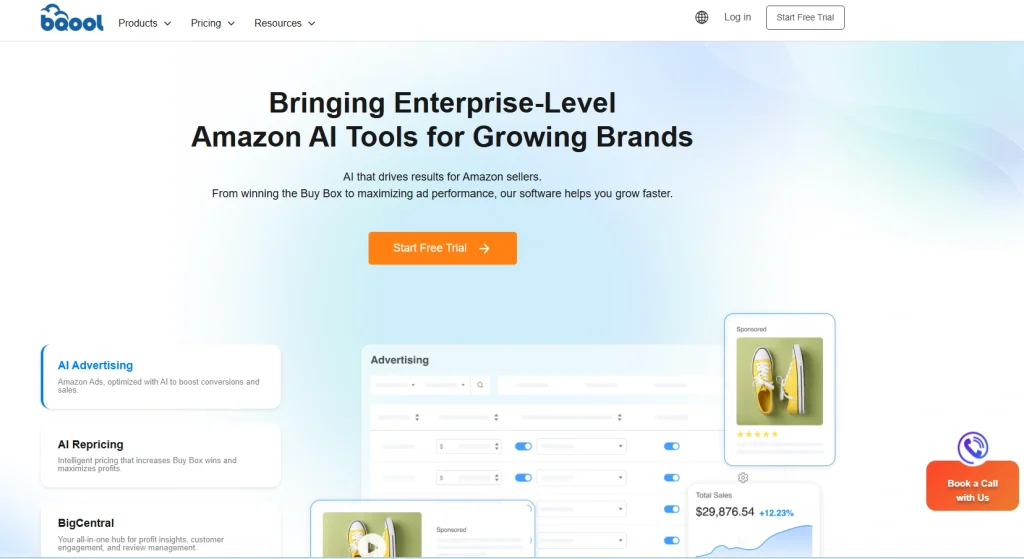
BQool BoostBuy gives Amazon sellers a smarter way to Amazon automate pricing without stretching the budget. Many sellers want advanced tools but hesitate because of the cost.
This BQool BoostBuy review found a strong balance between affordability and machine-learning performance. The software costs less than many competing tools, yet still delivers accurate and intelligent pricing decisions. Its clean dashboard makes navigation simple, even for first-time users.
While it may not react as quickly as some premium repricers, it consistently makes thoughtful adjustments. For mid-sized catalogs, BQool BoostBuy offers reliable performance, solid value, and impressive automation.
Product Specifications:
- Offers highly affordable monthly entry pricing for small sellers.
- Features a very clean and intuitive user dashboard interface.
- Repricing speed typically averages around five minutes per cycle.
Pros:
- Very affordable pricing.
- Clean user dashboard.
- Fast initial setup.
- Solid basic AI
Cons:
- Can lag occasionally
4. Repricer.com: Best for European Sellers
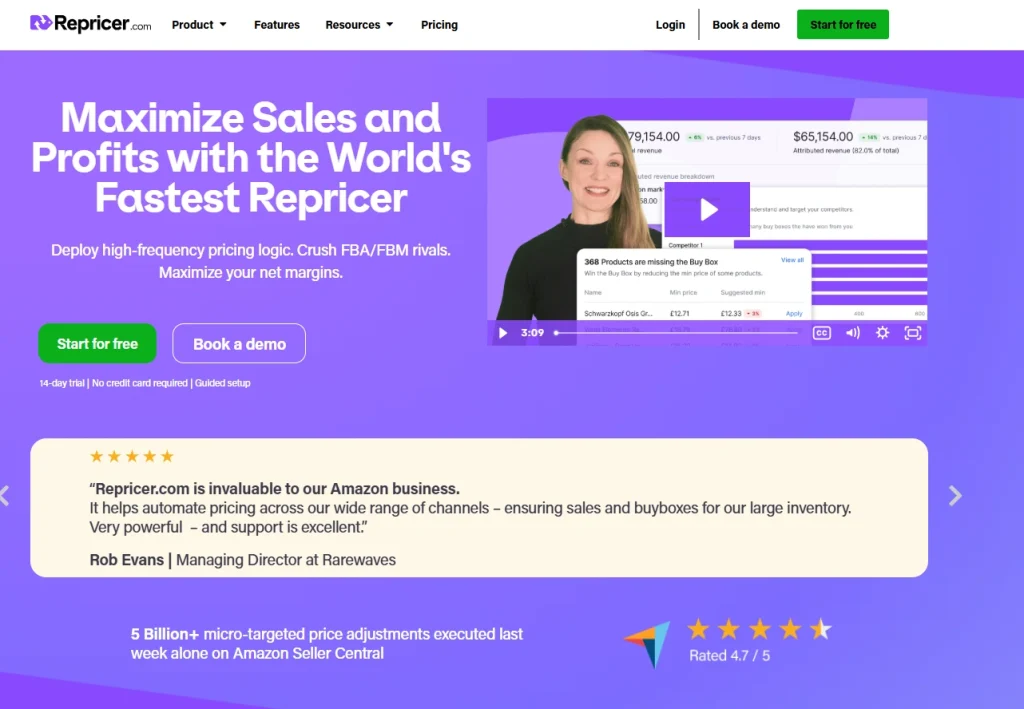
Selling internationally can quickly become complicated. Different currencies, tax rules, and marketplace conditions create challenges that many sellers struggle to manage.
This review highlights a platform designed for global Amazon expansion. It handles VAT calculations, supports multiple currencies, and helps sellers stay competitive across marketplaces like the UK, Germany, and France.
The interface may look a bit dated, and its US presence is smaller than some competitors. However, for cross-border sellers, it simplifies Amazon price optimization and helps maintain a strong position in international Buy Box competition.
Product Specifications:
- Specializes in highly seamless European Amazon marketplace localization features.
- Handles complex VAT tax calculations for cross-border transactions easily.
- Supports multiple foreign currencies and distinct regional pricing strategies.
Pros:
- Excellent for Europe.
- Handles VAT easily.
- Good currency support.
- Fast syncing capabilities.
Cons:
- A bit old visual interface.
5. Feedvisor: Best for Large Enterprise Brands
The Feedvisor enterprise-level software combines advanced analytics with expert support to handle pricing at scale. After all, managing a massive Amazon catalog requires more than basic Amazon price automation.
Unlike typical tools, you are not just getting software. You gain access to a team that helps manage and optimize your pricing strategy. The cost is high, and onboarding can take time. However, for high-revenue sellers, the hands-off approach, deep data insights, and strategic guidance can make large-scale pricing far easier to manage.
Product Specifications:
- Functions as a fully managed pricing service for brands.
- Delivers deep enterprise-level data analytics and sales reporting.
- Requires a very high minimum monthly spend to join.
Pros:
- Fully managed service.
- Deep analytics provided.
- Amazon official partner.
- Reduces seller stress.
Cons:
- Very long onboarding
6. Profit Protector Pro: Best for Product Launches
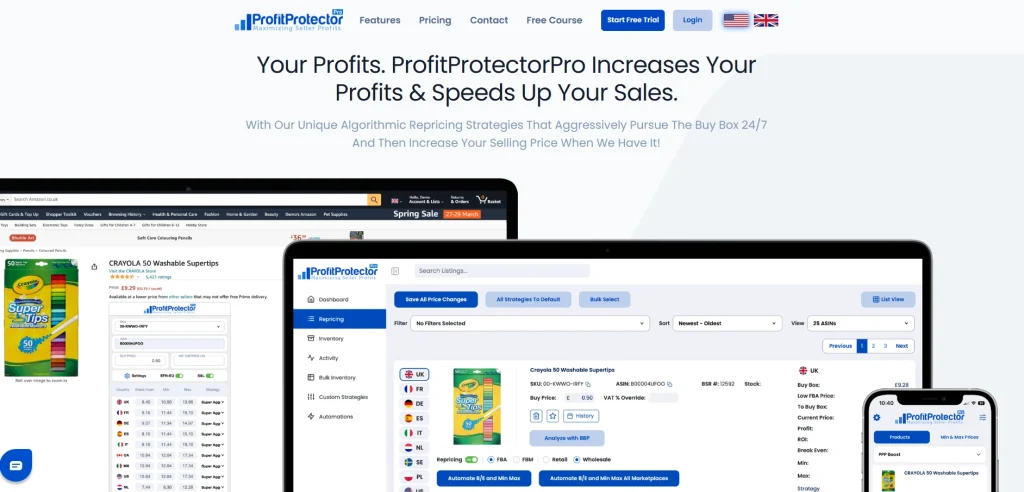
Launching a new product often requires speed, visibility, and a willingness to prioritize growth over short-term profits. This automated repricing tool focuses on sales velocity, which helps sellers move units quickly and improve rankings.
The strategy lowers prices to boost momentum, then increases them once stronger positions are achieved. Setup can be complex, and the platform is especially popular among UK sellers. Still, for aggressive launch campaigns and improving sales rank, it delivers a powerful advantage.
Product Specifications:
- Utilizes unique velocity-based logic for rapid rank growth.
- Highly excellent for pushing new product launches up quickly.
- Includes strong margin protection features after rank is achieved.
Pros:
- Great for launches.
- Unique velocity logic.
- Pushes search rank.
- Strong margin guards.
Cons:
- UK-focused primarily
7. Sellerboard Repricer: Best for Tracking Profits
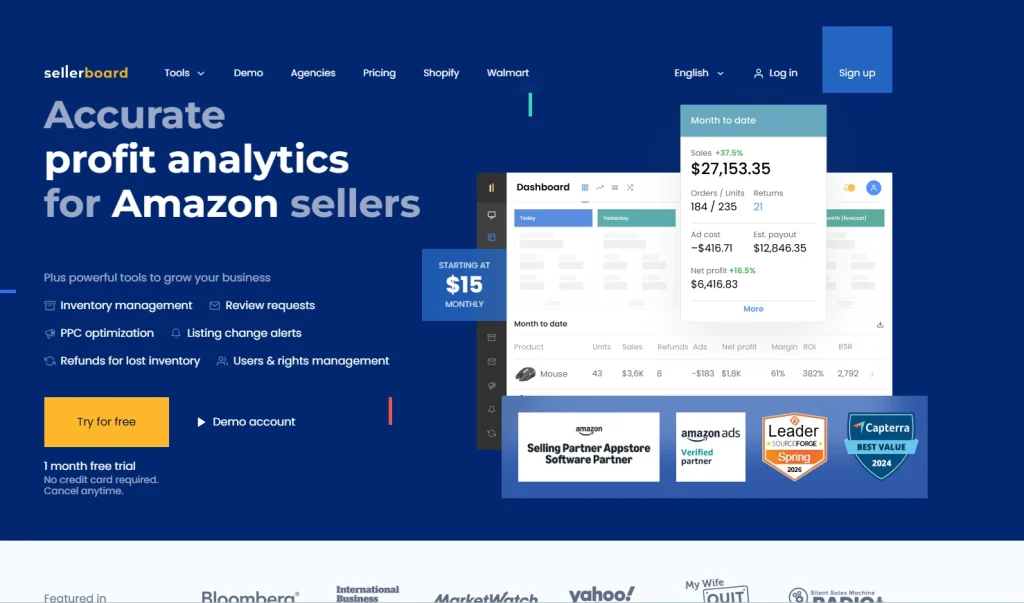
Sellerboard is one of the best Amazon repricer options that puts profit first. Built by a platform known for its accounting and analytics tools, it connects pricing decisions directly to your profit and loss data, showing real-time net profit after fees.
While its automation and AI are simpler than some advanced competitors, it still outperforms Amazon’s free repricer for most sellers. Affordable, easy to use, and highly effective, it’s a strong choice for small businesses focused on protecting margins and cash flow.
Product Specifications:
- Integrates repricing directly with accurate profit and loss tracking.
- Offers the lowest base price point in the market.
- Uses straightforward rule-based logic without complex AI algorithms.
Pros:
- Built-in accounting.
- Very cheap cost.
- Shows real profit.
- Extremely easy setup
Cons:
- Lacks true AI.
- Limited external integrations.
How to Pick the Right Repricer for Your Business
Choosing an Amazon seller repricer is not just about comparing features. It’s about finding a tool that fits the way you sell. A repricer that works well for a wholesale seller may not be the best choice for a private label brand. Start with your business model and choose a tool that helps you stay competitive while protecting your profits.
Pick a Repricer That Fits Your Selling Style
Every seller has different needs. You need to know them first and then get a tool.
- Private label brands usually need stable pricing and strong profit protection to maintain brand value.
- Wholesale sellers need to stay competitive on shared listings while protecting their margins.
- Retail arbitrage sellers often focus on selling inventory quickly so they can reinvest in new products.
- Multi-channel sellers need pricing and inventory to stay in sync across platforms like Amazon, Walmart, and Shopify.
The better a tool matches your business model, the better your results will be.
Look for Speed and Automation
Online prices change constantly. Competitors adjust prices, inventory levels change, and Buy Box ownership can shift several times a day. A slow Amazon FBA repricer can cause you to miss sales opportunities.
At the same time, speed is not enough. A good one should make smart pricing decisions based on market conditions and competitor activity, not simply lower prices every time. This helps you stay competitive without hurting your margins.
Protect Your Profits
More sales do not always mean more profit. That’s why profit protection is one of the most important features of an Amazon pricing tool. Understanding your overall return on investment metrics guarantees you are actually making money.
Look for tools that let you set minimum prices, account for fees, and protect your margins. This prevents products from being priced too low just to win a sale.
Use Inventory to Your Advantage
Your pricing strategy should also reflect your inventory levels. If stock is running low, you may want to keep prices higher. If you have plenty of inventory, more aggressive pricing may make sense.
The best Amazon repricer tracks inventory, keeps stock levels updated across channels, and adjusts pricing based on availability. This helps you maximize profits while keeping inventory moving efficiently.
How to Set Your Repricing Tool to Avoid Losing Money
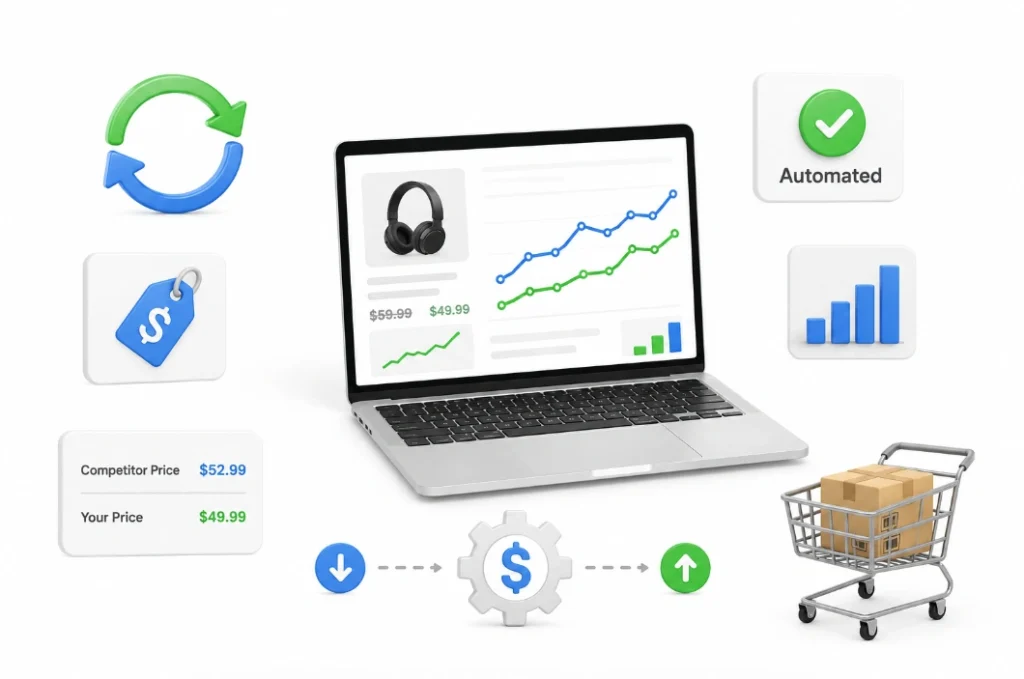
An Amazon repricer can save time and help you stay competitive. But if the settings are wrong, it can lower your prices too much and cut into your profits. Implementing effective reprice adjustments correctly is key. A few simple rules can help you avoid that.
Set Your Lowest Price First:
Know the lowest price you can accept before making a profit. Include Amazon fees, shipping costs, and product costs. Then set that number as your minimum price.
Block Unreliable Sellers:
Some sellers use extremely low prices that can confuse tools. If possible, exclude these sellers so your software does not follow unrealistic Amazon competitor pricing.
Focus on Important Competitors:
You do not need to track every seller on a listing. Monitoring a few strong competitors usually leads to better pricing decisions and fewer unnecessary price changes.
Check Your Repricer Regularly:
Do not leave your Amazon repricing software running without checking it. Review your pricing activity every week to make sure it is helping you reach your goals.
The best strategy is simple. Set clear limits, monitor performance, and let the tool work within rules that protect your profits.
Frequently Asked Questions (FAQs)
Here are answers to some of the most common questions about repricing software for sellers, pricing automation, and competitive pricing strategies. Clear, straightforward, and easy to understand.
How much does an AI repricing tool cost?
Pricing varies by provider and features. Basic plans often start around $25–$50 per month, while more advanced tools can cost $250 or more. Enterprise solutions may cost significantly more, especially for sellers with large catalogs. Most providers charge based on the number of active SKUs.
Can an AI repricer guarantee the Buy Box?
No. While an Amazon Buy Box tool can improve your chances of winning the Buy Box, Amazon also considers factors such as seller performance, shipping speed, and account health. Pricing is important, but it is only one part of the equation.
Can I use more than one repricer at the same time?
It is generally not recommended. Running multiple repricers on the same listings can create conflicting pricing actions and lead to unwanted price changes. Using a single, well-configured Amazon seller repricer is usually the best approach.
Will an AI repricer lower my prices too much?
Not necessarily. Many AI repricing software options are designed to balance competitiveness with profitability. Instead of always matching the lowest price, they can adjust prices strategically while helping protect your margins.
Is Amazon’s built-in repricer enough?
Amazon’s free repricer can be useful for basic Amazon price automation, especially for smaller sellers. However, third-party tools often provide faster updates, more advanced strategies, and additional profit protection features.
What is the difference between rule-based and AI repricing?
Rule-based repricers follow preset instructions, such as matching or undercutting a competitor's price. AI repricers analyze multiple factors, including market conditions and competitor activity, to make more dynamic pricing decisions. This can help sellers stay competitive while maintaining healthier profit margins through smart Amazon price optimization.
Ready For Upgraded Seller Scale & ROI
Keeping up with Amazon price changes can be difficult. Competitors adjust their prices constantly, and trying to do everything manually takes time and effort.
That is why the best Amazon repricer can make a big difference. It helps you stay competitive, save time, and Amazon set pricing automatically based on the rules you set.
Some sellers need a simple tool that is easy to use. Others may need advanced features to manage larger inventories and more complex Buy Box repricing strategies.
In the end, the best choice is the one that fits your business goals. A good Amazon FBA repricer helps you increase sales, protect your profit margins, and grow your business with less manual work.
