

Most Shopify stores are losing money right after a sale. Ads keep getting more expensive, and the first order often just covers costs. Focusing only on the checkout means the return on investment never really adds up.
The real opportunity comes only after knowing how to increase Shopify store revenue after checkout.
One-Click Upsells let customers easily include extra products in their order. Right after a purchase, trust is high, and decisions feel easy. A small upsell, a relevant offer, or a Thank You page that actually sells can turn one-time buyers into loyal repeat shoppers.
Who doesn’t want faster customer returns, right? After all, they spend more and bring in more cash flow. That’s where real revenue begins.
The Psychology of "The Golden Window" (Immediate Post-Checkout)
Right after someone clicks “Complete Purchase,” there is a tiny window, just 20 minutes. But it’s huge. This is the Golden Window. The hardest part of the sale is over. You already built trust, and decisions feel easy.
During this time, customers are on a “buyer’s high.” Dopamine spikes. They’re proud owners, not browsers.
Hit them with the right offer now, and they’re much more likely to add something to their order.
Here’s what works:
- One-click upsells: No re-entering payment info. Quick and easy.
- Smart thank you page offers: Show a relevant add-on while they’re still excited.
- Follow-up emails: Remind them of related products while interest is high.
Pro tip (Use the Endowment Effect): People value what they already “own.” Frame upsells as completing or protecting their new purchase. “Upgrade your [Product]” or “Add the custom case for your new item.” It feels natural, and customers respond better.
Strategy 1: Architecting High-Conversion One-Click Upsells (OCU)

Increasing Average Order Value (AOV) is all about offering extra value without slowing your customer down. Today, the One-Click Upsell (OCU) is the best way to grow revenue on Shopify.
It appears after the first sale is complete, so your initial conversion is safe while you encourage a second purchase. To truly understand the mechanics behind this, it helps to be familiar with what a Shopify post-purchase upsell actually is.
Post-Purchase vs. In-Cart Upsells: Which Performs Better in 2026
The main difference is timing. In-cart upsells happen before checkout, which can distract users and increase the chance of cart abandonment.
Post-purchase upsells appear after the customer clicks “Pay Now” but before the thank-you page. Since the first sale is already confirmed, there’s no risk of losing it.
Stores that use post-purchase offers often see 15-30% higher conversion rates because the customer has already committed. To protect your margins, it is crucial to avoid the common Shopify post-purchase upsell mistakes when structuring your initial offers.
Here is a quick comparison:
Metric | In-Cart Upsell (Pre-Purchase) | Post-Purchase Upsell (OCU) |
Conversion Rate | Moderate (3-5%) | High (10-15%+) |
Abandonment Risk | High (interrupts checkout) | Zero (sale secured) |
User Friction | High (breaks flow) | Low (one-click add) |
Impact on AOV | Small | Significant |
User Intent | Browsing/Evaluating | Confirmed Buyer |
Setting Up "Invisible" Frictionless Payments
The key to high-converting OCUs is making payments effortless. Using Shopify’s Post-Purchase API, you can charge the customer without asking them to re-enter payment details. One click adds the offer to their order.
Shopify either updates the first order or creates a linked second order. This smooth process makes it easy for customers to buy again instantly.
2026-Compliant Payment Gateways for Shopify OCU:
To make sure your post-purchase offers work, check your payment options:
- Shopify Payments: Fully integrated and reliable.
- PayPal Express: Supports vaulting for one-click offers.
- Stripe: Works through Shopify’s native checkout.
- Digital Wallets: Apple Pay and Google Pay are fully compatible.
- Direct Credit Cards: Visa, Mastercard, Amex via vaulted tokens.
Strategy 2: AI-Driven Personalization on the "Thank You" Page
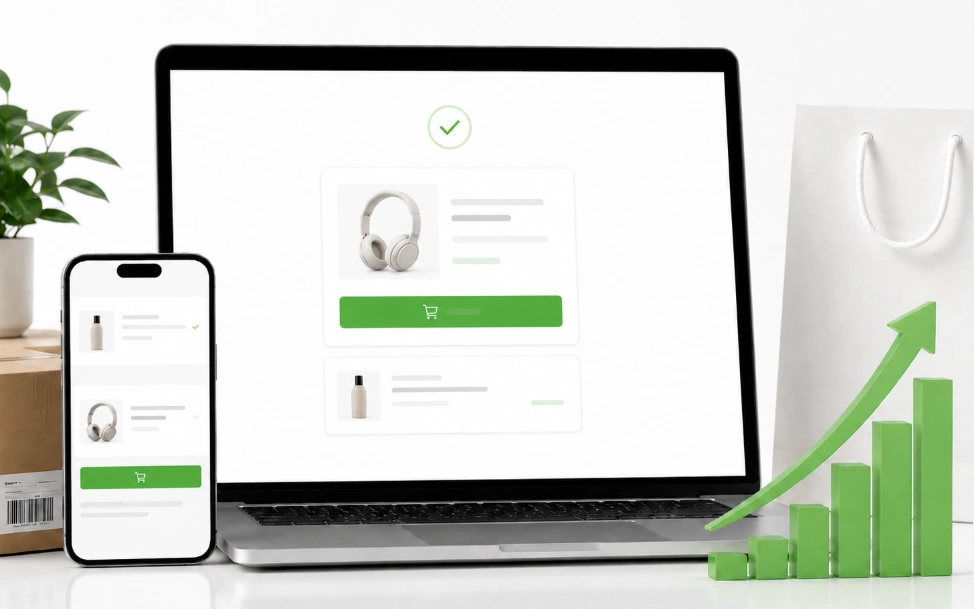
The transaction is finished. But the selling shouldn’t stop. In 2026, a static receipt is a missed opportunity.
Your “Thank You” page is your highest-converting real estate. It must act as a personalized, AI-powered storefront. Use it to build a bridge to the next purchase.
Dynamic Product Bundling Based on Real-Time Inventory
Modern AI widgets do more than guess. They analyze your real-time inventory and the customer’s location simultaneously. The system identifies products available in the fulfillment center closest to the buyer.
If a customer in New York buys a winter jacket, the AI suggests matching waterproof boots currently sitting in a New Jersey warehouse. This ensures lightning-fast delivery. Shipping distance is greatly reduced, and your profits go up.
These bundles adapt instantly to your stock levels. They never suggest an “out-of-stock” item. This precision is a core pillar of how to increase Shopify store revenue after checkout. It turns a simple “order confirmed” message into a logical, high-converting offer.
For broader revenue growth, pairing these efforts with dedicated Shopify SEO is the way to go. Now, your store attracts high-intent traffic ready to convert.
Integrating Social Proof and User-Generated Content (UGC)
After a purchase, customers want reassurance that they made a great choice. Embed shoppable TikToks or Instagram Reels directly on the “Thank You” page to show real people using the products.
Watching unboxing videos or seeing products in action builds excitement, reduces buyer’s remorse, and encourages repeat purchases. This is also the perfect moment to offer “Complete the Look” suggestions. Social proof can transform one-time buyers into loyal brand advocates.
Ideal 2026 "Thank You" Page Layout
Start with a clear order confirmation and tracking link at the top to give customers peace of mind. In the middle, feature a video feed of user-generated content alongside an AI-powered recommendation widget that offers one-click add-ons from nearby warehouses.
Toward the bottom, include an SMS or WhatsApp opt-in for VIP rewards to capture zero-party data. Finally, add a gamified referral feature, such as a “Scratch & Win,” to encourage sharing and reduce customer acquisition costs.
To choose the right layout, you simply need to understand the difference between thank you page upsells and one-click offers.
Strategy 3: Hyper-Personalized Retention Flows (Email, SMS, & WhatsApp)

Retention isn’t just sending one email, but a conversation across multiple channels. Top Shopify brands don’t stop at receipts. They use the first 48 hours after purchase to strengthen the relationship.
By combining Email, SMS, and WhatsApp, you reach customers where they are most active and engaged.
The "Value-First" 48-Hour Sequence
The first 48 hours are critical. The goal is to remove buyer’s remorse and gently guide customers toward a second purchase. Lead with value, not sales. Too many sales pushes early on can drive unsubscribes. Instead, offer a mix of helpful content, surprises, and personalization.
Here’s a simple 3-step sequence to maximize Customer Lifetime Value (CLV):
- Hour 0 – Email + SMS: Send the receipt plus a “secret” surprise discount. This reassures the customer and sparks immediate return interest.
- Hour 24 – Email / WhatsApp: Share an educational guide or “how-to-use” content. This reduces returns and positions your brand as an expert.
- Hour 48 – SMS / Email: Suggest a relevant cross-sell based on their browsing history, showing them the items they considered but didn’t buy.
Transitioning from SMS to Zero-Party Data Collection
With third-party cookies gone, growth depends on zero-party data, information the customer willingly shares. Post-purchase SMS is perfect for this because of its 98% open rate.
Instead of a generic sales message, ask a simple preference question. For example:
“Thanks for your order! We want to tailor your experience. Do you prefer [A] Minimalist Styles or [B] Bold Patterns?”
When the customer replies, your Shopify CRM automatically tags their profile. This allows you to send highly personalized offers. Minimalist buyers never see Bold product ads.
Small interactions like this turn SMS threads into powerful, high-value data assets, driving better engagement and higher click-through rates for future campaigns. Integrating expert Klaviyo marketing strategies can further automate these nuanced conversations for better segmentation.
Strategy 4: Gamification and The "Loyalty Loop"
It turns out, the Gen-Z turns into a loyal customer almost instantly. Gamification turns a normal purchase into a fun, interactive experience.
Adding play to the checkout process bypasses the customer’s “sales radar” and creates a reward loop that encourages them to make a second purchase right away.
Immediate Rewards: The Post-Purchase Scratch-and-Win
The “Thank You” page shouldn’t be the end. Use interactive elements like digital Scratch-and-Win cards or Spin-to-Win wheels. Customers can get instant rewards such as bonus loyalty points, free shipping, or a limited-time discount code.
Winning feels better than being sold to. A 15% discount after a purchase creates urgency, motivating a fast second order and increasing your Customer Lifetime Value from day one.
Tiered Loyalty Programs that Drive Immediate Second Orders
Traditional loyalty programs are too slow. Remember, loyalty tiers should update instantly after a purchase. For example:
“Congratulations! You’ve reached Silver Status. Use your 10% member discount on these items.”
Immediate rewards keep customers engaged and encourage them to use their new status while their intent is high.
Here is a 2026 tiered loyalty comparison table:
Tier Level | Requirement | Immediate Reward | Long-Term Perk |
Bronze | 1st Purchase | 5% “Welcome Back” Credit | Monthly Newsletter Access |
Silver | Spend $150+ | Instant $10 Credit | Free Shipping on All Orders |
Gold | Spend $500+ | Free Mystery Gift | Early Access to New Drops |
Technical Setup: The 2026 Shopify Tech Stack for Post-Purchase ROI

To make your post-checkout strategy work, your Shopify store needs a tech stack that’s fast, connected, and smart.
The trend now is away from heavy, clunky apps. It’s more toward lightweight, API-native tools that keep checkout speedy while still offering powerful post-purchase options.
The Core Pillars of a High-Converting Post-Purchase Stack
A winning post-purchase setup relies on three pillars: capturing immediate revenue, nurturing long-term value, and building trust with social proof. Here’s how to stack the best tools for maximum impact:
1. Upselling & Cross-Selling (Immediate Revenue)
These apps turn the seconds after checkout into opportunity, letting customers add more with a single click.
- Ark: Native, one-click post-purchase offers that feel like part of the checkout, smooth and effortless.
- ReConvert: The go-to for optimizing your “Thank You” page, adding widgets for product recommendations, birthdays, and more.
- Zipify OneClick Upsell (OCU): Perfect for high-volume stores needing multi-step funnels and split-testing.
2. Retention & Lifecycle Marketing (Long-Term Value)
Once your customer leaves, these tools take over, keeping the connection alive through Email, SMS, and WhatsApp.
- Klaviyo: AI-driven automation that predicts when customers are ready for their next purchase.
- Attentive: High-engagement SMS that sparks two-way conversations to bring shoppers back.
- WhatsApp Business API: Direct, personalized updates and VIP offers that reach your customers instantly.
3. Social Proof & Zero-Party Data (Trust & Insights)
Turning a first-time buyer into a repeat customer relies on trust and insights. These apps gather and showcase customer voices to make every future purchase easier.
- Okendo: Capture high-impact video reviews and UGC for your “Thank You” page, boosting credibility instantly.
- Junip: Fast, search-optimized reviews that help your social proof show up in Google and attract new customers.
Integration Map: Connecting Your Apps for Maximum ROI
A tech stack is only as strong as its connections. Your upsell app should integrate seamlessly with your email platform to prevent duplicate offers, and your review tool should automatically trigger follow-ups. Here’s a simple flow to keep everything working together:
- Step 1: Sync your Upsell App (e.g., Ark) with your Email Provider (e.g., Klaviyo) to skip “Welcome” flows for customers who just bought a second item.
- Step 2: Connect your Review App (e.g., Okendo) to SMS to send a review request 7 days after delivery.
- Step 3: Track every app’s contribution using Shopify analytics to see which is boosting your Revenue Per Automated Session (RPAS) the most.
Visual Aid: Categorized Post-Purchase Directory
Category | Top-Tier App | 2026’s Primary Goal |
Upselling | ReConvert | Maximize AOV on the “Thank You” page |
Retention | Klaviyo | Automate the 48-hour “Value-First” sequence |
Feedback | Okendo | Gather UGC to reduce future acquisition costs |
Frictionless Pay | Ark | Use Shopify’s Post-Purchase API for 1-click buys |
Advanced Analytics: Tracking the "True" LTV of Post-Purchase Offers
A single large order is good, but fast second orders are better for revenue. So focus on backend funnel performance rather than just AOV. Key metrics include:
- Post-Purchase Take Rate (%): % of customers accepting upsells or cross-sells.
- Revenue Per Automated Session (RPAS): Revenue from automated flows ÷ number of customers in the flows.
- CAC Payback Period: Days until a customer’s spend exceeds acquisition cost.
- Second-Purchase Velocity: Average time between the first and second order.
Common Mistakes Reducing Post-Purchase Margins
Even strong strategies fail if overdone. The biggest mistake is Offer Fatigue. Too many discounts or pop-ups make your brand look desperate and teach customers to wait for deals. Go through these dos and don’ts for post-purchase design.
Do | Don’t |
Use AI to recommend products that match the purchase. | Show random “Best Sellers” unrelated to the cart. |
Limit yourself to ONE high-impact post-purchase upsell page. | Create a maze of 4–5 upsell offers. |
Include helpful content, such as guides or UGC, in emails. | Spam daily “10% OFF” emails. |
Use countdown timers sparingly to create real urgency. | Use fake timers that reset on refresh. |
Frequently Asked Questions (FAQs)
Post-purchase revenue isn’t just luck, it’s pure strategy. These questions explain how top Shopify stores boost profits after checkout with smart, simple tactics:
Shopify’s Post-Purchase API enables one-click upsells, but you cannot implement them via the basic admin. Certified apps like Ark or ReConvert use this API to show offers after checkout, holding the thank-you page while ensuring secure, frictionless transactions.
A healthy post-purchase upsell conversion rate in 2026 ranges from 7% to 15%. Below 5% indicates irrelevance, while above 20% signals a “Perfect Pair.” Adjust offers accordingly, potentially increasing pricing for highly complementary add-ons to maximize incremental revenue.
Shopify saves the customer’s payment info securely during checkout. Using the Post-Purchase API, the store charges the saved payment token when the customer clicks “Add to Order,” so no extra card info or verification is needed.
Send the first follow-up email within 20–60 minutes to excite and thank the customer. Then send helpful reminder emails at 24 and 48 hours. This keeps your brand visible without annoying the customer with too many messages.
Yes. Many Shopify apps let you offer a “Switch to Subscription” option on the thank-you page. This encourages one-time buyers to subscribe for recurring orders, increasing long-term revenue and customer lifetime value with a simple discount or offer.
Customers aren’t annoyed by upsells, they dislike irrelevant ones. Offers must logically relate to the purchased product, like a camera and lens cleaner. Unrelated items appear as a cash grab, potentially harming brand perception.
Ready To Increase Shopify Store Revenue After Checkout
Hope you now know how to increase shopify store revenue after checkout. The real growth happens after checkout. Those first 20 minutes are just golden.
Buyers are excited, open, and ready to act. One-Click Upsells with Ark or ReConvert make it effortless for them to add more without re-entering payment. Thank You pages can become mini stores with AI product suggestions and limited-time discounts that actually feel helpful.
Follow up with Emails and SMS over the next 48 hours. Start with tips they can use, then offer relevant cross-sells that feel personal rather than pushy. Paying attention here turns casual buyers into repeat customers for sure.
