
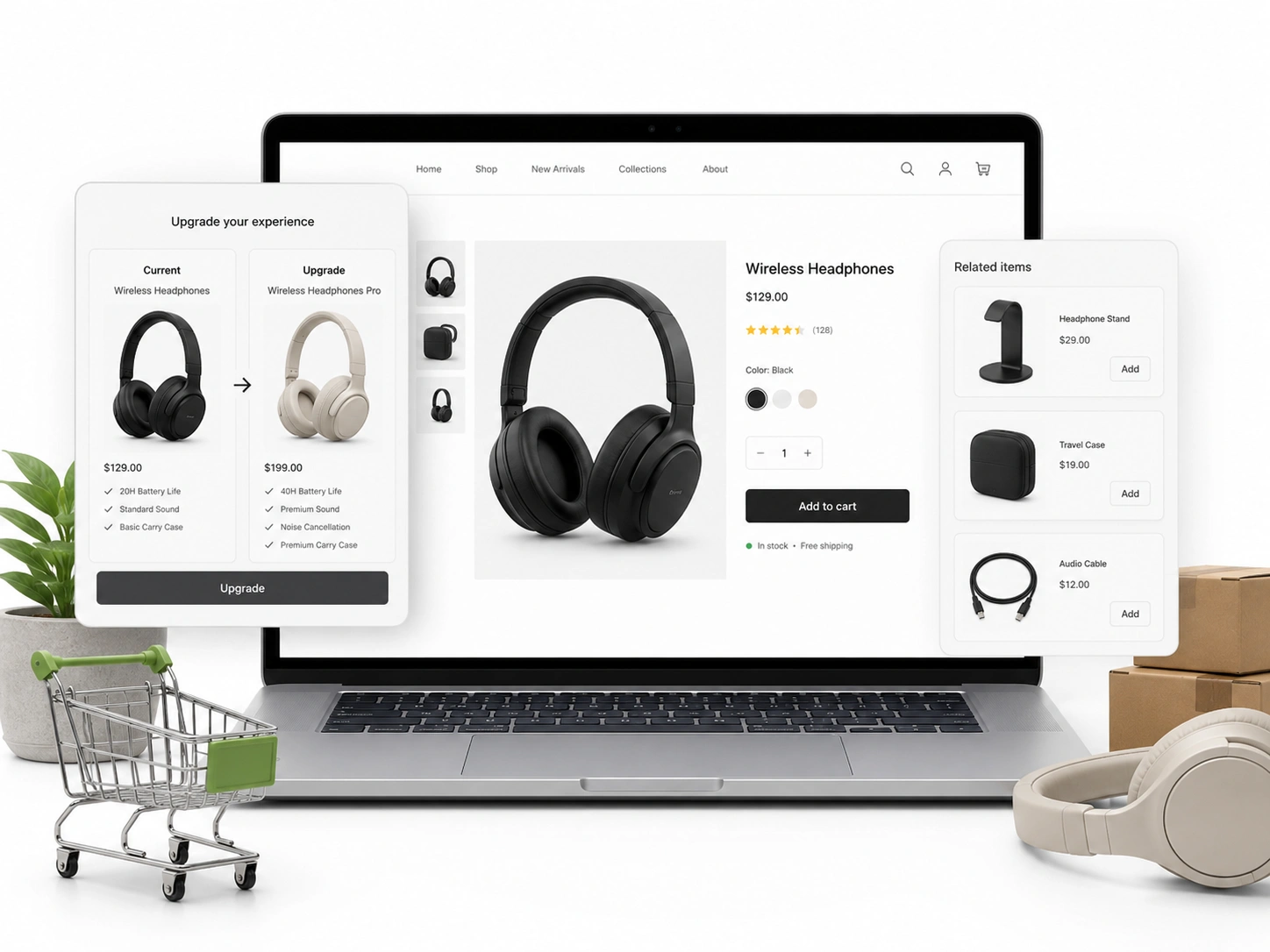
Running a Shopify store is exciting. You spend a lot of time and money to bring new people to your site. But what if the real secret to more money was already right there?
Many store owners focus only on getting new customers. This is important, but it is not the whole story. You can make more sales from the shoppers who are already buying from you. This is where a smart Upselling vs Cross-Selling strategy comes in.
This guide will show you everything. We will look at what these two ideas mean. We will see why they work so well. And we will give you a simple plan to use them on your Shopify store. This will help you increase your average order value and build a stronger business.
What is Upselling? Unpacking the "Upgrade" Strategy
Let’s start by looking at the first of our two key sales techniques. Think of it as the art of the upgrade. This is a very common sales technique you see every day.
Attribute: Definition
Upselling is a simple idea. You encourage a customer to buy a better version of a product. This version is usually more expensive, but it offers more value.
Think about going out for coffee. The person at the counter asks if you want a large drink instead of a medium. That is a perfect example of upselling. They offer you a better, bigger option.
Attribute: The Primary Objective
The main goal of upselling is to increase your Average Order Value (AOV). You want each customer to spend a little more on a single item. This small increase can add up to a lot of money over time.
You are not just selling a more expensive product. You are selling a better experience. The customer gets more value, and you get a bigger sale. It is a win for everyone.
Shopify-Specific Examples
Let’s see how this works in a real Shopify store.
Imagine you sell electronics. A customer is looking at a laptop with 8GB of memory. You could show them a similar laptop with 16GB of memory. The upgrade gives them a faster computer.
If you have a skincare brand, you can also use this. A customer might be buying a 50ml bottle of serum. You can offer a 100ml bottle. The bigger bottle often has a better price per milliliter, which is great value.
This even works for subscription boxes. Maybe a customer is about to pay for one month. You can offer them a three-month plan. The price per month is lower, so they save money in the long run.
What is Cross-Selling? Mastering the "Add-On" Approach
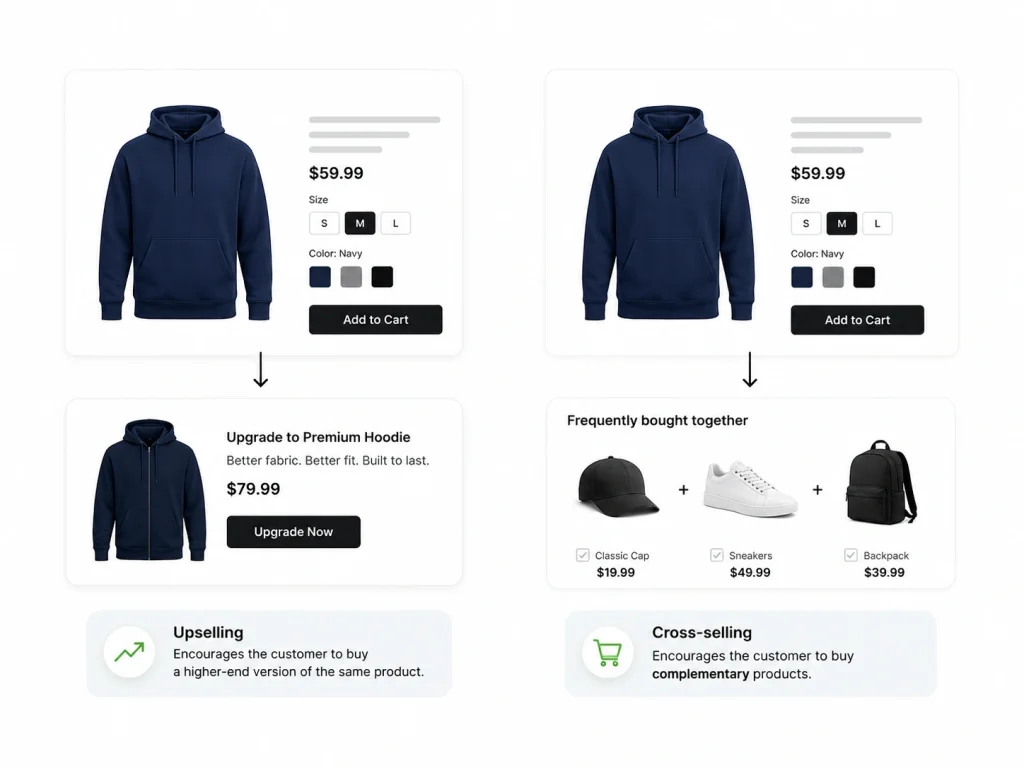
While upselling focuses on making a single product better, cross-selling is different. It is about creating a more complete experience for the customer. This sales strategy helps you sell more items.
Attribute: Definition
Cross-selling means you recommend related products. These are items that go well with what the customer is already buying. They are add-ons that make the main purchase even better.
Let’s go back to the coffee shop. The same person who offered you a large drink now asks if you want a cookie with it. That is cross-selling. The cookie is a related product that completes your coffee break.
Attribute: The Primary Objective
The main goal here is to increase the total cart value. You want the customer to buy more items in one order. You are helping them find everything they need in one place.
This is a great way to boost your sales. It also shows the customer that you understand their needs. A good recommendation can feel like great customer service.
Shopify-Specific Examples
Cross-selling is perfect for any Shopify store.
If you sell clothes, you can show a “Complete the Look” section. A customer adds a dress to their cart. Then, you can show them a matching pair of shoes and a handbag.
Do you have a home goods store? A customer buys a new duvet cover. You can suggest they also buy matching pillowcases and a fitted sheet. This is a very helpful suggestion.
Maybe you sell cameras. A customer buys a new camera body. You can offer a bundle. This bundle could have a memory card, a camera bag, and a lens cleaning kit. You are selling a full package, not just one product.
The Core Differences: Upselling vs Cross-Selling Head-to-Head
On the surface, both strategies boost revenue. But their approach is quite different. The customer psychology they use is not the same. Understanding this difference is key to using them well.
Here are the main differences broken down.
- Path to Increased AOV: Upselling makes the value of one product higher. Cross-selling adds more products to the cart to make its value higher.
- Customer Intent: Upselling speaks to a customer who wants better quality. They want the best version available. Cross-selling helps a customer who wants a full solution. They want everything they need for their purchase.
- Influence on Journey: Upselling is about upgrading the main item. Cross-selling is about enhancing that item with related products or services.
A Quick Chart: Upselling vs Cross-Selling
It is always helpful to see things side by side. We made a simple chart for you. This will make the ideas very easy to understand.
Here is a quick breakdown of Upselling vs Cross-Selling. You can use this chart as a handy guide for your store. Let’s look at the main differences.
Feature | Upselling | Cross-Selling |
Main Goal | Upgrade the single main product. | Add related products to the cart. |
Customer Focus | Wants the highest quality version. | Wants a complete and easy solution. |
Cart Action | Usually replaces the original item. | Keeps the original item and adds more. |
Simple Example | Buying a larger 65-inch TV. | Buying a wall mount for a 50-inch TV. |
End Result | One expensive item in the order. | Multiple different items in the order. |
Both methods are great for your business. They just use different paths to get there. You will see the best results when you use both of them together.
The Psychology of the Sale: Why Customers Say "Yes"
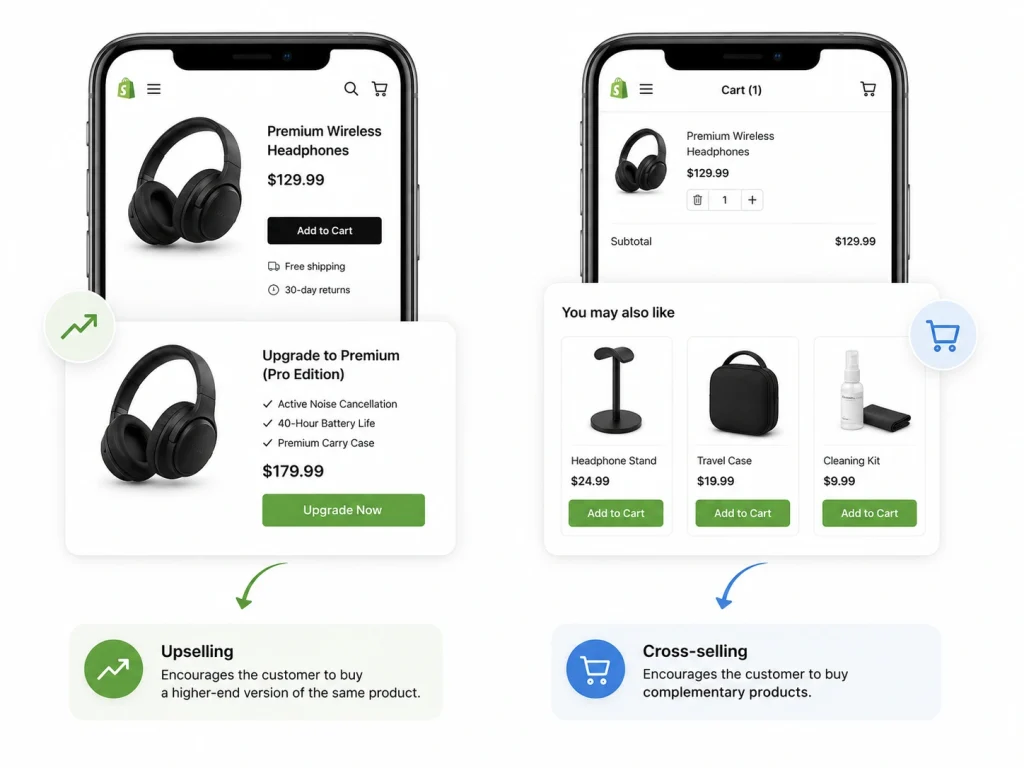
These sales techniques are not just random guesses. They work because they connect with how people normally shop. They tap into natural buying habits.
The Psychology of Upselling
Upselling works because of a simple human desire. People often want the best thing they can afford. It feels good to get a premium product.
It also connects to our idea of value. A customer might be happy to spend a little more money. This is true if they believe they are getting a much better product or a better deal. A bigger size for a small price increase feels like a smart choice.
The Psychology of Cross-Selling
Cross-selling works because people love convenience. They want a complete solution without having to search for it. If you suggest a phone case with a new phone, you save them a future trip.
When you do it right, cross-selling feels like helpful advice. It does not feel like a pushy sales pitch. This builds trust and makes the customer feel understood. Good recommendations are a key part of customer retention.
Strategic Timing and Placement: When and Where to Offer
The success of your offers depends on when and where you show them. The right timing can make a huge difference. Let’s look at the best spots in the customer journey.
The Best Places for Upselling
You want to offer an upgrade before the customer has finished their decision.
Product pages are a great place. You can use a “Compare Models” chart. This lets customers see the benefits of the more expensive version. You can also have a “You Might Prefer” section.
A pop-up right before they add to the cart is also powerful. When a customer clicks “Add to Cart,” you can show them the better option. You can also set up a Shopify post-purchase upsell to catch them right after they check out. This is your chance to show them why the upgrade is worth it.
The Best Places for Cross-Selling
Cross-selling works best when the customer has already decided on their main purchase.
Your cart page is a perfect spot. You can show a “Frequently Bought Together” section. This shows customers what other people buy with that item.
The checkout page can also work for small add-ons. Think about things like gift wrapping or product insurance. These are easy “yes” offers.
The post-purchase page is another golden opportunity. This is the “Thank You” page after the sale is complete. You can make one-click offers for related products here. To get the best results, it helps to understand the difference between thank you page upsells and one-click offers to create a smooth experience.
Best Practices for a Winning Upselling and Cross-Selling Strategy

Now, let’s bring it all together. Here are some simple rules to follow. These will help you boost your revenue. And they will make sure you do not annoy your customers.
Be Genuinely Helpful, Not Pushy
This is the most important rule. Your recommendations must be very relevant. Do not offer a winter coat to someone buying a swimsuit. Bad suggestions will break a customer’s trust. Always focus on adding value.
Follow the "Rule of 25"
Do not try to sell them something that is way too expensive. A good rule of thumb is to keep your offer under 25% of the original order value. If someone is buying a $100 shirt, do not try to sell them a $100 jacket. A $20 scarf is a much better cross-sell.
Use High-Quality Visuals
People buy with their eyes. Make sure you use clear, beautiful pictures of your upsell and cross-sell products. If you are offering a bundle, show all the items together. Help the customer see how great the full package is.
Create Bundles and Package Deals
Everyone loves a good deal. You can create bundles of related products. Then, offer a small discount if the customer buys the bundle. This makes the cross-sell feel like a smart decision. It shows them they are getting great value.
Leverage Social Proof
People trust other people. Use phrases like “Customers also bought” or “Top Rated.” This shows that other shoppers liked the recommendation. It makes the customer feel more confident about adding it to their cart.
A/B Test Your Offers
You will not get it perfect on the first try. That is okay. Keep testing different things so you can avoid common post-purchase upsell mistakes. Test your offer message. Test where you place the offer. Small changes can lead to big improvements in your sales strategy.
Key Metrics to Track Your Success
How do you know if your plan is working? You need to look at the right numbers. Here are the most important things to track.
- Average Order Value (AOV): This is the most direct way to measure your success. Is the average value of each order going up? If so, your strategy is working.
- Conversion Rate: You need to watch this number closely. Your offers should not be so aggressive that people leave your site without buying anything. Your goal is to increase AOV without hurting your conversion rate.
- Offer Take Rate: This tells you what percentage of customers accept your offers. It helps you see which offers are popular and which ones are not.
- Customer Lifetime Value (CLV): This is a long-term number. A great strategy makes customers happy. Happy customers come back to buy again, which increases their lifetime value to your store.
Frequently Asked Questions (FAQs)
Curious to learn more about these powerful sales techniques? We have gathered the most frequently asked questions from Google to help clear up any confusion. Read through these simple answers to better understand upselling and cross-selling for your store.
Upselling encourages a customer to buy a more expensive, upgraded version of their chosen item. Cross-selling suggests adding related or complementary products to the current order. Both strategies increase your overall sales but use different methods.
A classic upselling example happens when you buy a laptop. If you originally choose a basic model, the seller might offer a premium version with a faster processor and more memory for a slightly higher price.
A great cross-selling example occurs when purchasing a new smartphone. Before you finish checking out, the store suggests buying a protective phone case, a screen protector, and wireless headphones to complete your brand-new mobile setup.
Neither strategy is inherently better than the other. The best approach combines both methods to maximize your revenue and enhance customer satisfaction. It entirely depends on your specific product catalog and the buyer’s current shopping journey.
Both tactics effectively increase your average order value. Upselling raises the total revenue earned per individual item sold. Meanwhile, cross-selling increases the total number of items purchased per order, naturally leading to a much larger final cart size.
The ideal time to cross-sell is after a customer adds a main product to their cart or during the final checkout process. You can also offer complementary items on the post-purchase thank-you page to capture extra sales
Ready to Boost Your Shopify Revenue?
You now have the complete playbook for mastering upselling vs cross-selling. We’ve explored the core strategies, the customer psychology, and the exact steps to implement them on your Shopify store. But learning is just the first step; the real growth comes from taking action. Don’t let this opportunity to unlock hidden revenue pass you by.
Start small, but start today. Pick one popular product and create a compelling upsell to a better version. Next, find an item that pairs perfectly with another and build your first cross-sell bundle.
By testing these simple, value-driven tactics, you’re not just increasing your average order value. You are enhancing the customer journey and building a more profitable, customer-centric brand for the future.
