

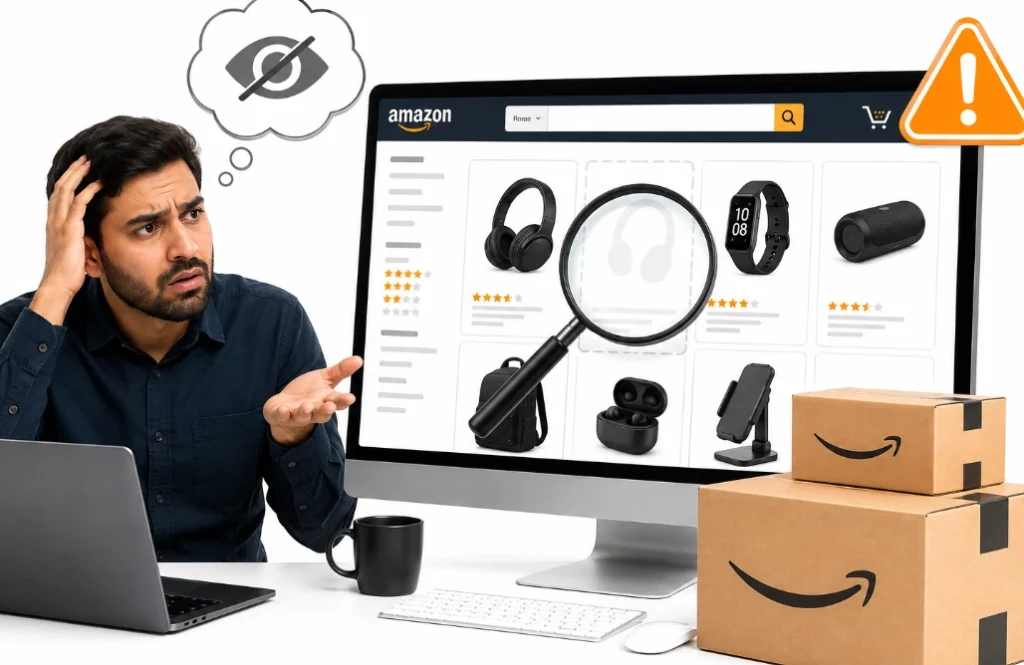
You built a good product. The title looked clean. Your images went up without errors. Then a search for it on Amazon returned nothing.
That absence feels wrong. Your dashboard shows the listing as active. Buyers still cannot find it in the results.
So the real question stands. Why Your Amazon Product Is Not Showing in Search? This often has one root cause. The listing failed one visibility test that Amazon runs.
Sellers across the USA hit this exact wall. A live listing and a searchable listing are two different things. One sits in your account. The other appears when a shopper types a keyword.
Most guides treat this as one keyword problem. That view is too narrow. Your Amazon product visibility rests on a chain of checks. Every link in that chain must pass.
This guide walks through nine causes. Each one hides your product for a different reason. All of them have a clear fix.
Why Your Amazon Product Might Not Show: The Quick Answer
Your Amazon product does not show because the listing failed one search-eligibility test. Your Amazon product not showing in search points to a chain. One weak link drops it from the results.
The listing must be active, complete, and approved. It also needs stock, the right category, and an index match. One missing piece hides the whole product.
An Amazon product no-show in search almost always has a fixable cause. You confirm each link in the sections below. A quick ASIN test shows whether indexing is the issue.
A Live Listing And A Searchable Listing Are Not The Same
A live listing exists in the catalog, but a searchable one appears in search. These two states look identical on your dashboard. That gap traps many new sellers.
Your listing can read Active and still stay invisible in search. The product listing lives in Amazon Seller Central. Amazon search has not matched it to a term yet.
Amazon shows a product only after it indexes the listing for a keyword. Indexing means Amazon linked your product to that search word. Without that link, the product stays hidden from every shopper.
So a live product page proves the listing exists. It does not prove the listing ranks. This one difference explains most panic over a missing product.
How To Confirm If Your Listing Is Indexed Or Suppressed

You confirm indexing with an ASIN plus keyword search on Amazon. An ASIN is the 10-character code Amazon gives each product. You type the ASIN and your main keyword into the search bar.
One result means Amazon indexed your listing for that term. Zero results point to an Amazon listing not indexed for that keyword. A 404 page or a ‘’Dogs of Amazon” screen means removal.
That single test separates an indexing gap from a suppression. Suppression means Amazon pulled a live listing out of search. You find suppressed items inside Manage Inventory.
The path runs through Seller Central and Inventory and Manage All Inventory. A filter for Suppressed lists every hidden product. Amazon’s own Seller Central help documentation explains the eligibility rules behind these flags.
The Listing Quality Dashboard and Account Health show the exact flag. Your Amazon ASIN not searchable by keyword falls into one of nine buckets. Each bucket points to a fix you can run today.
Where Amazon Reads Your Keywords For Indexing
Amazon reads your keywords from four listing fields for indexing. The product title carries the most weight for Amazon keyword indexing. Strong title words drive most of your early search visibility.
The bullet points add features and secondary keywords. Your product description and A+ text support relevance below the title. Backend terms then cover synonyms the visible copy misses.
The title holds a 200-character limit in most categories. Mobile screens cut the title near 80 characters. Front-loaded keywords protect both product visibility and clicks.
Listing field | Limit | Indexing note |
Product title | 200 characters | Highest weight, mobile cuts near 80 |
Bullet points | About 500 characters each | Secondary keywords index here |
Product description | 2,000 characters | Supports relevance at lower weight |
Backend search terms | 249 bytes | Whole field drops if you go over |
Search suppression works in a different way from an indexing gap. This suppression pulls a complete listing out of results over policy. An Amazon ASIN not searchable by keyword points to suppression, not copy.
9 Reasons Your Amazon Product Stays Hidden In Search Results

Your Amazon product stays hidden for one of nine common reasons. Some overlap, so more than one can hit at once. A short scan of each will match your case.
Amazon suppressed your listing for missing or bad data
Amazon suppresses a listing when required data is missing or wrong. A missing brand or title triggers this block. Blank color or size fields do the same. The listing suppressed state hides the product but keeps the direct link alive.
A non-compliant main image causes the same block. The main photo needs a clean white background and a clear product view. Promotional words like Best Seller break the title rules too.
The fix starts inside Seller Central under the flagged listing. You correct the missing field or swap the bad image. Most search-suppressed listing cases reappear within 24 to 48 hours.
Your product is not indexed for the keyword
An unindexed listing never appears for a term, however strong the product. This is the top cause, and the one sellers miss most. Amazon keyword indexing links your product to each search word.
Your product needs the keyword inside the title or backend field. A keyword that lives nowhere in your listing will not index. Weak keyword relevance keeps the product out of that result set.
You run the ASIN plus keyword test for your top ten terms. A short list shows which words index and which do not. Missing words point straight to your title and backend search terms.
Backend search terms broke the 249-byte limit
Backend search terms fail when they cross the 249-byte limit. Amazon backend keywords carry a hard cap of 249 bytes in the USA. One byte over and Amazon ignores the whole field.
Standard letters and numbers count as one byte each. A comma or special symbol eats extra bytes and space. One packed field drops every hidden keyword at once.
The generic keyword field works best with single spaces and no punctuation. Repeated title words waste the space, so fresh synonyms win. The result is an Amazon listing not indexed for any hidden term.
Your listing sits in the wrong browse node
A wrong browse node blocks your product from a whole set of keyword searches. One browse node is the category bucket Amazon files your product under. Category mapping decides which searches your product can even enter.
Amazon bots sometimes move a product to a category they judge better. That new node may not support your main keywords. Your indexing can drop the moment the category approval shifts.
You compare your category against the top organic results for your keyword. A mismatch means a case with Seller Support for a correction. Right category mapping restores your Amazon search ranking for the term.
Out-of-stock status pulled your offer from search
An out-of-stock listing loses its search slot until you restock. Amazon hides most products that show zero available units. Buyers cannot buy an empty offer, so search drops it.
Stranded inventory creates the same result in a sneaky way. This means you hold units with no active offer to show. A stranded inventory issue leaves units in the warehouse and off the search page.
Restocked units sometimes lag in the system for about 24 hours. Vacation settings and inactive offers cause the same gap. Active inventory availability and a valid offer bring the listing back.
A brand-new listing is still processing
A brand-new listing stays out of search until Amazon finishes indexing it. New catalog data can take hours to move through the system. This delay hits every new seller review and new product upload.
New accounts face extra checks before full search eligibility. Payment verification and identity review can hold visibility. A product approval pending status keeps the item out of results until cleared.
You wait 24 to 72 hours after a new upload before you worry. The listing status inside Manage Inventory shows any pending review. Patience solves this one more often than edits do.
You lost the Featured Offer, so the listing hides
A listing without a Featured Offer can fall out of normal search. The Featured Offer is the main buy option shown on a product page. Pricing errors or offer conflicts cause a Featured Offer missing state.
The Buy Box and the Featured Offer share the same idea. No winning offer means Amazon has little reason to surface the page. Offer eligibility depends on account health and pricing rules.
You review pricing and offer status inside Seller Central. A corrected offer restores Featured Offer eligibility. Healthy offer status protects your Amazon product visibility over time.
An adult or restricted term flagged your listing
A restricted word in your backend can hide the whole listing from search. Amazon tags some words as adult even in innocent products. A flagged item drops out of general search results without a clear notice.
Restricted claims or medical terms trigger the same flag. The product still loads by direct link, yet keyword search skips it. This block mimics a suppression but starts from your own copy.
You scan your title and backend for any risky term. A clean rewrite of the flagged field lifts the block. Compliant copy keeps your Amazon listing SEO on solid ground.
Weak listing quality and no sales history sink your rank
A listing can index and still rank far below page one. Low listing quality or zero conversion history push you down. Amazon search ranking rewards products that sell after they show.
No reviews and low sales velocity signal weak relevance to Amazon. New products with no clicks earn little trust from the algorithm. Poor Amazon organic ranking often traces back to this quality gap.
Stronger images and better product relevance raise the score. Steady sales build the conversion history the algorithm wants. Real Amazon SEO optimization targets both indexing and conversion together.
How Variations And Parent-Child ASINs Affect Visibility

Variations affect visibility because a broken parent-child link can hide a child ASIN. One variation groups sizes or colors under one listing. A parent ASIN holds the group, and each child ASIN holds one option.
Amazon sometimes shows the parent and buries a child variation. A child with no image or price can drop from results. You confirm each child indexes with its own ASIN plus keyword test.
The item type keyword and product type tell Amazon what the item is. A wrong value here weakens category mapping and search eligibility. Correct attributes keep every child in its buyers’ path.
Suppressed vs Inactive vs Not Indexed: The Difference That Matters
These three states each block search for a different reason. A suppressed listing is live but pulled over a policy issue. An inactive listing is closed or out of stock.
A not-indexed listing is active and in stock, yet unmatched to a keyword. Each state needs a different fix, and one seldom solves another. The table below maps each cause to its repair.
Listing state | What it means | Common cause | First fix |
Suppressed | Live but hidden from search | Missing data or bad image | Correct the flagged field |
Inactive | No active offer | Out of stock or closed | Restock or reactivate offer |
Not indexed | Active but keyword-blind | Backend or title gap | Add keyword and recheck |
You match your symptom to one row before you touch the listing. A wrong fix on the wrong state wastes days. Correct listing status reading saves the most time here.
How To Fix An Amazon Listing That Won't Show In Search
You fix a hidden listing by working the chain in order. The order runs from listing health to indexing to rank. Each step clears one blocker before the next.
Your first move confirms the listing status inside Manage Inventory. A suppressed flag points you to the Fix Your Products tool. That tool names the exact field or image Amazon wants corrected.
Clean product data forms the base of any Amazon SEO optimization plan. Solid data here often needs Amazon listing optimization for real gains. Strong titles and bullets feed the relevance that the algorithm reads.
Your next move tests keyword indexing for every main term. The ASIN plus keyword search shows each indexed and missing word. Missing words go into the title or the generic keyword field.
Teams that want faster wins lean on structured Amazon SEO for the rebuild. Better structure fixes weak keyword relevance across the listing. Cleaner data also feeds category mapping and search eligibility.
Account health and payment verification also gate search eligibility. A hold on account health can freeze visibility across your catalog. You clear any policy notice before you expect the listing back.
Vacation settings and stranded units block the offer without warning. A stranded inventory issue needs a relist or an offer fix. Active fulfillment status and stock bring the offer back.
Backend Keywords And Category: The Two Levers Of Indexing

Backend keywords and category control indexing because they set word match and shelf placement. One decides which words match your product. The other decides which category shelf holds it.
The backend keyword field feeds Amazon words that never show on the page. Fresh synonyms and audience terms belong here, not repeated title words. The right tools for Amazon keyword research surface the high-intent terms worth indexing.
Category mapping decides your search eligibility for a whole group of terms. A product filed under the wrong node loses those searches at once. The right product type and node keep the item in its buyers’ path.
Both levers reward a review every few months. Search query data and Search Query Performance show what buyers type. Sellers who want to improve SEO on Amazon pair backend cleanup with category audits.
Better term choice raises Amazon organic ranking over the following weeks. Strong Amazon backend keywords widen the searches your product can enter. Both moves lift the same goal of product discoverability.
Brand Registry And Search Data Speed Up Recovery
Brand Registry and search data speed recovery through edit control and buyer terms. The program gives brand owners more control over listing content. Registered brands edit titles and attributes with fewer catalog conflicts.
Top Search Terms and Product Opportunity Explorer show demand in your category. This search query data points to the exact terms worth indexing. One live Seller Central forum discussion shows sellers tracing the same invisibility to indexing.
Strong A+ Content adds images and text below the main details. A+ Content lifts conversion once the listing shows in search. Better conversion then feeds Amazon organic ranking over time.
Why Your Amazon Ads Get No Impressions Too
Your Amazon ads get no impressions because a hidden listing cannot serve them. PPC impressions depend on indexing and offer status like organic search. A suppressed or unindexed listing starves your campaigns.
Sponsored Products cannot show a listing Amazon pulled from search. PPC no impressions signal an indexing or suppression problem, not a bid issue. Owners who rank higher on Amazon search first repair indexing, then scale ads.
Ad serving eligibility follows listing eligibility, not the reverse. You fix the listing before you raise a single bid. The right order saves your budget from a dead page.
A listing that indexes and holds the Featured Offer earns impressions again. Better creative then has a live page to point to. Clean listings let Amazon ads management turn spend into real clicks.
This order protects both your budget and your Amazon search ranking. Indexing before ads keeps every dollar working. Search fixes always come before ad spend.
A Simple Backend Keyword Checklist For Indexing
A clean backend field can lift indexing within days. The rules below keep the field readable in full. Each point maps to a real Amazon rule.
- Stay under 249 bytes, since one byte over drops the whole field.
- One space between words, with no commas or punctuation.
- Fresh synonyms only, never words already in your title.
- No competitor brand names, ASINs, or barcodes.
- No adult or restricted words that risk a flag.
- Audience and use-case terms, such as gift for dad.
A field that follows these points indexes for more searches. Sellers who fix suppressed listings often skip this backend step. The whole fix suppressed listings on Amazon process begins with clean data.
Byte count beats keyword count every time here. One clean string reaches more searches than a stuffed one. Fresh synonyms fill the field and strengthen your Amazon listing SEO.
How Our Team Rescues Hidden Amazon Listings
Our team has fixed hidden Amazon listings for over 10 years. We start every case with a full index test on the main keywords. From there, the team clears each blocker in a set order.
Most listings we repair return to search within 24 to 48 hours. Several clients reached page one within a few weeks after the fix. One new product hit the #1 New Release spot in two weeks.
You can reach out to our team for a free listing review. We review indexing, suppression, and backend health in one pass. A short message shows you why the product stays hidden.
Common Amazon Listing Mistakes That Kill Search Visibility

Most invisible listings share a short list of avoidable mistakes. Each one below breaks a specific Amazon rule. Fixing them restores search eligibility fast.
- Backend terms over 249 bytes, which de-index the whole field.
- Promotional words like Best Seller inside the product title.
- A main image with a logo, text, or a colored background.
- Competitor brand names stuffed into backend search terms.
- A listing left in the wrong browse node after an auto-move.
- Ads pushed onto a suppressed or unindexed listing.
One mistake often hides more than one product at a time. A short audit each month catches these before sales drop. An Amazon product not showing in search seldom survives a clean audit.
Frequently Asked Questions (FAQs)
Sellers ask the same core questions when a product vanishes from search. The short answers below match the most common cases. Each answer names the cause and the first fix.
Why is my Amazon listing active but not showing in search?
An active listing stays invisible when Amazon has not indexed the keyword. The product still exists in the catalog without a keyword match.
How long does it take for an Amazon listing to get indexed?
A new listing takes about 24 to 72 hours to index for search. Corrected suppression reappears within 24 to 48 hours after the fix.
How can I tell if my Amazon product is indexed?
You search your ASIN plus your main keyword in the Amazon search bar. One result means indexed; zero means not indexed for that term.
Can wrong backend keywords hide my listing?
Yes, a backend field over 249 bytes makes Amazon ignore every hidden keyword. Punctuation and repeated title words also waste the limited space.
Why do my Amazon ads get no impressions?
Ads serve almost nothing when the listing is suppressed or not indexed. The listing must show in organic search before Sponsored Products can run.
Will more reviews help my product show in search?
Reviews and sales raise relevance, which lifts rank after the listing indexes. Extra reviews alone cannot fix a suppression or a backend block.
Does a wrong category stop my product from showing?
A wrong browse node blocks your product from that category's searches. One correction case with Seller Support restores eligibility for those terms.
Why is my brand-new listing not in search yet?
A brand-new listing needs 24 to 72 hours to index for search. New accounts also face payment and identity review that can hold visibility.
Fix the Chain Before You Chase Rank
Why Your Amazon Product Is Not Showing in Search traces to one broken link. Your listing must pass every test to appear. One failed step hides the whole product.
You test indexing first with an ASIN plus keyword search. Clearing suppression and fixing the category come next. Each fix restores one piece of search visibility.
Clean data and steady sales carry the rest over time. The chain rewards the seller who checks every link. Indexing comes first today, and rank follows from there.
